


Posts in the 'Complete Streets' category
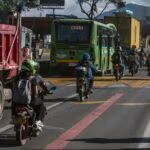
Motorcycles are transforming urban transport around the world. In many cities, they already account for a significant share of daily trips; in others, motorcycle use is growing rapidly. While motorcycles improve access to jobs, education and economic opportunity, they also ...

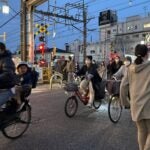
Despite a lack of dedicated bicycle infrastructure, Tokyo is among the world’s great cycling cities, with 14% of all trips made on two wheels. The city’s narrow roadways discourage through traffic and require slow speeds, creating an informal network of ...
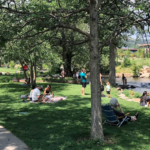
On a fair-weather day, one can often gauge the livability of a dense city neighborhood by a simple test: are children active outside? The new Guide to creating urban public SPACES for children takes that test seriously by turning it ...
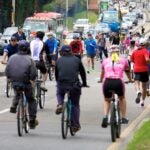
Every Sunday morning, Bogotá, Colombia, transforms its streets. Over 120 kilometers (75 miles) of major city roads are closed to cars and opened to cyclists, walkers and runners in the Sunday Ciclovía. The 50-year-old weekly tradition has evolved from a social ...
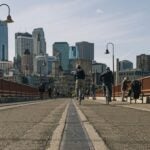
Picture this: you wake up on a Sunday morning and hop on a bike with your family or a close friend. Within a few minutes you arrive at a coffee shop, order your drink of choice while listening to the ...
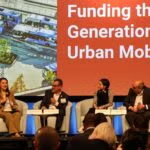
Last week, WRI Ross Center co-convened the 23rd edition of Transforming Transportation with our partners at the World Bank. Supported by FIA Foundation, the forum in Washington, DC, brought together more than 5,000 in-person and online participants, reflecting the event’s ...
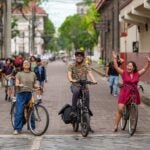
On most days, Doc Mau, a disability advocate and Manila local, walks between 5,000 and 10,000 steps on crutches, choosing routes within the city with even sidewalks and clearly marked crossings. She pauses to catch her breath along tree-lined paths ...
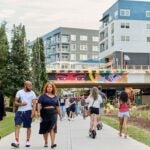
Early on a weekday morning in Atlanta, a familiar choreography unfolds along a landscaped path: High school students stream north to class; middle schoolers head south, backpacks bouncing as they bike; electric scooters zip past joggers and dog walkers, while ...
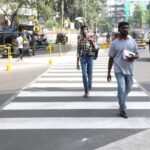
People don’t just use streets; they respond to them. The placement of curbs, alignment of crossings and painted markings directly shape how safely and predictably people move. How people interpret the physical cues received from their environment determines their decisions and movements. ...
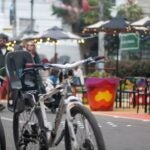
Nestled in the Andes, Bogotá’s mountainous landscape traps air pollutants, sometimes cloaking the Colombian capital in a dusty smog. The consequences have been severe. The city’s poor air quality resulted in an estimated 2,300 excess deaths in 2019. In 2023, ...

Road traffic crashes kill about 1.19 million people each year and seriously injure another 20 million to 50 million. Pedestrians, cyclists and motorcyclists — the most vulnerable road users — account for half of these deaths and injuries. Even people in motor ...

In Istanbul’s Caferağa neighborhood, WRI Türkiye led a community-driven initiative to create a more sustainable, inclusive and livable urban environment. From April 2023 to July 2024, the Livable Caferağa project worked closely with residents to understand the neighborhood’s challenges around overcrowding, ...

Istanbul’s Caferağa neighborhood has a longstanding reputation for its cultural richness and historic charm. Quaint cafes, restaurants and bars line the sidewalks. A thriving arts scene draws an eclectic crowd. More than 2.3 million visitors daily flock to the district ...

Africa’s cities are both among the most rapidly growing in the world and the most underserved by transport infrastructure. The African Development Bank estimates an annual infrastructure investment gap of $100 billion even as Africa’s urban population is projected to double by ...

IT professional Nagarjun Kandukuru, 51, looks out of the window of his Bannerghatta Road home in Bengaluru and watches as his 16-year-old son cycles off to music class. The family has never owned a car. Kandukuru, himself, uses a motorcycle ...