


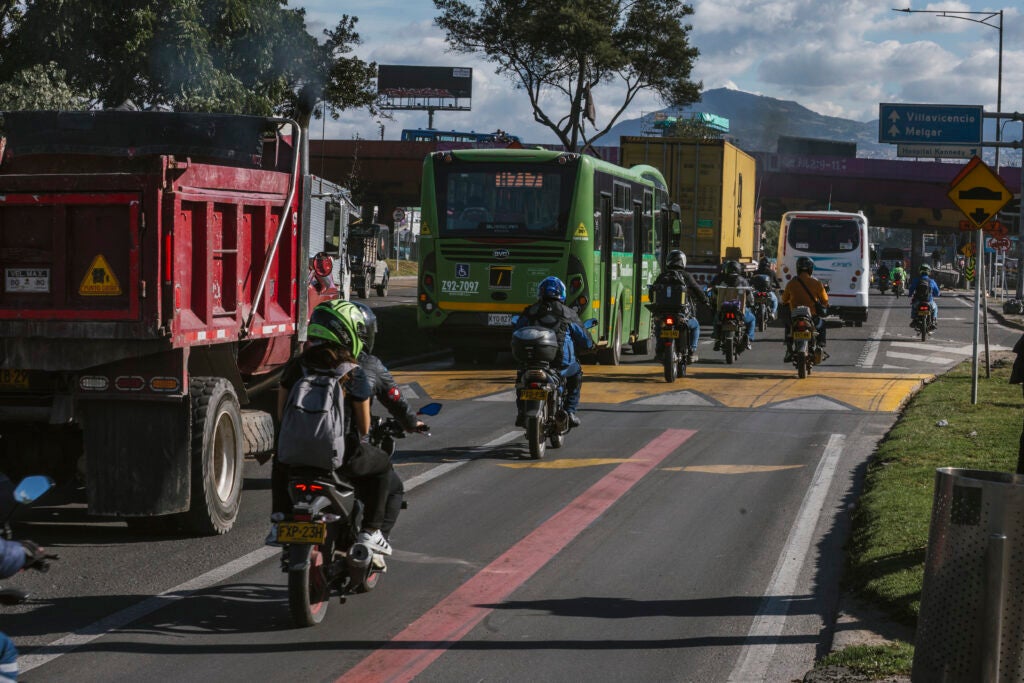
Motorcycles are transforming urban transport around the world. In many cities, they already account for a significant share of daily trips; in others, motorcycle use is growing rapidly. While motorcycles improve access to jobs, education and economic opportunity, they also contribute to one of the most pressing road safety challenges facing cities today: severe traffic crashes due to unsafe speeds.
Lacking a protective frame, motorcyclists face severe — and often fatal — injuries even at modest speeds. Their ability to travel at high speeds also poses heightened risks to vulnerable road users, particularly in areas with high pedestrian activity, such as commercial streets and school zones. These risks make speed management especially critical in cities where motorcycles are a significant and growing part of the transport system.
The role of speed in fatal and serious crashes is well established. The harder question for cities is how to manage speeds on the corridors where the greatest risks occur while preserving mobility and economic activity. Bogotá’s recent experience offers an important answer: focus on the corridor, not just the crash location.
From Isolated Interventions to Corridor-Level Speed Management
Research on motorcycle safety suggests that severe crashes often reflect conditions across an entire corridor rather than a single dangerous intersection or road segment. When unsafe speeds are widespread, interventions need to influence behavior across the entire corridor as well.
Bogotá put this principle into action. Between 2024 and 2025, the city installed more than 160 parabolic speed humps along nearly 10 kilometers of major arterial corridors. The intervention challenged a common assumption in urban transport: that traffic calming belongs on local streets, but not on major arterial roads.
There were understandable concerns about congestion. Yet monitoring showed no significant impact on corridor functionality. On the original Guayacanes pilot corridor, traffic volumes remained stable and even increased after implementation.
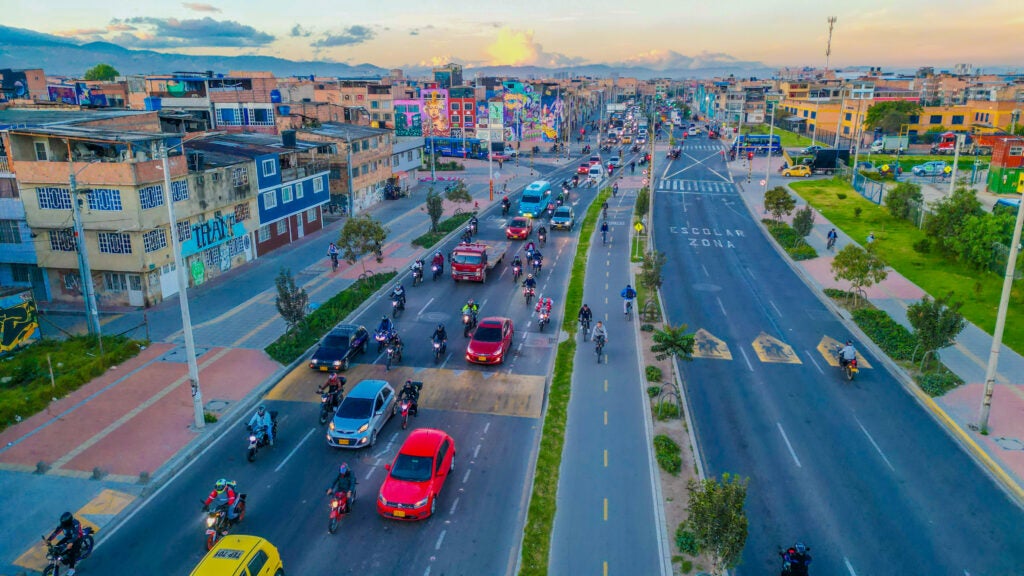
Those finding matters. The goal of traffic calming is not simply to make vehicles travel slower. It is to create safer, more predictable speeds while maintaining the movement of people and goods.
The Safety Gains Are Significant
Preliminary one-year analysis based on official data from Bogotá’s District Secretary of Mobility (SDM), conducted by WRI Colombia as part of the Bloomberg Philanthropies Initiative for Global Road Safety (BIGRS), points to substantial safety improvements across the evaluated corridors.
The analysis suggests approximately:
- 69% fewer fatalities
- 58% fewer injuries
- 18 lives saved each year
- 222 injuries prevented each year
Behind every one of these numbers is a person who avoids death or serious injury — and a family, workplace and community that avoids the consequences of a preventable crash. For city leaders, this is the central value of speed management. It is not simply a transportation intervention. It is a public health intervention that can improve travel for all road users.
The Economic Case for Safer Speeds
The safety benefits also translate into significant economic value. Using internationally recognized methodologies for estimating the social value of avoided deaths and injuries in middle-income countries, Bogotá’s intervention is estimated to generate approximately $92 million in annual social benefits.
That estimate captures more than medical costs. It reflects the economic and social value of lives saved and injuries prevented — including avoided healthcare costs, preserved productivity, fewer disabilities and reduced human suffering.
Road safety is often viewed as a cost, but Bogotá’s experience suggests it should be viewed as one of the highest-return public investments available to cities to prevent road traffic deaths and injuries.
Why Bogotá Matters Beyond Colombia
These lessons are especially relevant as motorcycle use grows across cities in the Global South. Cities such as Jakarta, Bangkok, Ho Chi Minh City and Nairobi already have large motorcycle fleets and face significant road safety challenges. Other cities are experiencing rapid increases in motorcycle ownership and use.
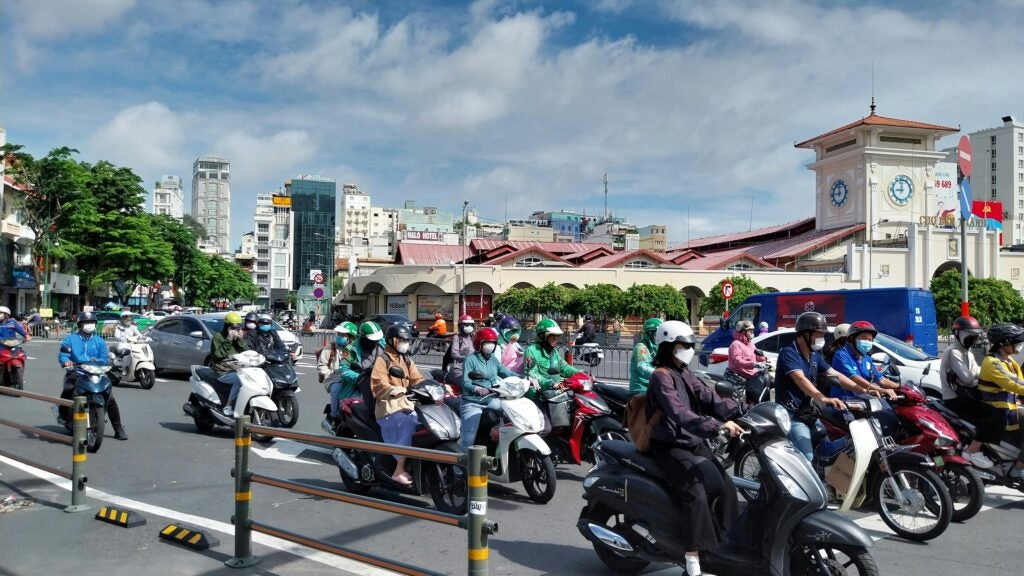
These cities differ in their road networks, transport systems and institutional capacity. But they also share an underlying reality: motorcyclists are disproportionately exposed to severe outcomes when speeds are too high.
And the benefits of safer speeds are not limited to people on motorcycles. Lower and more consistent speeds can make urban corridors safer for pedestrians and cyclists, public transport users and drivers. A Safe System approach recognizes that people will make mistakes, and the road environment should prevent those mistakes from becoming fatal or life changing.
The Intervention Is Not the Innovation
It would be easy to interpret Bogotá’s results as a case for speed humps alone. That would miss the bigger lesson. Parabolic speed humps were the tool Bogotá used to address its specific corridor conditions. Other cities may need different combinations of interventions: average-speed enforcement, raised intersections, safer road design, self-explaining streets or other Safe System measures.
The transferable lesson is that traffic calming can work on arterial roads, but only when corridor-level speed management is grounded in evidence. Cities should identify corridors where speed is contributing to serious crashes, deploy treatments that influence speeds consistently along those corridors, and then measure what happens to safety and mobility.
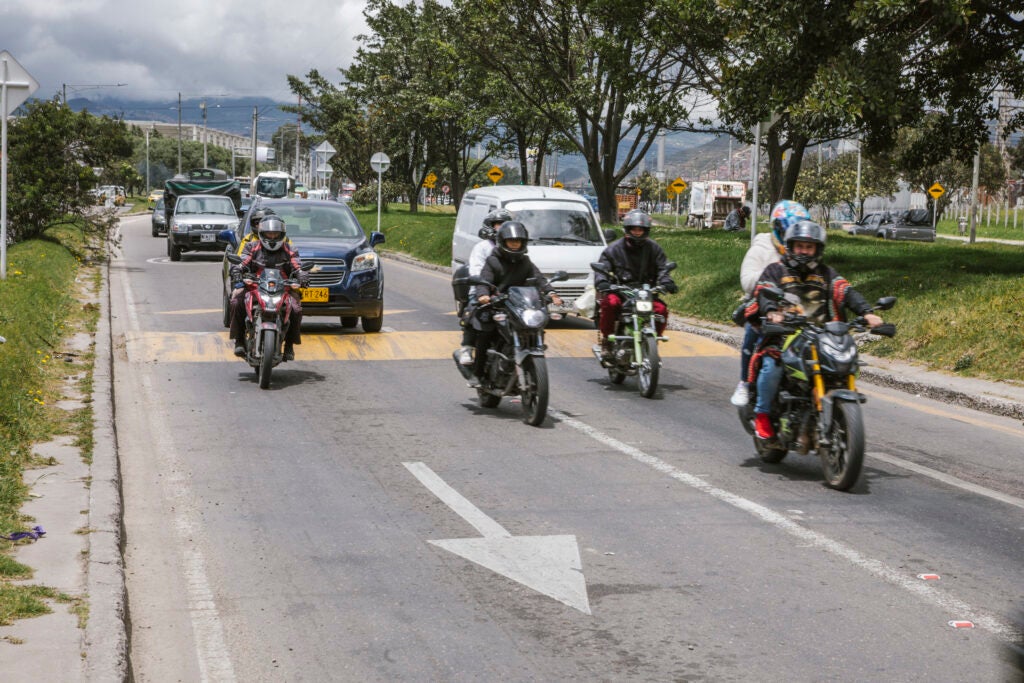
As motorcycle use continues to grow, cities need solutions that can be implemented at scale and that reduce death and serious injury without undermining mobility. Bogotá offers encouraging evidence that they can do both. Its experience shows that traffic calming can work on arterial roads when it is evidence-based, targeted to high-risk corridors, designed for arterial conditions and focused on managing free-flow speeds across an entire route rather than at isolated points.
Ultimately, Bogotá’s experience shows that the most critical innovation isn’t a single physical intervention, but a willingness to act on evidence, adapt and prioritize safety. We know that speed is a critical determinant of road safety; the challenge now is to translate that approach into practice and make safer arterial roads the standard, not the exception.
Segundo López is Research & Program Manager, Health & Road Safety, at WRI Ross Center for Sustainable Cities.