


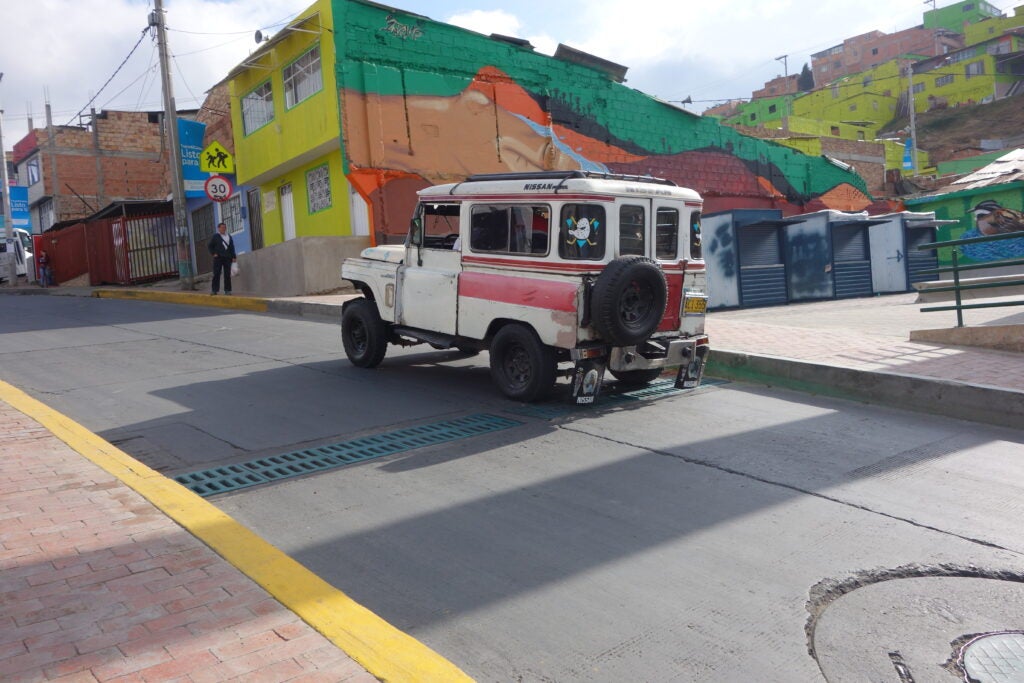
Before sunrise in Bogotá’s southern hills, the day’s first passengers are already on the move.
By 4 a.m., a fleet of aging SUVs, locally known as carritos, begin climbing the steep, unpaved streets of Ciudad Bolívar. They weave through neighborhoods where conventional buses cannot operate, carrying domestic workers, construction workers, students and older adults down to the cable car station that connects them to the rest of Bogotá. Riders typically pay about 25 to 70 U.S. cents and vehicles leave whenever passengers need them.
Officially, however, the service does not exist.
Across cities in Latin America, Africa and Asia, informal transport systems like these fill critical gaps left by formal public transportation. Yet they are often viewed as temporary solutions or a problem to eliminate, rather than mobility systems worth understanding. Through Bogotá Living Lab, researchers are asking a different question: What can cities learn by working with operators and the communities they serve, instead of planning around them?
Small Numbers, Essential Connections
On paper, informal transport looks marginal in Bogotá. Of the roughly 12.3 million trips made daily in the city, less than 1% use informal modes (collective cars, taxis and bicitaxis).
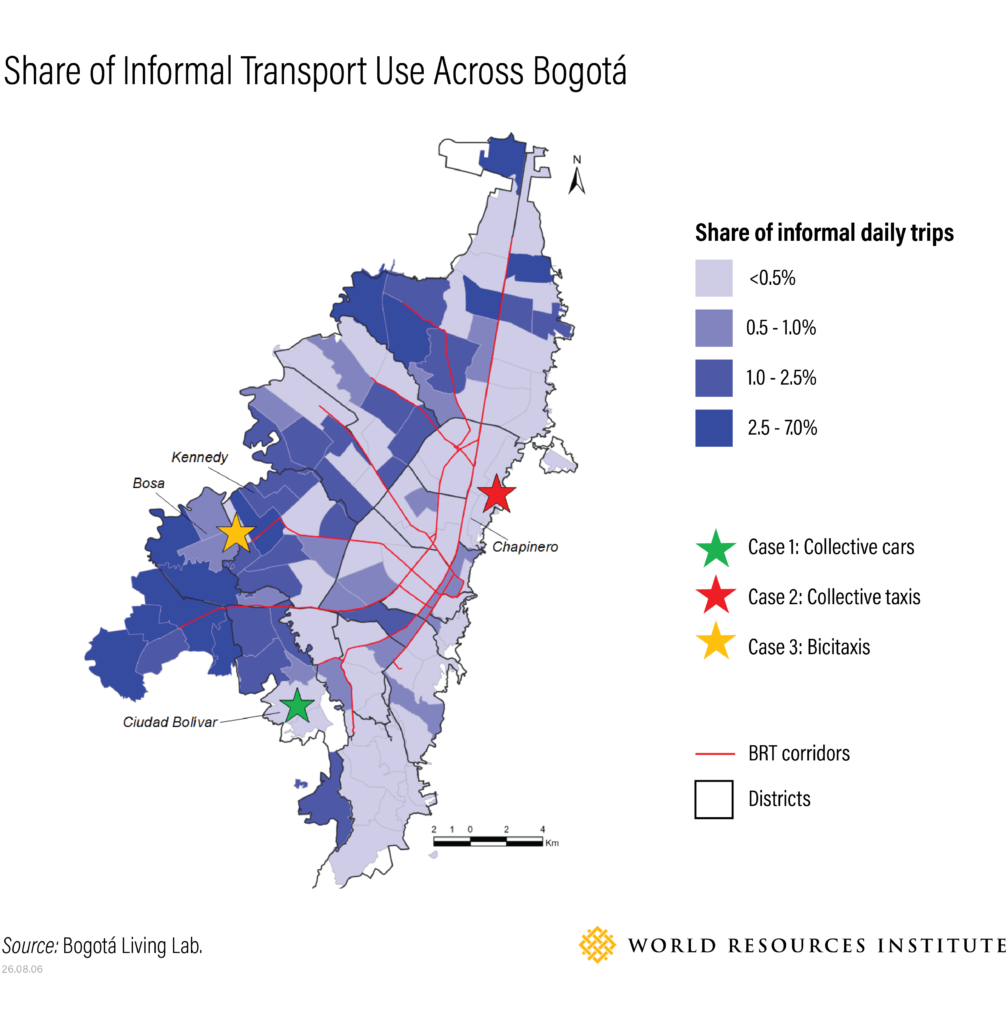
But citywide averages hide where these trips matter most.
In peripheral neighborhoods like Ciudad Bolívar — where the formal public transport system thins out, incomes are lower and commutes are among the city’s longest — these services provide essential access to jobs, schools, healthcare and public transportation. Far from just an alternative to the formal system, they make it accessible. For many residents, these services are the difference between getting to work on time and not getting there at all.
With support from Universidad de los Andes and University College London, Bogotá Living Lab studied three different informal transport services:
In Ciudad Bolívar, carritos are run by self-organized route owners who coordinate services across the territory’s expanding neighborhoods. In Pardo Rubio, collective taxis connect residents of a hillside neighborhood separated from Bogotá’s main job center by difficult topography and major road infrastructure. And across several parts of the city, three-wheeled bicitaxis — a semiformal service that has authorization to exist but almost no rules on how to operate — provide short trips while creating income for people the formal labor market has pushed aside, including older adults, people with disabilities and single mothers.
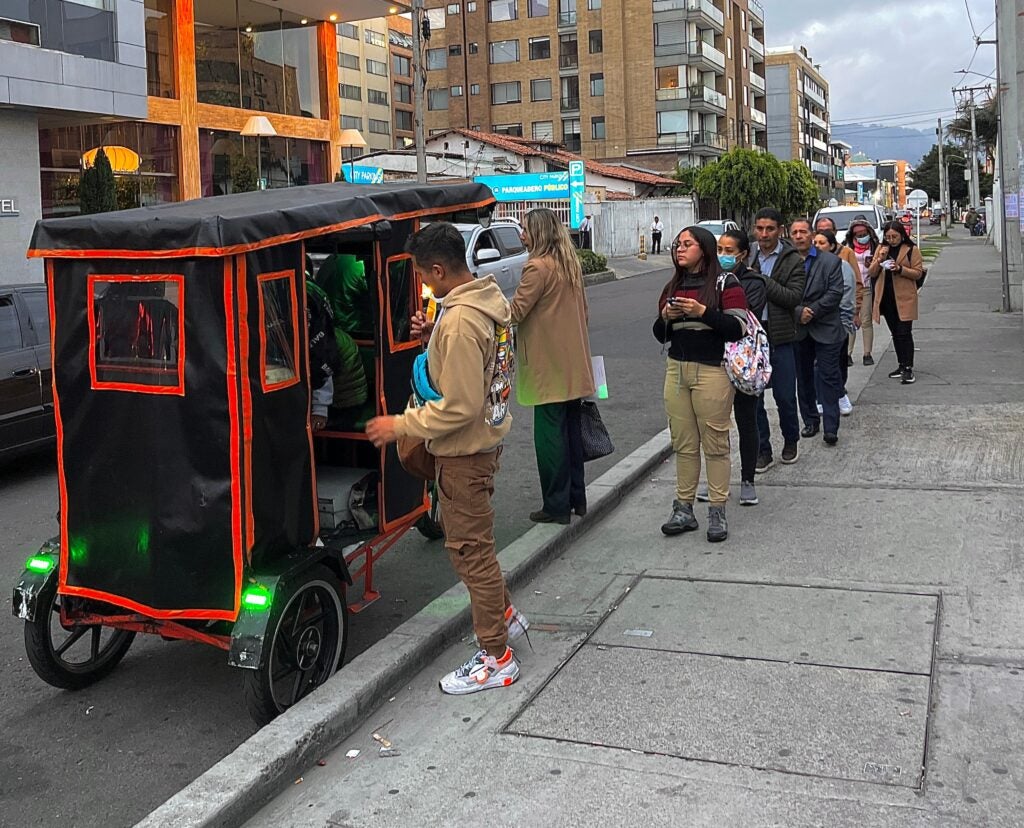
These services do more than move passengers. They carry groceries, deliver packages, take children to school and bring patients to clinics. Drivers coordinate routes through walkie-talkies and WhatsApp, while routes expand as fast as new self-built neighborhoods appear — often faster than any public transport agency could plan for.
Listening Before Planning
Instead of another diagnosis written from a distance, Bogotá Living Lab built something more unusual: a long-term platform where drivers, passengers, community leaders, researchers and city officials sit at the same table.
The living lab concept is a methodology focused on human-centered research and development, emphasizing the creation and validation of services, products or application innovations in multi-contextual, real-world settings. Unlike other human-centric approaches, living labs prioritize user involvement at the core of the co-design process. In this environment, users, developers and other stakeholders collaborate intensively to develop new solutions.
The first step was simply listening, carefully and on the communities’ terms. Through focus groups and participatory mapping workshops involving nearly 50 users and drivers across the three study areas, the team built a picture of how each system actually works including its internal hierarchies, fares, conflicts and codes of conduct.
What surfaced was more nuanced than the usual story.
In Ciudad Bolívar, many passengers praised the reliability, frequency and safety that carritos provide. Drivers and passengers are often neighbors who know each other, so women traveling alone at night often feel a higher sense of security.
In Pardo Rubio, however, riders described concerns about monopolistic practices, mistreatment of drivers and unsafe driving.
These differences illustrate why treating all informal transport as a single category can lead to ineffective policies. Labeling both as informal transport and applying one policy to them would miss the point entirely.
Recognition Matters
Despite their differences, participants across all three communities identified several shared priorities: road safety, conflicts within communities and, strikingly, recognition.
Drivers don’t necessarily want to stay in the shadows. As one Ciudad Bolívar driver put it, “it would be good at least to recognize us,” and to stop being labeled as illegal. In Ciudad Bolívar, they call their work “alternative transport,” in Pardo Rubio, “peripheral transport.” The vocabulary itself is a claim to legitimacy.
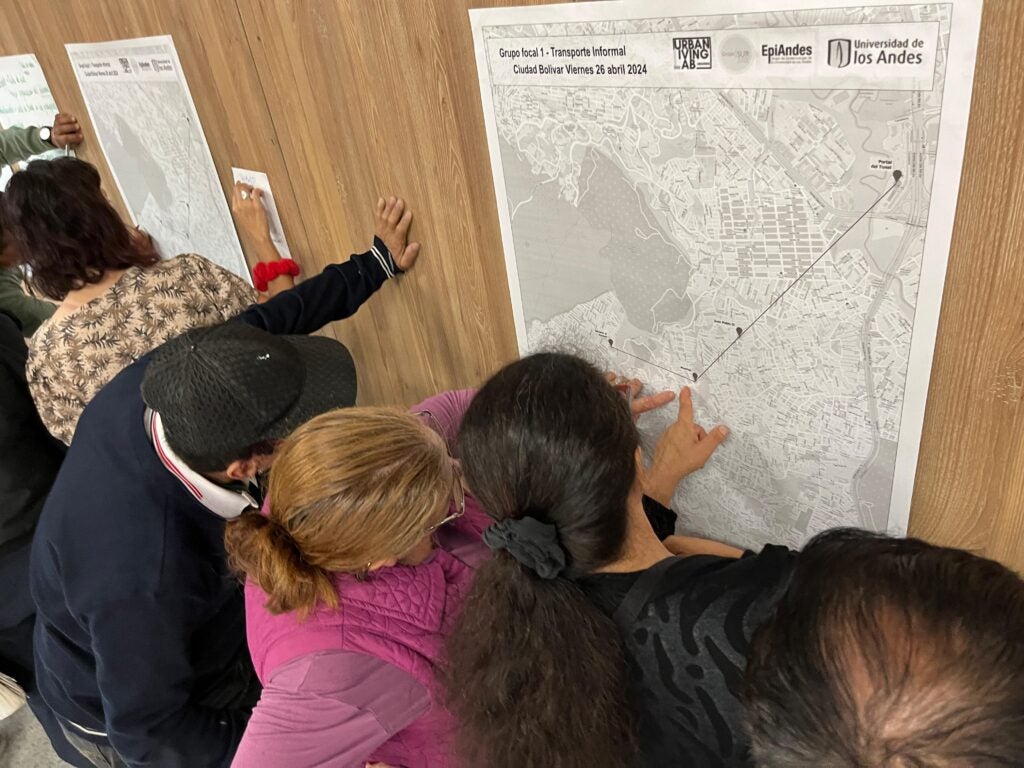
These conversations now inform the next phase of Bogotá Living Lab, where researchers, communities and public officials are co-designing and stress testing pilot interventions to address locally identified priorities.
Building Better Mobility Through Collaboration
For decades, transport reform in the Global South has followed the same script: formalize, replace or repress informal transport services. The results are mixed at best.
Bogotá itself integrated its public transport system years ago, yet informal services persist precisely where the formal network underdelivers.
The Bogotá Living Lab bets on a humbler premise: you cannot regulate what you refuse to understand, and you understand faster when operators and users are co-researchers rather than enforcement targets.
This work is part of the Partnership for Research on Informal and Shared Mobility (PRISM) network, which supports living labs in cities including Accra, Bangkok, Cape Town, Mumbai, New York and San José, Costa Rica. Together, these initiatives are building evidence on how informal and shared mobility systems operate, and how cities can engage with them more effectively.
We know that participatory processes can stall, and goodwill alone doesn’t build high-quality public transport systems. But after decades of planning for communities instead of with them, Bogotá Living Lab’s new research shows what can happen when residents help shape the understanding of how their neighborhoods move. Listening may not be the whole solution, but it may be one of the most important places to begin.
Interested in learning more about PRISM’s living labs or informal transport? Join us in Bangkok, Thailand, from October 26 to 28 for the 1st Global Convening on Informal & Shared Mobility. Co-hosted by Volvo Research and Educational Foundations (VREF), Chulalongkorn University Transportation Institute, PRISM, Columbia Climate School Center for Sustainable Urban Development (CSUD), WRI Ross Center and other partners, the convening will bring together researchers, operators and practitioners to build a more rigorous, interdisciplinary understanding of informal and shared mobility, with a particular focus on knowledge from and for the Global South.
Luis Angel Guzman Garcia is Associate Professor at Universidad de los Andes.
Daniel Oviedo is Associate Professor at University College London.
Juan Esteban Sanchez-Gomez is an Engineering Consultant for Universidad de los Andes.
Paula Guevera Aladino is Sustainable Mobility, Gender & Equity Consultant for the United Nations Environment Programme (UNEP).