


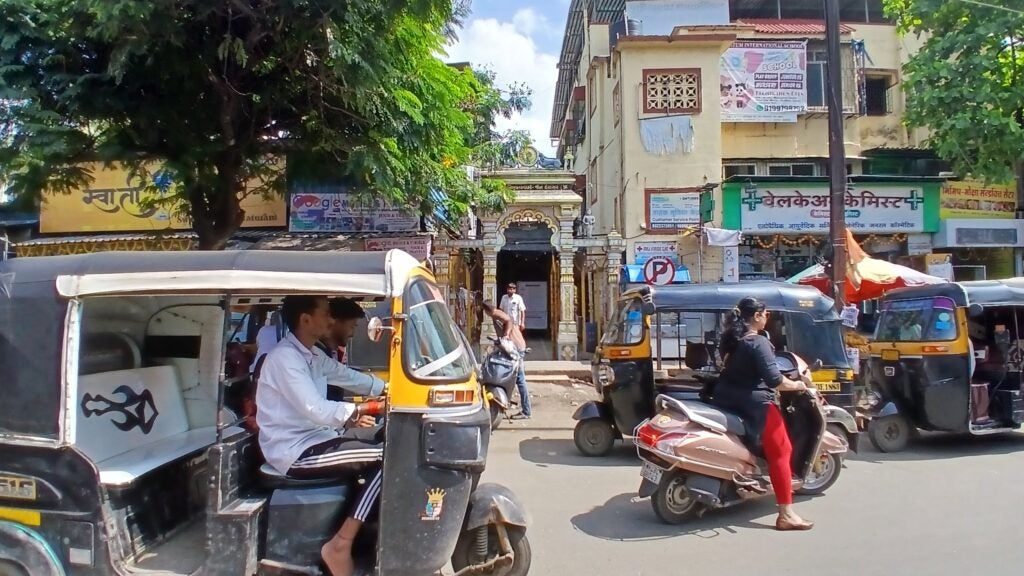
In the peripheral areas of Mumbai, the humble autorickshaw provides a vital link between homes, transit stations and essential urban services. For nearly 13 million residents, shared autorickshaws function as essential first- and last-mile connections, helping commuters navigate areas where formal transport options remain limited. Drivers often spend more than 12 hours a day on the road, becoming deeply embedded in the everyday rhythms and social fabric of the communities they serve.
“Many of our ministers and leaders started out as autorickshaw drivers,” an auto union leader told us. “This is not an accident. It’s because they have been on the ground, interacting with people and moving through their neighborhoods every day, that they understand the ground reality so well.”
Yet despite their importance, autorickshaws are rarely viewed as a transport mode worthy of support or integration into formal mobility systems. This contradiction forms the basis of the Mumbai Living Lab’s inquiry into Nalasopara’s shared autorickshaw system under the Partnership for Research on Informal and Shared Mobility (PRISM) network: Why is such a critical system of first- and last-mile connectivity still unrecognized in transport planning?
Nalasopara: A Rapidly Growing Peripheral Corridor
The Mumbai Living Lab, supported by the Society for the Promotion of Area Resource Centers (SPARC), is located in the peripheral suburb of Nalasopara. The area — one of the most impoverished and densely populated in the Mumbai Metropolitan region — attracts migrant populations due to its relatively affordable housing, existing immigrant networks and proximity to Mumbai’s urban core.
Here, a shared autorickshaw system has emerged as a dominant and necessary mode of mobility to fill the gaps left by formal public transport. The system helps residents manage daily travel expenses, as many commuters cannot afford single-ride fares, and serves as a critical first- and last-mile connection between home and public rail stations.
Common across urban peripheries, Nalasopara’s shared autorickshaw network operates in a semi-formal space. Routes have fixed origins and destinations, fares are standardized and service patterns are widely understood by commuters. At the same time, drivers retain the flexibility to respond to changing passenger demand through intermediate stops and route adjustments.
Fares are determined collectively through consultations involving the transport commissioner, traffic police, regional transport offices and auto unions. The result is a system that combines the unpredictable with responsiveness of informal mobility. Yet it continues to be excluded from official transport planning.
A Semi-Formal Mobility System Moving Thousands Every Day
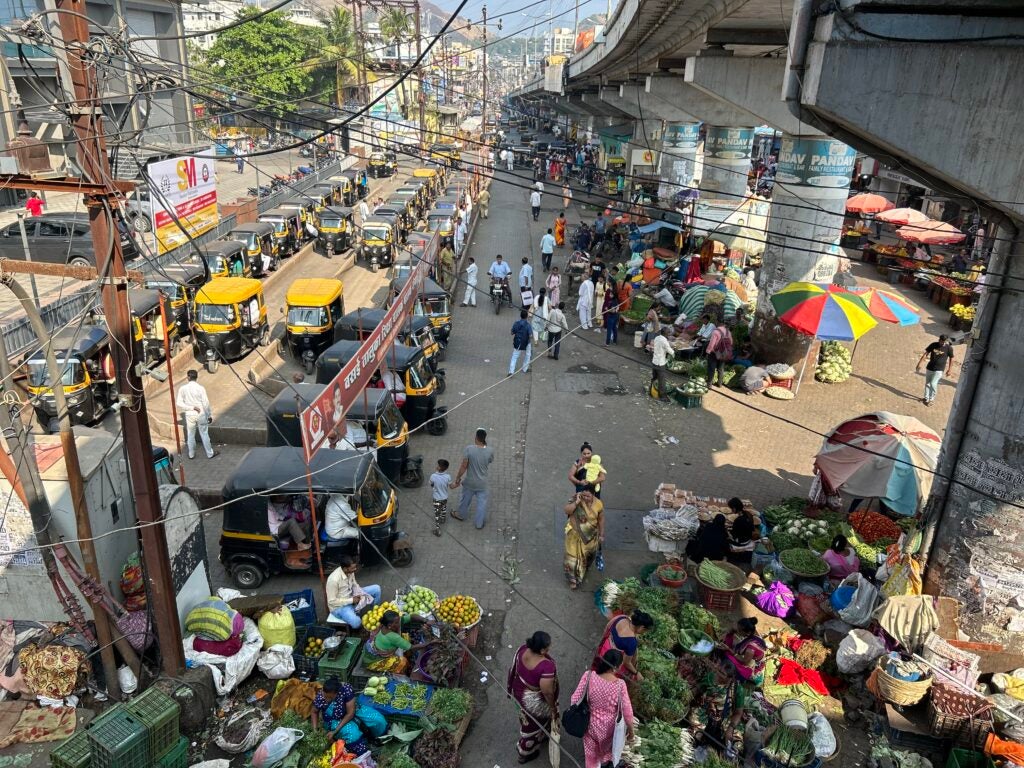
Nalasopara’s autorickshaw network connects residential areas, industrial zones and key amenities such as schools and hospitals, extending further east toward the highway and interstate transport connections. On average, one autorickshaw departs from the station precinct every ten seconds, indicating the intensity and scale of this mobility network.
These routes were formed by, and continue to operate through, a diverse range of local actors, including auto unions (which represent autorickshaw drivers), the regional transport office, transport commissioner and traffic police. Auto unions, specifically, play a key role in recognizing routes based on commuter demand and in determining fares that balance affordability for users with viability for drivers.
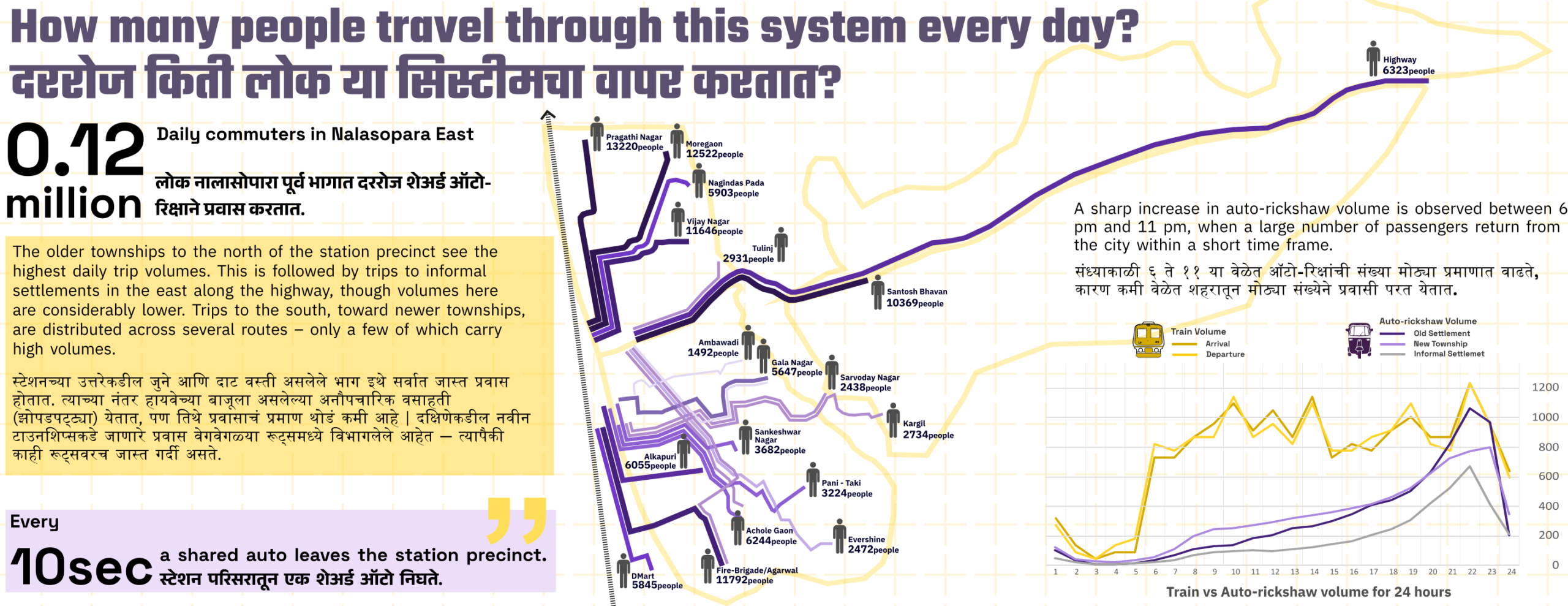
Our study, specifically focused on eastern Nalasopara, recorded approximately 18,000 trips per day, covering nearly 72,000 kilometers and serving over 120,000 passengers. This scale highlights both the reliability and the critical dependence on the system in the region.
Why Recognition Matters for Drivers and Communities
Home to one of the highest concentrations of informal settlements in the Mumbai Metropolitan Region, routes serving informal settlements across Nalasopara often generate high demand. But they also face infrastructural constraints such as narrow roads. The shared routes extending to the north and south of the station primarily serve older neighborhoods (gaothans), single housing blocks and planned townships, where connectivity is relatively stable and reliable. In contrast, the eastern corridor along the highway reveals a significant transport deficit. Our survey found that nearly 70% of informal settlements in Nalasopara East lack adequate first- and last-mile connections.
Many of these informal settlements are located off the main highway, with little to no transport penetrating interior areas. As a result, residents often walk 30–45 minutes just to reach their homes. While routes serving these areas generate high demand, drivers face infrastructural constraints such as narrow, poorly accessible roads. To manage this, they tend to operate along the main road rather than entering interior lanes, informally negotiating drop-off points. The commuters in these areas may be unable to pay the additional fares required to access interior locations, leading to gaps in service.
In addition, despite their effectiveness in meeting residents’ needs, Nalasopara’s autorickshaw drivers continue to be overlooked by local authorities and are often perceived as a nuisance because they operate in large numbers.
During an interview between Mumbai Living Lab researchers and a local autorickshaw driver, he recollected, “We [autorickshaw drivers] were here at the Nalasopara stand first. Our stand came even before they planned the bus stand. They planned the bus stand right next to us, creating congestion, and we are the ones being blamed. How is that right? Why didn’t they plan it keeping the auto stand in mind?”
This sentiment highlights a critical gap in planning: when existing mobility systems (informal, semi-formal or formal) are not considered, unsafe conditions can be created.
Lessons From Mumbai Living Lab
Shared autorickshaws remain undervalued not because they are invisible, but because of their operation in the grey area. They are partially formalized through a set of regulatory and compliance documents such as permits, licenses, badge numbers and pollution certificates. However, these forms of recognition remain limited to enforcement and regulation, without extending to inclusion in transport planning frameworks.
Through its research, Mumbai Living Lab is using Nalasopara as a lens to understand similar systems across other peripheral regions. By documenting how these networks function and the communities they serve, the Lab aims to build the case for greater recognition, integration and support.
Recently, we invited the public to engage with our work through “Transit Tales,” an exhibition held May 10–17, 2026, at Kamalnayan Bajaj Hall & Art Gallery in Mumbai. Through paintings, maps, architectural drawings, rap music and short documentaries, the exhibition explored the shared autorickshaw system and challenged perceptions of its role in the city’s mobility landscape.
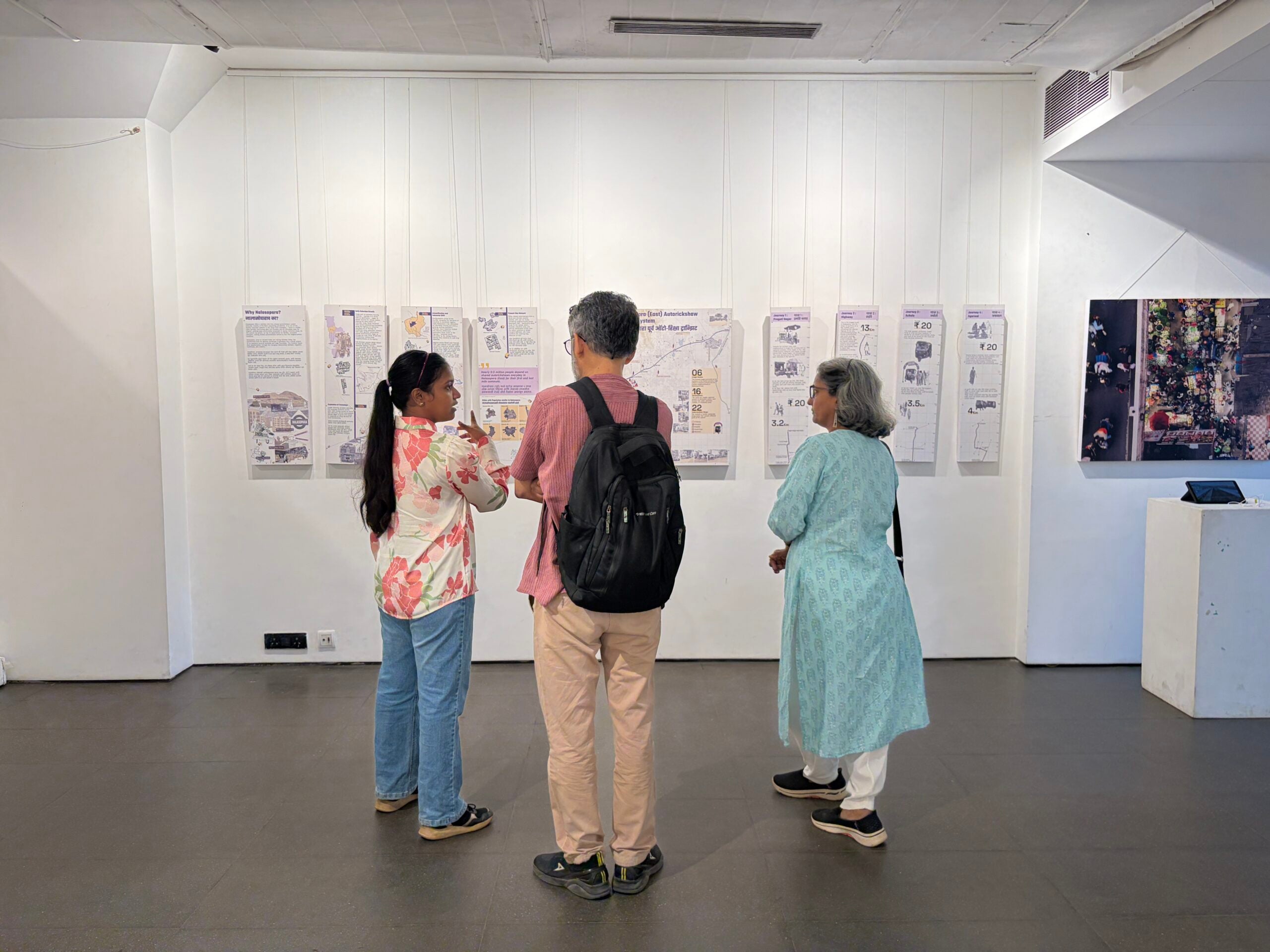
This fall, Transit Tales will travel to Bangkok, Thailand, as part of the 1st Global Convening on Informal & Shared Mobility. Co-hosted by Volvo Research and Educational Foundations (VREF), Chulalongkorn University Transportation Institute, PRISM, Columbia Climate School Center for Sustainable Urban Development (CSUD), WRI Ross Center and other partners, the convening will bring together researchers, operators and practitioners to build a more rigorous, interdisciplinary understanding of informal and shared mobility, with a particular focus on knowledge from and for the Global South. The exhibition will offer another opportunity to explore the stories, systems and people behind this often-overlooked form of urban mobility.
Alex Mohan Kandathil is Co-Principal Investigator for Mumbai Living Lab at SPARC.
Aneerudha Paul is Principal Investigator for Mumbai Living Lab at SPARC.
Shreya Baoni is Research Associate for Mumbai Living Lab at SPARC.
Kshitija Akre is Research Associate for Mumbai Living Lab at SPARC.
Darsheet Vora is Architect-Researcher for Mumbai Living Lab at SPARC.