


Posts tagged with 'fares'

Before sunrise in Bogotá’s southern hills, the day’s first passengers are already on the move. By 4 a.m., a fleet of aging SUVs, locally known as carritos, begin climbing the steep, unpaved streets of Ciudad Bolívar. They weave through neighborhoods ...

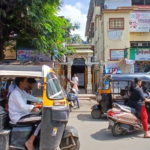
In the peripheral areas of Mumbai, the humble autorickshaw provides a vital link between homes, transit stations and essential urban services. For nearly 13 million residents, shared autorickshaws function as essential first- and last-mile connections, helping commuters navigate areas where ...

Last week, WRI Ross Center co-convened the 23rd edition of Transforming Transportation with our partners at the World Bank. Supported by FIA Foundation, the forum in Washington, DC, brought together more than 5,000 in-person and online participants, reflecting the event’s ...

2025 tested cities in ways both familiar and new. Urban areas faced intensifying heat, more frequent and severe climate-driven disasters, widening inequality, and political shifts shaping local and national agendas. Yet cities also emerged as centers of leadership and innovation, ...

Transforming Transportation 2025 is in the books. After a year of geopolitical turmoil and escalating climate impacts, the transport sector is seeing rapid change on multiple fronts. Across two days of events, leaders in government, business, academia and civil society ...

Public transit is not only a vital network connecting people to jobs, services and one another; it’s also an important climate solution. The world needs to double public transit capacity by 2030 as part of its larger roadmap to slash planet-warming emissions ...
Public transport is one of the best, most cost-effective solutions available to address today’s climate and development challenges. Buses and trains can reduce greenhouse gas (GHG) emissions by up to two-thirds per passenger, per kilometer compared to private vehicles. The UN’s latest ...
Imagine hailing a bus through a smartphone application in India for your daily commute from home to college or work. On-demand transportation leverages technology to connect a bus in the vicinity with a passenger looking to travel in the same ...
Chennai, India has long been notorious for its lawless auto-rickshaw drivers. On August 25, 2013, the Tamil Nadu state government sought to change this perception by reforming rickshaw fare structures for the first time in 17 years. The government was ...
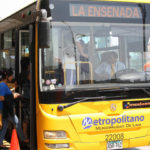
In a capital city with 8 million inhabitants, not only was Lima’s advanced bus system the first of its kind in the country, but it also provides valuable lessons for the rest of Latin America. Building on the Lima experience, ...
This blog post is a part of the catalyzing new mobility program and receives support from The Rockefeller Foundation. In a city as large as Mumbai—with a population of more than 12 million people—transportation can be a challenge. While residents have ...
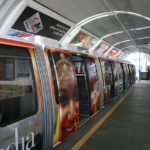
Sydney’s new infrastructure authority, Infrastructure New South Wales (Infrastructure NSW), is looking at a range of options to reduce peak hour congestion. At an industry conference on November 15, agency officials suggested providing free train fares between midnight and 7:00 ...
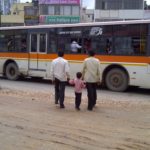
Umang Jain, a transport specialist with EMBARQ India, reflects on the creation of a public-private partnership for Jaipur City Bus Service. The Ministry of Urban Development in India sanctioned 400 buses for Jaipur at a cost of Rs 142 crore ...

Google Wallet, an app that transforms your phone into your wallet, is partnering with New Jersey Transit to bring the “tap-and-pay” option to customers. “NJ Transit is the first public transportation agency to partner with Google Wallet,” NJ.com explains, “allowing ...
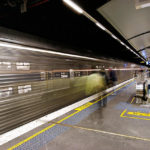
Last month, the State Minister for Transport announced that Sydney’s new integrated public transport ticketing system, the Opal Card, would begin operating in late 2012. (See here for a list of other names considered for the new contactless smartcard ticketing system. Ideas ...