


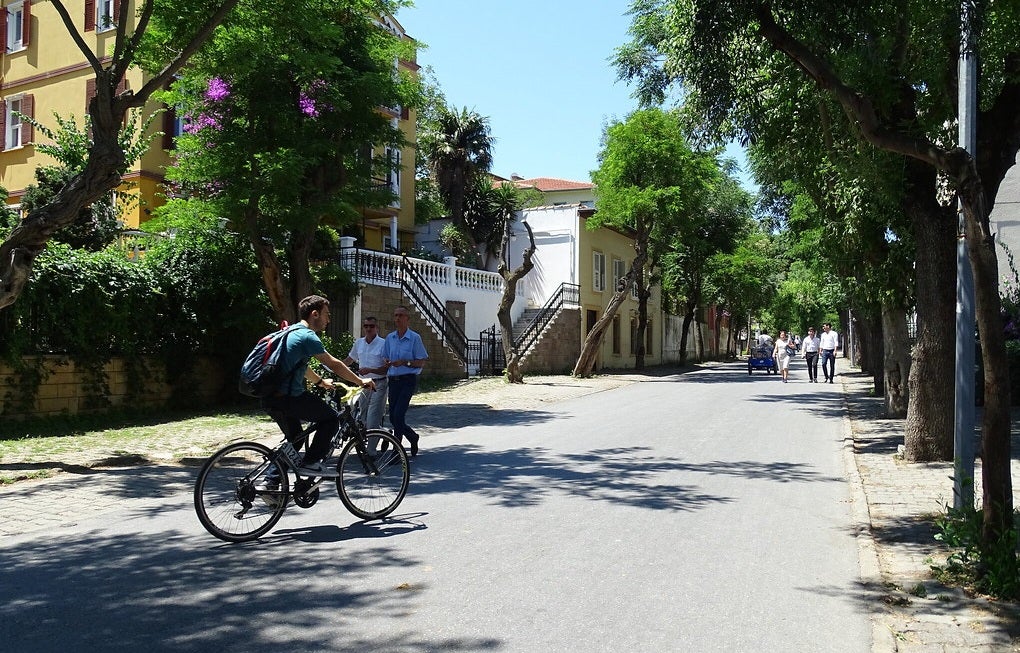
Cities are complex ecosystems shaped by countless interactions between infrastructure, ecology and human life. As evolving technologies, shifting social norms, climate change and political instability reshape the urban landscape, these systems face increasing pressure. Rapid urbanization, in particular, has made cities denser and more unequal than ever before — bringing urgent challenges in housing, health, mobility and access to basic urban services.
As the United Nations has noted, poverty, exclusion and environmental degradation remain persistent barriers to sustainable urban development worldwide. In response, the vision of equitable cities has gained momentum: cities designed to offer all residents — regardless of income, gender or background — fair access to housing, education, healthcare, green spaces and public services.
Within this broader call for justice, the concept of the 15-minute city has emerged as both a compelling narrative and a practical planning tool. Popularized by urbanist Carlos Moreno and embraced by cities like Paris and Melbourne, it imagines a place where daily life — work, school, food, leisure — is fully accessible within a short walk or bike ride from home. It is a shift away from car-centric, centralized models toward localized, human-scale living.
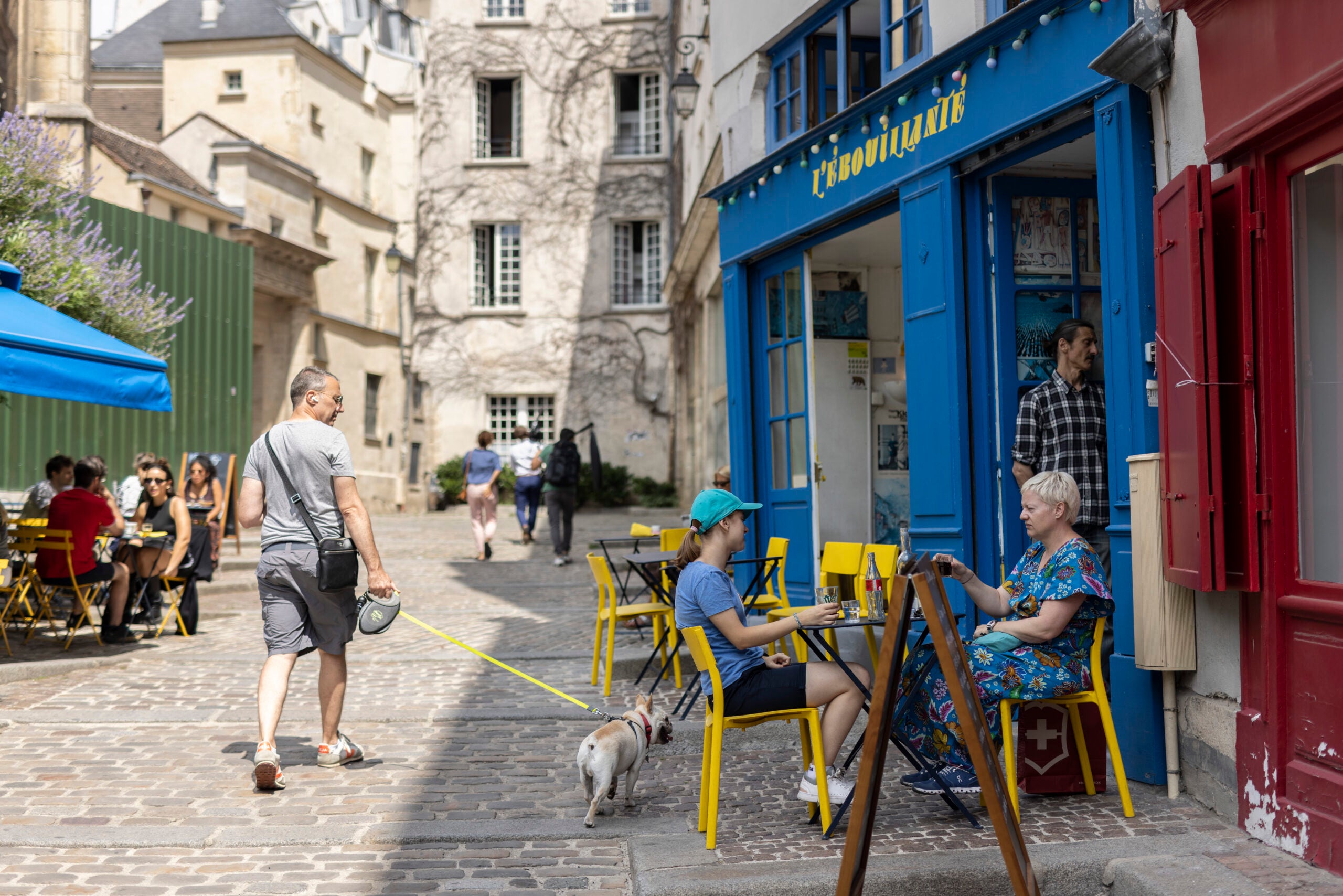
Yet every city interprets these ideas through its own realities. What works in Paris or Melbourne does not translate directly elsewhere; each context brings its own challenges and opportunities. This is particularly true for Istanbul, where scale, geography and inequality make the question of equitable access both more complex and more urgent.
Istanbul’s Urban Reality
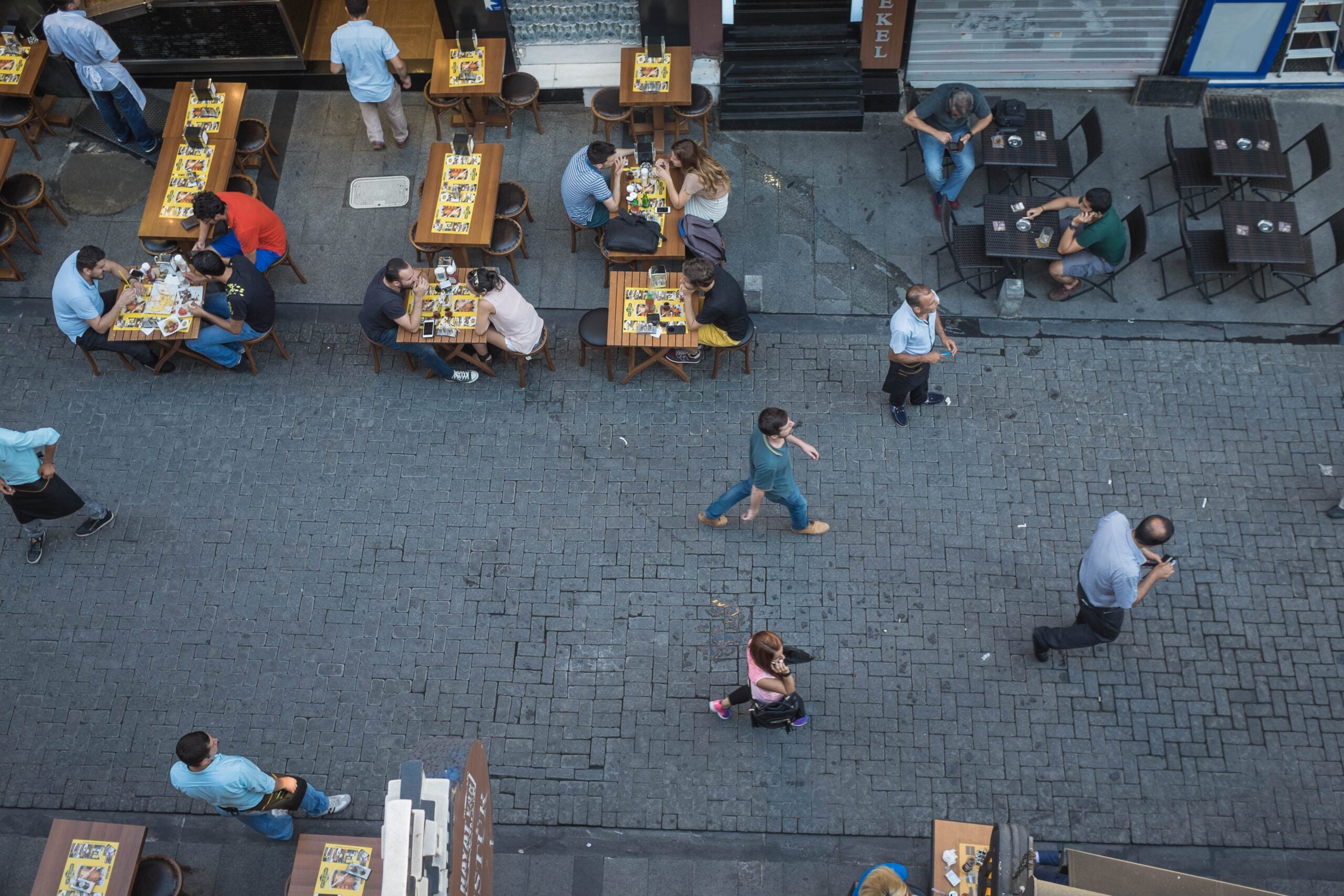
Istanbul is Turkey’s largest city — not by land area, but by population. With over 15 million residents and a metropolitan region stretching far beyond official boundaries, it is often described as a megacity in every sense. The city never slows down: streets are crowded day and night, intersections are clogged and moving through the city requires constant negotiation.
Istanbul ranks 13th among most congested cities in the world. Add to that an urban fabric marked by steep geography, fragmented development and outdated infrastructure, the idea of a 15-minute city can seem almost out of reach. Public spaces, sidewalks and green spaces — crucial components of walkable living — are often insufficient, poorly maintained or unevenly distributed across districts.
But is it fair to dismiss the model entirely just because Istanbul is large, dense and complex? Or are we overlooking something happening at a more local level — within neighborhoods themselves?
Looking Closer: Life at the Neighborhood Scale
Despite its chaos, Istanbul remains a city of local rhythms and strong neighborhood identities. In many areas, daily life already takes place on foot: bakers know your name, markets are just downstairs and children walk to school. These urban patterns might actually embody aspects of the 15-minute city, even if they have never been labeled as such.
Inspired by this idea, WRI Türkiye carried out a participatory mapping exercise as part of the EU-funded project, Stronger Civil Society for Equal Cities. During one of the workshops, civil society representatives drew their own “15-minute maps,” showing what they could reach on foot from their homes. Each person either mapped out or described the key places they can reach within a 15-minute walk, including:
- Grocery stores
- Cafes and restaurants
- Parks and recreational public spaces
- Schools and childcare centers
- Healthcare providers and pharmacies
- Cultural and religious centers
- Workplaces
These maps helped identify both strengths and gaps in accessibility across five neighborhoods in Istanbul.
These individual 15-minute maps show us how people use the city at a hyper-local level. Some reflect dense, walkable areas with vibrant life. Others reveal gaps, limitations or forced reliance on vehicles or transit.
Across all five cases, one finding stands out: the 15-minute city in Istanbul currently captures everyday services and social life far more than it does employment. Workplaces are rarely within walking distance, meaning that even in highly walkable areas, commuting remains a central challenge. This gap highlights the tension between the ideal of a self-contained neighborhood and the economic realities of a megacity where jobs are concentrated in specific hubs.
Istanbul’s 15-Minute Future
So, is the 15-minute city a myth for Istanbul? Not entirely. At the neighborhood level, many elements already exist, including compact urban services, strong local identities and walkable daily life. But gaps in infrastructure, accessibility and urban design, combined with the economic geography of the city, limit its reach.
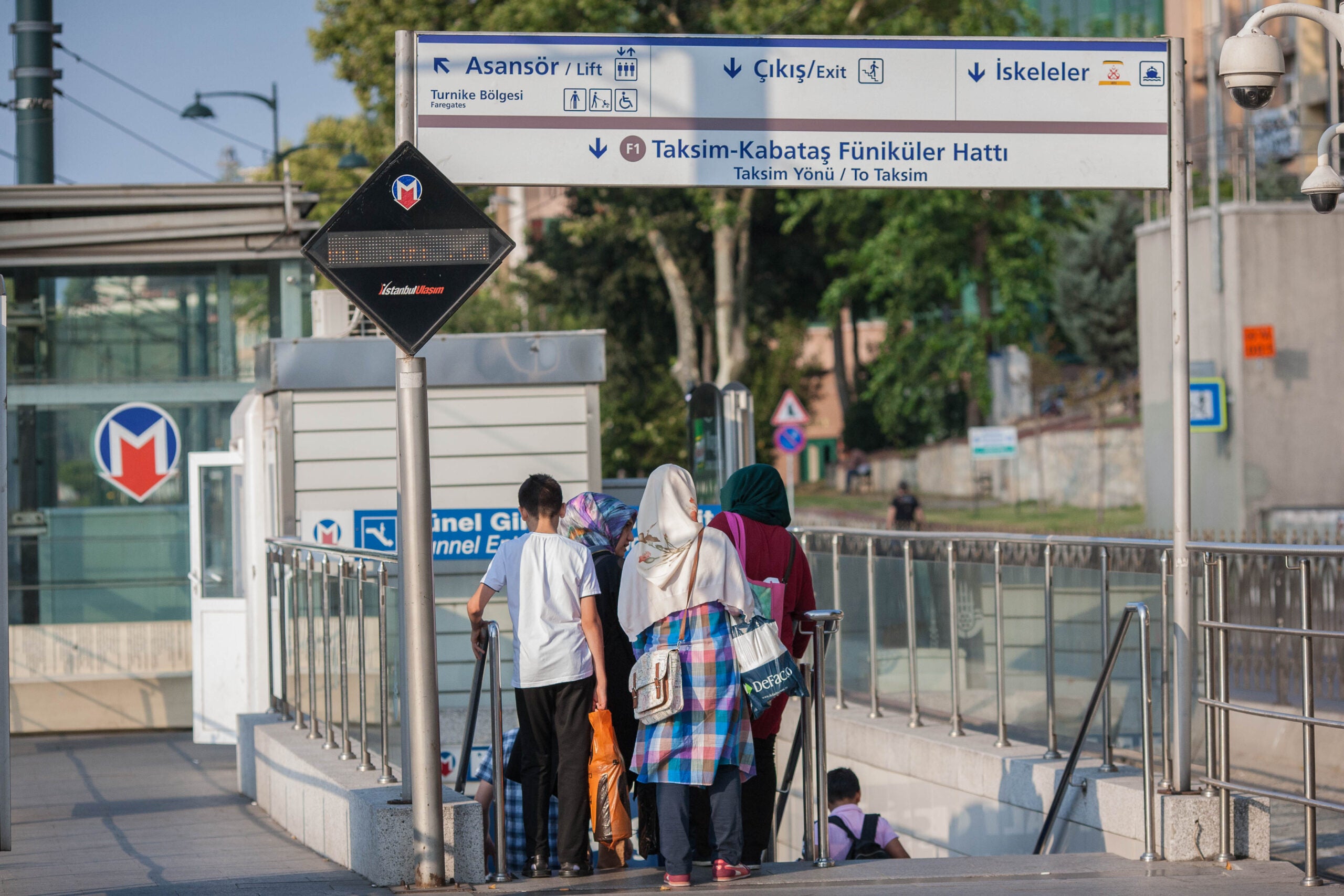
Istanbul shows us that the 15-minute city isn’t a single formula; instead, it’s a spectrum of possibilities: In compact urban neighborhoods, it’s about managing density so that accessibility comes with comfort and inclusivity. In urban peripheries and suburban areas, it’s about breaking the dependence on cars and building more mixed, walkable environments. And in special contexts like Büyükada, it’s about recognizing that livability can also come from the quality of movement, not just the minutes it takes to get somewhere. Istanbul, with all its layers, reminds us that the 15-minute city is less about a stopwatch and more about the experience of daily life.
The 15-minute city is not an urban myth — but neither is it a ready-made solution. It is a vision that requires adaptation, investment, and above all, recognition of the city’s neighborhood-scale strengths. In Istanbul, the foundation is already there; the challenge is to nurture it into a more equitable, accessible and livable urban future.
Çiğdem Cörek Öztaş is Senior Manager of Sustainable Urban Development at WRI Türkiye.