


Posts tagged with 'walkability'
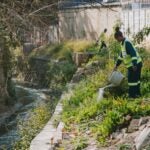
When torrential rains hit Kinshasa in April 2025, the city of 20 million came to a standstill. Floodwaters submerged more than half the city as the Ndjili River and smaller streams overflowed, quickly overwhelming the city’s drainage capacity. Lives were ...

Picture this: you wake up on a Sunday morning and hop on a bike with your family or a close friend. Within a few minutes you arrive at a coffee shop, order your drink of choice while listening to the ...
Cities are complex ecosystems shaped by countless interactions between infrastructure, ecology and human life. As evolving technologies, shifting social norms, climate change and political instability reshape the urban landscape, these systems face increasing pressure. Rapid urbanization, in particular, has made ...
It may seem like political divides around climate change are only deepening. Yet the world’s largest climate survey reveals a striking consensus: Eighty percent of people globally want their countries to take stronger climate action, and over half think about climate change ...

Imagine living in a country where everyone has access to clean, affordable public transportation to reach their jobs, schools and healthcare needs without relying on polluting fossil fuels. That vision isn’t too far from where India hopes to be by ...

Africa’s cities are both among the most rapidly growing in the world and the most underserved by transport infrastructure. The African Development Bank estimates an annual infrastructure investment gap of $100 billion even as Africa’s urban population is projected to double by ...
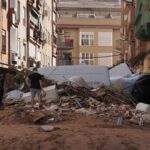
2024 has been a tumultuous year: More than half the world’s population went to the ballot box — some voting for radical change — extraordinary weather events have devastated communities and countries have been rocked by continued violent conflict. Given ...
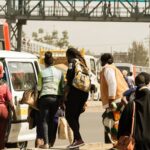
For a woman living in an African city, public transport can be a daunting experience. Women usually plan their trips in advance, and consider a multitude of factors before setting out: What is the safest way to reach the bus ...
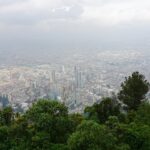
In Bogotá, Colombia, over 3,000 people die prematurely each year due to exposure to air pollution—namely from PM2.5, a fine particulate matter produced by vehicle exhaust, burning and industrial outputs. Bogotá is not alone: According to 2021 data, of 174 ...

In March 2023, the White House announced its federal budget, including funding for a groundbreaking initiative: the Active Transportation Infrastructure Investment Program (ATIIP). The program is unlike anything the U.S. has supported in the past as it will provide matching ...
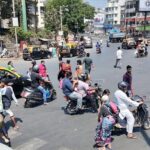
Most people in India walk – to work, to the market or to the railway station. According to the 2011 Indian census, 48% of people walk or cycle to work every day compared to the less than 3% of people ...

Electric vehicles may own the headlines, but our feet remain the most environmentally friendly means of travel, closely followed by bicycles, skateboards, scooters, tricycles and other active, non-motorized modes. Not only does zero-emission active mobility help protect the climate and ...
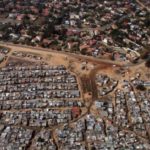
While most cities around the world struggle with inequality, in Johannesburg, South Africa, the challenge is compounded by the legacy of apartheid. In the apartheid era, black populations were relocated to the poorly serviced areas far away from job opportunities. ...

European cities by and large have a sterling reputation when it comes to walkability and public transportation. Recent data compiled by Ralph Buheler, John Pucher and Alan Altshuler in the International Journal of Sustainable Transportation show that between 1989 and ...

Unaffordability is a major problem in cities of all kinds. Many households spend far more on housing and transportation than is considered affordable, and many people who would like to live in magnet cities cannot due to these costs. Cities ...