


Search Results for 'feed'
Known for record-breaking skyscrapers, indoor ski slopes, and mega-shopping malls, the oil-rich UAE is not often the picture that immediately comes to mind on the topic of sustainable transport. But big things are happening in this small nation — from ...


When the lack of safety for women in transport makes headlines December’s brutal gang rape and assault with an iron bar that caused fatal internal injury to a 23-year-old student on a public bus in New Delhi has caused nationwide ...
Fifteen years ago, Latin America passed a tipping point on the road to becoming a global leader in advanced bus systems, proving that municipalities can inspire meaningful change through a combination of leadership, institutional support, and funding. Today, Latin America ...
With input from Umang Jain The Delhi Government introduced a new scheme to improve the operation of bus services where existing routes, 650 in total, were classified into ‘clusters’. This scheme envisaged concurrent operations of the Delhi Transport Corporation (DTC) ...

This post originally appeared on Bloomberg.com and WRIInsights. As we enter 2013, there are signs of growth and economic advancement around the world. The global middle class is booming. More people are moving into cities. And the quality of life for millions ...
This piece was originally published on India Together. It would be difficult to identify a more maligned aspect of the public transport experience than the transfer. Particularly with bus services, having to transfer between one bus to the next ...
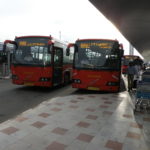
Last week, EMBARQ India was named joint winner of the Volvo Sustainable Mobility Award 2012, for its project with the Bangalore Metropolitan Transport Corporation (BMTC) on improving bus transport along the Hosur Road corridor in the city. To counter ...
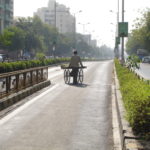
Bus Rapid Transit (BRT) systems have emerged as a cost-effective, flexible, and environmentally sustainable form of public transportation, and have come a long way since the world’s first system was developed in Curitiba, Brazil, and subsequently in other cities across ...

India is rapidly urbanizing. From 1991 to 2011, the urban population in India has increased from 100 million to 200 million. By 2041, 50-percent of India’s population is expected to live in cities. On average, the population of India’s six ...
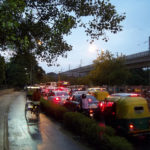
Over the last few years, the city of Delhi has seen a 20-percent decline in the use of public transport. Non-motorized transport, including cycling, makes up for 33-percent of all trips taken in the Capital. To counter the declining use ...

In India, the Gujarat High Court has ordered the state government to convert all public and private vehicles registered in the state to compressed natural gas (CNG) within one year. From the court’s order: “State is directed to pass necessary ...

Our monthly China Transportation Briefing shares interesting news and noteworthy research related to China’s transportation and urban development. The goal is to help people who are interested in solving China’s urbanization and transportation problems understand relevant Chinese policies and trends. Each issue ...

This blog post is a part of the catalyzing new mobility program and receives support from The Rockefeller Foundation. In a city as large as Mumbai—with a population of more than 12 million people—transportation can be a challenge. While residents have ...
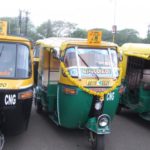
One week ago, with assistance from EMBARQ India, the city of Rajkot, in partnership with Nirmal Foundation, launched the G-Auto service, debuting a new fleet of auto-rickshaws, featuring a unified brand and dial-a-rixa (call-in) service, on July 13. The initial fleet includes 50 ...
Welcome back to TheCityFix Picks, our series highlighting the newsy and noteworthy of the past week. Each Friday, we’ll run down the headlines falling under TheCityFix’s five themes: integrated transport, urban development and accessibility, air quality and climate change, health ...