


Search Results for 'feed'
Talk to any data expert, and you’ll probably hear about how data is revolutionizing urban transport. Without access to travel information, people are left in the dark when it comes to planning their day—a major inefficiency for any city. For ...

People with access to real-time transit information have been shown to spend 15 percent less time waiting at bus stops than people without this information. Additionally, a study of Chicago’s bus routes found that access to real-time transit information increased ...
On January 11, 2016 the BRT Center of Excellence launched a new book called “Restructuring Public Transport through Bus Rapid Transit.” The new resource provides researchers, students and decision makers an overview of how cities can effectively implement BRT in a variety ...
In his inaugural address on January 1, 2016, Mayor of Bogota Enrique Peñalosa outlined some ambitious goals. In line with the achievements of his first administration, Peñalosa declared his vision to make Bogota a world leader in sustainable mobility with the “best public transport ...

Transforming Transportation (#TTDC16) is the annual conference co-organized by EMBARQ, the sustainable urban transport initiative of the World Resources Institute’s (WRI) WRI Ross Center for Sustainable Cities, and the World Bank. This year’s conference is themed Sustainable Transport: From the ...

Residents of Singapore will soon be able to easily walk and bike across the entire country—thanks to its new “high line” project. Taking inspiration from New York City’s High Line, Singapore has announced plans to transform the former Keretapi Tanah ...
Dr. Eugenie Birch, eminent urban planner and author, is the Co-Director of the Penn Institute for Urban Research and Lawrence C. Nussdorf Professor of Urban Research at the University of Pennsylvania. A long member of city planning organizations and academia, ...
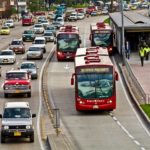
The official inauguration of the TransMilenio bus rapid transit (BRT) system took place 15 years ago today, on December 4th of 2000; the event was a milestone for public transportation in Bogotá, Colombia, and changed the way the world thought ...

In Central Asia, cities have traditionally had parks and tree-lined streets to provide shade and attract pedestrians. Recently, however, pedestrian space has been sacrificed for more roads to accommodate the increase in private vehicles. Further, with cities prioritizing cars more ...

The future of global development will overwhelmingly play out on the city stage. Recognizing this, the global development agenda has begun to identify cities as engines for improving human well-being, addressing climate change, and transitioning to more sustainable growth. Indeed, ...
Wondering if it would be faster to bike, take the bus or metro to work? A simple search on Google Maps or your preferred transit app can give you this information almost instantly, thanks to transit agencies that provide their ...
How do we make cities work for people? As a WRI Helms Fellow on Urban Governance and Sustainable Cities, Maria Antonia Tigre was tasked with answering this question. Through From ideas to implementation: creating sustainable cities with good governance here ...
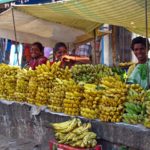
Today (October 16) marks World Food Day, when communities across the world take a stand against hunger and food insecurity. Hunger is a particularly important issue in cities, since poor households in urban areas spend anywhere from 60 to 80 ...
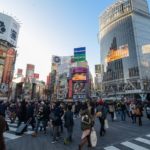
When the March 11, 2011 earthquake in Japan caused a series of energy shortages throughout the country, the national government recommended that office buildings cut back on air conditioning during the summer months in order to reduce power usage. Through ...

India is undergoing rapid urbanization: within fifteen years, about 600 million Indians will live in urban areas. Given that cities practically run on water, India must find a way to route clean, reliable water supplies to its citizens, helping meet their needs for ...