


Posts tagged with 'motorcycles'
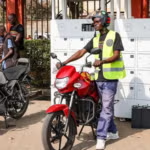
Urbanization and rising transport demand are putting real strain on Kenya’s transport systems. Road transport already accounts for about 13% of the country’s greenhouse gas emissions, and this share is projected to rise to around 17% by 2030 as the population and ...

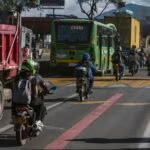
Motorcycles are transforming urban transport around the world. In many cities, they already account for a significant share of daily trips; in others, motorcycle use is growing rapidly. While motorcycles improve access to jobs, education and economic opportunity, they also ...
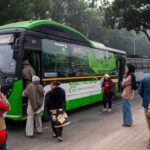
At 5 a.m., an electric bus glides out of its depot after charging overnight, ready to carry children to school without spewing diesel fumes. As the city stirs, heat pumps have already brought homes and offices to a comfortable temperature, ...

Last week, WRI Ross Center co-convened the 23rd edition of Transforming Transportation with our partners at the World Bank. Supported by FIA Foundation, the forum in Washington, DC, brought together more than 5,000 in-person and online participants, reflecting the event’s ...

The electric vehicle (EV) market is showing steady growth in many parts of the world. In 2023, nearly one in five cars sold worldwide was electric, with China, Europe and the United States accounting for 95% of those sales. In ...

Transforming Transportation 2025 is in the books. After a year of geopolitical turmoil and escalating climate impacts, the transport sector is seeing rapid change on multiple fronts. Across two days of events, leaders in government, business, academia and civil society ...

Moving around cities in a variety of ways is getting easier and more convenient: whether it’s improved public transportation systems, wider sidewalks or more dedicated bike lanes. With the rise of smartphone technology and GPS, shared mobility services — like ...
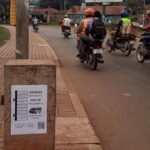
Do informal transport networks in African cities provide equitable services for everyone that needs them? Unsurprisingly, the answer is often no. Operators frequently prefer to drive the safest and most central routes, inadvertently prioritizing commuters traveling to formal jobs in ...
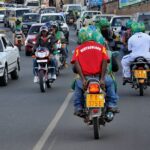
Like many parts of Africa, motorcycles are the most popular form of transportation among Rwanda’s 13.3 million people. Whether they’re commuting to work or school, transporting jugs of water from the local taps or just running everyday errands, people on ...

Urban development in many cities around the world prioritizes making space for cars over pedestrians, cyclists or public transportation. In Brazil, this design led to an average of more than 30,000 annual road crash fatalities nationwide by the turn of the century, ...

Like many cities, Nairobi greets visitors with the sight of densely packed buildings, the scent of roasting food and the sound of honking horns, mostly from motorcycles weaving through traffic. While these popular motorcycles provide an affordable and fast form ...

To cut transport emissions, moving vehicles away from burning fossil fuels is a fundamental step. However, the e-mobility transition is not only an opportunity to reduce emissions but to modernize mobility across the board, from expanding access to public transport ...
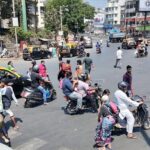
Most people in India walk – to work, to the market or to the railway station. According to the 2011 Indian census, 48% of people walk or cycle to work every day compared to the less than 3% of people ...
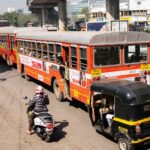
The momentum towards low-carbon and sustainable transport is growing globally, but the sector still lags behind many others and each country faces a unique path to travel. Political landscapes, regulations, industry interests, market set-ups, financial resources and social considerations all ...
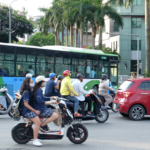
This is the third installment in a series of articles documenting lessons learned across NDC-TIA country activities, to be published throughout 2022. In Vietnam, a country home to 97 million inhabitants, there are 65 million registered motorcycles and mopeds,1.5 million ...