


Posts tagged with 'urban services'

Sprawl is a known and widespread challenge for rapidly growing cities across the world. Unplanned, inefficient development encroaches on natural resources and ecosystems, often reaching far beyond established transit networks. Residents of sprawling urban areas often face socioeconomic vulnerabilities and ...


What does it take for cities to create a true systems change that creates a holistic, positive shift of the entire urban system? Finding and celebrating examples of this feat is at the heart of the WRI Ross Center Prize for Cities. Since ...

Cities are at the forefront of climate impacts, and city governments are key actors in unlocking action to build urban resilience and reduce greenhouse gas emissions. In recent years, the number of cities and regions committing to climate action and ...

Moldova’s capital city, Chișinău, recently secured a €20 million investment to tackle flooding and pollution of the Bîc River, aiming to transform it into a valuable recreational amenity for 100,000 residents and mitigate future flood risks. This funding, which combines loans from ...
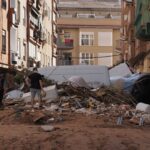
2024 has been a tumultuous year: More than half the world’s population went to the ballot box — some voting for radical change — extraordinary weather events have devastated communities and countries have been rocked by continued violent conflict. Given ...
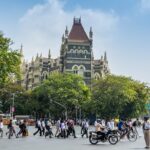
The Brihanmumbai Municipal Corporation (BMC) recently launched Mumbai’s first-ever climate budget, making it the first city in India and the fourth in the world (after Oslo, New York and London) to launch a climate budget. While Mumbai works to expand and institutionalize their ...
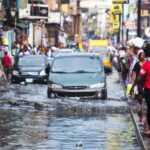
In a time of polycrises – from economic and political instability to health and environmental emergencies – water is a resource that cannot be relegated to the background. Especially in urban environments, water demand is ever-increasing and in too many ...
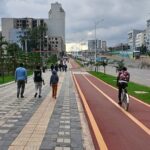
Cities are not just places where people live—they are interconnected networks of people, services and economic activity. A city is a system of systems, bringing together transportation, energy, buildings, water, waste management and more. Transforming these interconnected systems is vital ...
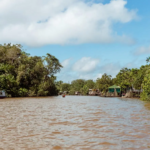
Departing from the Amazonian city of Belém, Brazil, in a speedboat, it takes around 10 minutes to reach the shores of Combu Island. As the skyline fades into the distance, the lush, green environment of the island comes into view ...
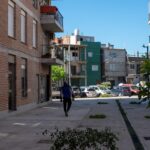
The built environment is not on track globally to achieve its sectoral climate targets. Accounting for over a third of total energy system emissions already, the continued use of carbon-intensive materials paired with inefficient energy use throughout the built environment ...
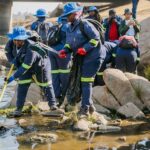
Alexandra Township is a 20-square-block enclave in the heart of Johannesburg, South Africa’s northern suburbs. Established in 1902, the township was built to house 750,000 residents. Today, it is home to more than 1.2 million. Despite efforts to increase waste ...
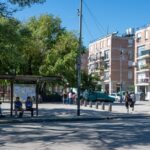
On the eastern edge of Buenos Aires, residents of the Rodrigo Bueno neighborhood take a break from pick-up soccer games and stretch out on grassy knolls. Further down the road, a kitchen buzzes with locals testing new recipes to feature ...

“Hum faltu hai [in English, “We are useless”] …I don’t even know what the budget of the council is. Nobody tells me about the procurement process [or] the number of tenders that have gone public…I don’t have enough knowledge about ...
In the crowded slums of Zambia, Africa, members of the Zambia Youth Federation, a social movement of the urban poor, conducted climate change research and presented it in an emotional spoken word poem. Their message let policymakers know how climate ...
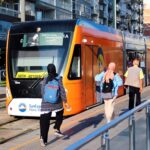
Public transport is one of the best, most cost-effective solutions available to address today’s climate and development challenges. Buses and trains can reduce greenhouse gas (GHG) emissions by up to two-thirds per passenger, per kilometer compared to private vehicles. The UN’s latest ...