


Posts tagged with 'land use'

Data centers are poised to consume land, water and power across the United States at an unprecedented rate. Driven by artificial intelligence, cloud computing and supportive government policies, U.S. data centers’ power capacity could reach 194 gigawatts (GW) by 2035, ...


Urbanization and rising transport demand are putting real strain on Kenya’s transport systems. Road transport already accounts for about 13% of the country’s greenhouse gas emissions, and this share is projected to rise to around 17% by 2030 as the population and ...

Recent federal policy decisions combined with rising energy demand are contributing to an immediate set of challenges for Americans: volatile electricity prices and growing concerns about affordability and reliability. In this moment of uncertainty, local governments remain some of the ...
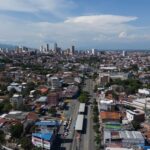
Climate change is severely affecting cities worldwide. But before measures to reduce climate risks and emissions can be implemented, a great deal must first happen inside city governments. This includes coordinating across departments, planning, financing and aligning priorities. In Colombia, these ...

As the federal government advances rollbacks of more than 100 environmental and climate policies and resources, it is redefining the U.S. government’s role in protecting communities disproportionately impacted by pollution — and diminishing opportunities for communities to make decisions that impact their ...

Cities have always been shaped by the infrastructure they choose to host. Railways defined the industrial city. Highways reorganized post-war suburbs. Metro systems and airports rewired the geography of globalized urban economies. Today, another form of infrastructure is expanding rapidly ...

Picture this: you wake up on a Sunday morning and hop on a bike with your family or a close friend. Within a few minutes you arrive at a coffee shop, order your drink of choice while listening to the ...

Last week, WRI Ross Center co-convened the 23rd edition of Transforming Transportation with our partners at the World Bank. Supported by FIA Foundation, the forum in Washington, DC, brought together more than 5,000 in-person and online participants, reflecting the event’s ...

Early on a weekday morning in Atlanta, a familiar choreography unfolds along a landscaped path: High school students stream north to class; middle schoolers head south, backpacks bouncing as they bike; electric scooters zip past joggers and dog walkers, while ...

Twenty years ago, the forested slopes above Alpine Acres — a small community at the source of the Weber River in Summit County, Utah — were overgrown with dry brush and primed for wildfire. With only one road in and ...

AI tools like ChatGPT, navigation apps and streaming platforms feel effortless, drawing information seemingly from thin air. Yet the infrastructure behind them is anything but invisible. Across the country, a surge of new data centers is reshaping local energy grids, ...

We are in the midst of a great economic shift — one that will shape livelihoods and growth for decades to come. The rise of AI and digitalization, geopolitical changes, uneven population growth, and the urgent need to cut emissions ...

On most mornings, Cati Ochoa walks the green corridor along the Zamora River near her home in Loja, Ecuador, before starting work. The moment she steps beneath the trees, she feels her shoulders drop. “Green areas give us peace,” she said. ...

2025 tested cities in ways both familiar and new. Urban areas faced intensifying heat, more frequent and severe climate-driven disasters, widening inequality, and political shifts shaping local and national agendas. Yet cities also emerged as centers of leadership and innovation, ...

Which neighborhoods are suffering the most from rising urban heat? Where is flooding the biggest challenge? What other cities around the world are struggling with air pollution, and what can we learn from those that have improved the quality of ...