


Posts tagged with 'Johannesburg'
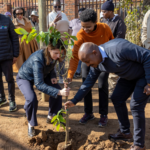
Soweto, Johannesburg’s largest township, faces dual climate threats from flooding and extreme heat. These threats are compounded by the township’s soaring unemployment and an economy dominated by low-value and informal sectors. As a result, many residents have unpredictable livelihoods and ...

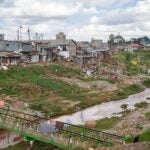
When torrential rains hit Kinshasa in April 2025, the city of 20 million came to a standstill. Floodwaters submerged more than half the city as the Ndjili River and smaller streams overflowed, quickly overwhelming the city’s drainage capacity. Lives were ...
The thirteenth session of the World Urban Forum (WUF13) convenes this month in Baku amid converging geopolitical and economic shocks: conflict-driven energy spikes, rising debt burdens and persistent inflation. Around the world, these shocks are squeezing public budgets and household incomes alike. ...
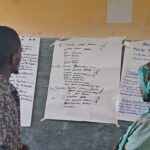
Challenging Discriminatory Cultural Norms to Build Fair, Resilient Communities in Sub-Saharan Africa
Social norms and gender biases are widely recognized as major barriers to the social and economic empowerment of women, people with disabilities and other underrepresented groups, including limiting their participation in governance and decision-making. For instance, in many parts of the world, domestic and caregiving ...
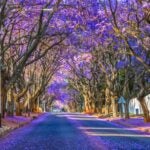
Every spring, Johannesburg’s streets are transformed by a sea of purple as thousands of jacaranda trees burst into bloom. The lavender canopy is a defining feature of the city, as well as of nearby Pretoria. But few know this ...

In September 2023, a 6.8 magnitude earthquake struck Morocco, killing over 3,000 people and devastating communities and infrastructure across Greater Marrakech. The Marrakech Medina, a United Nations Educational, Scientific and Cultural Organization (UNESCO) World Heritage Site, was hit particularly hard. ...

With about 464 millimeters of rainfall per year — less than half the global average — South Africa is one of the driest countries in the world. Its semi-arid climate, uneven rainfall distribution and persistent droughts leave the country facing chronic water ...

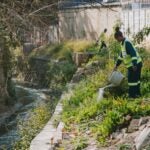
In Gauteng Province, the Jukskei River winds its way through the heart of Johannesburg’s inner-city neighborhoods, informal settlements and suburban areas, eventually joining the Crocodile and Limpopo rivers before emptying into the Indian Ocean. One of the biggest waterways in ...

South Africa’s cities face growing threats to their water resources, especially rivers, as rapid development and climate change undermine the health of water systems and the ecosystem services they provide. Urban areas are particularly vulnerable to serious flood risks during ...

Nearly a decade ago, the world rallied around the Paris Agreement on climate change and the goal of holding global temperature rise to 1.5 degrees C (2.7 degrees F). Since then, the “1.5C goal” has become the world’s North Star ...

Despite accounting for less than 3% of global terrestrial area, cities have had an outsized impact on our approach to planetary boundaries, affecting biodiversity and consumption of materials and energy. Studies show that cities have become responsible for 78% of carbon emissions, ...

Africa’s cities, from large metropolises to smaller towns, are increasingly characterized by growing urban sprawl. Kinshasa, Democratic Republic of Congo, is expanding by about 2,000 people and 5 hectares (10 football fields) every day, according to a World Bank estimate. Kumasi, an intermediary ...

COP30 in Belém, Brazil, will be the most substantial and strategic mechanism for local and subnational governments to influence and impact national and global sustainability agendas in 2025. As we gear up for the mid-year Bonn Climate Conference, it is ...

For the 21 million residents of Lagos, Nigeria, climate change is not a distant concept — it is a current reality. Over the past decade, the city has experienced devastating floods, exacerbated by the loss of over half of its wetlands ...
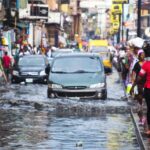
In a time of polycrises – from economic and political instability to health and environmental emergencies – water is a resource that cannot be relegated to the background. Especially in urban environments, water demand is ever-increasing and in too many ...