


Posts tagged with 'informal settlements'
When the weather heats up in Belo Horizonte, residents of Morro do Papagaio get creative. “A lot of people put their blankets in the refrigerator,” said Amanda Lima, a 24-year-old university student, activist and resident of the south-central region of ...

Cities and states have aimed higher and moved faster on climate action than national governments. The reason is simple: To local leaders, climate problems and solutions matter because their constituencies are directly impacted by them. Extreme heat, flooding and air ...
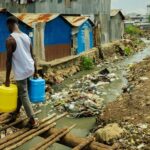
When floods hit my hometown in Kenya last year, it was the poorest communities who suffered most. In Nairobi, where more than 3 million people live in vulnerable homes made of wood, sheet metal and concrete — many in low-lying ...

Building solutions for urban peripheries — the sprawling, poorly served, low-income informal neighborhoods on the outskirts of Brazilian cities — requires recognizing their value. Brazilian peripheries, while poor, often have knowledge, organizational forms and collective practices that are already helping ...
The transformation of Buenos Aires’ Rodrigo Bueno neighborhood over the last decade is remarkable. What was once an informal settlement lacking sewers and clean water is now a thriving, diverse community where residents own their homes. A new street system and electrical ...

As cities try to restore the benefits of natural systems by mimicking how ecosystems function, one option they can use is nature-based solutions (NBS). However, cities often struggle to determine which types of interventions best suit their local context, due ...

This op-ed was originally published by Context, the media platform of the Thomson Reuters Foundation, on June 16, 2025. Read the original piece here. A new study has found that 4 billion people – half of the world’s population – endured ...

With about 464 millimeters of rainfall per year — less than half the global average — South Africa is one of the driest countries in the world. Its semi-arid climate, uneven rainfall distribution and persistent droughts leave the country facing chronic water ...

In Gauteng Province, the Jukskei River winds its way through the heart of Johannesburg’s inner-city neighborhoods, informal settlements and suburban areas, eventually joining the Crocodile and Limpopo rivers before emptying into the Indian Ocean. One of the biggest waterways in ...

By midday in Mathare, a densely populated informal settlement in Nairobi, Kenya, the sun beats down on the tight rows of wooden stalls and corrugated metal rooftops. At an elevation of 5,889 feet (1,795 meters), Nairobi has long been known ...

In the heart of Nairobi’s Mathare slums, a quiet but powerful revolution is growing – one plant at a time. Teenage mothers, often marginalized and overlooked, are transforming their lives and their community through urban farming and organizing. Their efforts ...

For the 21 million residents of Lagos, Nigeria, climate change is not a distant concept — it is a current reality. Over the past decade, the city has experienced devastating floods, exacerbated by the loss of over half of its wetlands ...
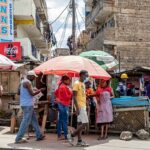
In Mathare – a collection of informal settlements northeast of Nairobi, Kenya, housing more than 500,000 residents – heat is reshaping daily existence. Most buildings in Mathare are constructed from materials like corrugated metal, which trap and magnify heat, forcing ...
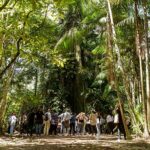
Amid the vast Amazon River delta, Belém, Brazil, sits at the intersection of the urban and natural worlds. A network of waterways and islands home to resources like açaí and cacao surround the city, serving as a critical port for ...
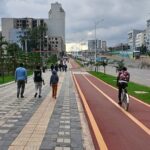
Cities are not just places where people live—they are interconnected networks of people, services and economic activity. A city is a system of systems, bringing together transportation, energy, buildings, water, waste management and more. Transforming these interconnected systems is vital ...