


Nations around the world are ushering in a new decade of climate action through revised nationally determined contributions (NDCs), due this year. The urgency for climate action has never been greater, especially with 2024 marking the warmest year on record globally. While the urban content of NDCs is improving, it remains insufficient and doesn’t reflect the increasingly urban world we live in. UN-Habitat analysis showed that only 27% of the last round of pledges under the Paris Agreement included strong urban content.
Through the Coalition for High Ambition Multilevel Partnerships (CHAMP) for Climate Action, launched at COP28, WRI has worked to advance the subnational content of new NDCs due this year, also known as “NDCs 3.0.” The CHAMP initiative is a pledge by 78 countries, to date, to include subnational governments in producing new NDCs as well as incorporate strong subnational content into these plans in order to progress, finance and deliver more ambitious and inclusive climate action overall.
Through CHAMP, WRI has provided technical assistance to four countries in particular during this latest round of NDC updates, with each demonstrating how cooperation is essential for ambitious climate action:
Colombia
In 2024, WRI Colombia and Colombia’s Ministry of Environment and Sustainable Development designed and launched a strategy to involve subnational governments in the NDC update process and increase national and subnational climate ambition. In partnership with the German Society for International Cooperation (GIZ) and with support from Bloomberg Philanthropies, five regional workshops were hosted in five geographies: Medellín, Bogotá, Yopal, Cali and Barranquilla. The workshops were designed for a diverse set of subnational actors — including youth; women; and representatives from secretariats, local government, and Indigenous and Afro-Colombian groups — to create a more inclusive process for the country’s updated NDC.
This year, WRI Colombia and the country’s Ministry of Housing hosted a workshop to identify implementation gaps for four measures in its NDC 2.0 that showed the least progress (two mitigation measures and two adaptation measures). During the workshop, key actions were prioritized to help overcome these barriers and define the next steps for 2026, 2028 and 2030.
In addition, WRI Colombia set up a Steering Committee with members from the Ministry of Housing, the National Planning Department and the Ministry of the Environment, as well as representatives from NGOs, multilateral development banks and subnational governments, to develop a shared understanding of urban challenges in the NDC 3.0 and how to address them.
On Sept. 25, Colombia submitted its “declarative” NDC 3.0. This acknowledges the role of subnational governments in planning and implementing climate mitigation and adaptation measures and promotes governance that integrates national and subnational perspectives.
Rwanda
In November 2024, WRI Africa, in close collaboration with the Rwandan Environment Management Authority (REMA) and the Ministry of Environment, organized a five-day, in-person workshop to surface district priorities for Rwanda’s new NDC. The event brought together 130 participants representing 30 districts — specifically, directors in charge of planning, agriculture and natural resources — to consolidate local and regional priorities and contribute to the national NDC enhancement process. The event was followed by a three-day, in-person validation workshop ensuring adequate capture of these priorities. Findings from the consultations were synthesized into a report and submitted to REMA to inform Rwanda’s NDC 3.0.
Building on this foundation, in March 2025, WRI and ICLEI-Local Governments for Sustainability Africa supported REMA, the Ministry of Environment and the Rwandan Local Government Association to convene a policy dialogue with district vice mayors in charge of economic development. The dialogue aimed to strengthen political support for a whole-of-government approach to NDC implementation, fostering stronger coordination between national and subnational levels. WRI and partners also participated in a workshop with the Ministry of Environment and other key stakeholders to validate the draft NDC.
On Nov. 7, Rwanda published its NDC 3.0. This includes a higher mitigation target and a commitment to an economy-wide 53% reduction in greenhouse gas emissions by 2035, relative to business as usual. The new NDC also emphasizes building capacity at the local level by investing in training and resources for districts, and calls for identifying and institutionalizing “climate focal points” in all 30 districts.
Kenya
WRI Africa, in partnership with the Financing Locally Led Climate Action (FLLoCA) program, Ministry of Environment, Climate Change and Forestry (MECCF) and the Climate Change Directorate, organized a series of virtual meetings with climate change directors from all of Kenya’s 47 counties. These consultations provided a platform to present Kenya’s draft NDC 3.0 and gather feedback on how county-level climate priorities had been integrated into the national process.
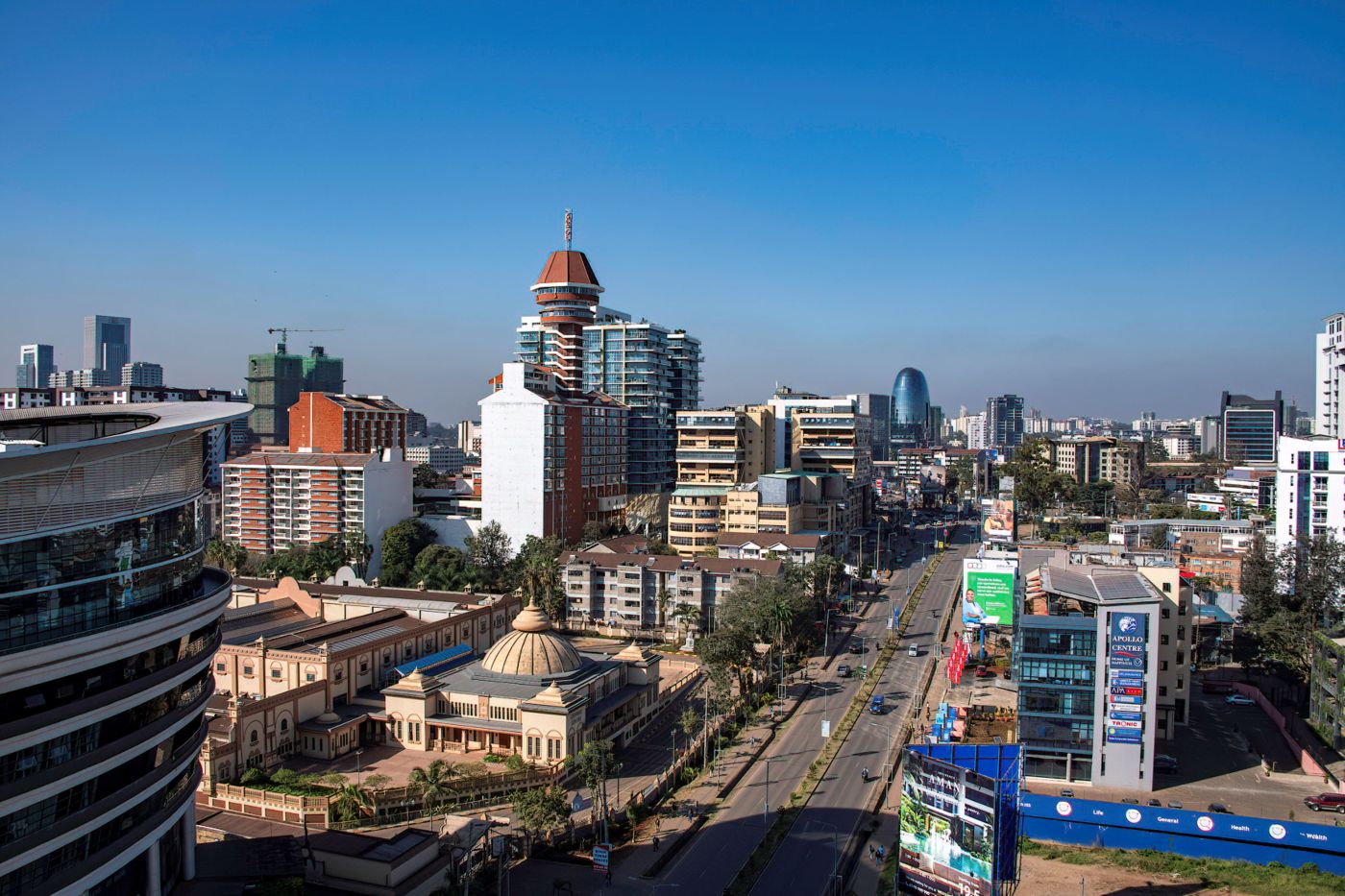
In February 2025, WRI Kenya, in collaboration with C40 Cities and the Global Covenant of Mayors for Climate and Energy, convened a CHAMP National Finance Accelerator Roundtable on the sidelines of the UrbanShift Forum in Nairobi. This brought together key stakeholders to discuss opportunities for strengthening local access to climate finance and advancing multi-level collaboration on NDC implementation.
In May 2025, Kenya submitted its NDC 3.0, one of the earliest countries to do so.
On Oct. 28-29, WRI Kenya and the Office of the Special Envoy for Climate hosted a High-Level Convening to advance coordination, finance and implementation of Kenya’s climate commitments under its new NDC. WRI Kenya, in collaboration with the Council of Governors (CoG), NDC Partnership (NDCP) and the Government of Kenya, will also convene two multistakeholder dialogues, focused on energy and transport and water and nature-based solutions, in November 2025.
Ethiopia
WRI Ethiopia held a high-level NDC 3.0 kickoff workshop in March 2025 in collaboration with the Ministry of Planning and Development, sector ministries, NGOs, civil society organizations and the private sector. Following the workshop, WRI and the sector ministries also conducted a review of Ethiopia’s NDC implementation to date. Building on this, WRI is further assessing implementation at the subnational level, with a case study focusing on Addis Ababa and a particular emphasis on the energy sector because of its relevance to the urban environment. WRI held an additional consultation workshop in early August to better understand how subnational elements of the new NDC might be implemented and produce practical suggestions for strengthening localization of the NDC.
Led by the Ministry of Planning and Development, and in consultation with the Ministry of Urban Development and Infrastructure and 30 local authorities, WRI also developed a greenhouse gas emissions estimation for Addis Ababa. The aim is to scale this to other cities, helping to emphasize the need for city-level investments in climate action.
In September 2025, Ethiopia released its NDC 3.0, which includes a 2035 mitigation target and revised, more ambitious mitigation, adaptation and financing targets in comparison to its last NDC. The new NDC commits to multilevel and multisectoral engagement and implementation to ensure broad ownership and alignment of climate action.
This article originally appeared on WRI.org.
Abiyot Dagne Belay is Climate Policy & Research Lead at WRI Africa.
Carolina Useche is Climate Action Manager at WRI Colombia.
Chaandi Malhotra is Integrated Climate Action Project Coordinator at WRI Europe.
Héctor Miguel Donado is Research & Project Manager for WRI’s Climate, Economics & Finance program.
Ivy Murgor is Air Quality Program Manager at WRI Ross Center for Sustainable Cities.
Marc Manyifika is Urban Resilience Lead at WRI Africa.
Max Jamieson is Global Lead for Integrated Climate Action at WRI Ross Center for Sustainable Cities
Nadia Shah Naidoo is Integrated Climate Action Senior Associate at WRI Africa.
Pandora Batra is Strategic Engagement Senior Manager for WRI Ross Center for Sustainable Cities & WRI’s Climate program.