


Recent Posts by Marc
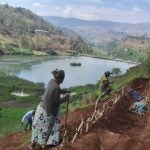
Bukavu, Democratic Republic of the Congo, sits where Lake Kivu drains into the Ruzizi River along the border with Rwanda. The city’s steep hillsides turn heavy rains into fast-moving runoff that overwhelms drains, damages roads and threatens downstream communities. It’s ...

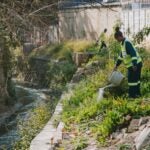
When torrential rains hit Kinshasa in April 2025, the city of 20 million came to a standstill. Floodwaters submerged more than half the city as the Ndjili River and smaller streams overflowed, quickly overwhelming the city’s drainage capacity. Lives were ...
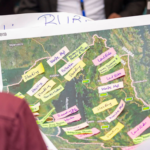
Over the next few decades, Rwanda is positioned to become one of the most competitive investment destinations in East Africa. National targets, such as achieving upper middle-income status by 2035 and high-income status by 2050 (Vision 2050)1, signal the government’s ...
Nations around the world are ushering in a new decade of climate action through revised nationally determined contributions (NDCs), due this year. The urgency for climate action has never been greater, especially with 2024 marking the warmest year on record globally. While ...

As cities try to restore the benefits of natural systems by mimicking how ecosystems function, one option they can use is nature-based solutions (NBS). However, cities often struggle to determine which types of interventions best suit their local context, due ...

Despite accounting for less than 3% of global terrestrial area, cities have had an outsized impact on our approach to planetary boundaries, affecting biodiversity and consumption of materials and energy. Studies show that cities have become responsible for 78% of carbon emissions, ...

As countries prepare their updated nationally determined contributions (NDCs) for submission ahead of this year’s UN climate change conference (COP30), there is growing recognition that effective climate action requires strong collaboration between national and subnational governments. Only about a quarter ...

Africa’s cities, from large metropolises to smaller towns, are increasingly characterized by growing urban sprawl. Kinshasa, Democratic Republic of Congo, is expanding by about 2,000 people and 5 hectares (10 football fields) every day, according to a World Bank estimate. Kumasi, an intermediary ...