


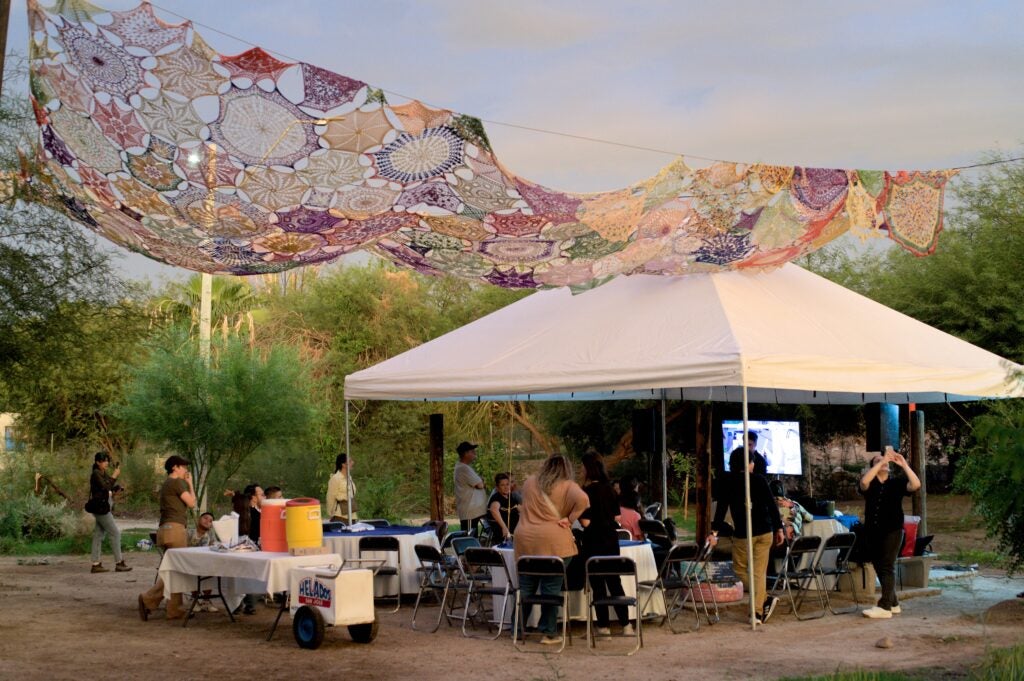
“The heat is terrible,” said Nadia, describing life in her hometown of Hermosillo, Mexico. “To get to work, we’re forced to take the bus because if you walk, you dehydrate. It’s impossible to walk.”
Scorching temperatures affect more than just commuting, Nadia explained. For many residents, the struggle continues at home.
“In my case, and really in every home, we need to have fans or air conditioning, but not everyone can afford it,” Nadia said. “It’s not like in other cities where they don’t seem to need them. Here… It’s not a luxury; it’s a need to have fans or air conditioning to live.”
In cities around the globe, extreme heat is no longer a seasonal, summer disruption — it’s reshaping how people live, work and move through cities. In May 2026, temperatures across North America reached unprecedented highs, followed by Europe’s worst recorded heat wave in June. In 2025 alone, heat waves contributed to more than 16,000 deaths across European cities.
As temperatures rise, so do heat-related illnesses and hospital visits, while productivity suffers. Those most at risk are often people with the fewest resources and the least protection from the heat.
How Heat Shapes Daily Life in Hermosillo
Located in the heart of the Sonoran Desert, Hermosillo, nicknamed the “City of Sun,” is one of the hottest cities in Mexico. In July 2025, the city broke a historical temperature record, reaching an ambient temperature of over 46 degrees C for the first time since recording began. In neighborhoods like Amapolas, Bella Vista, El Ranchito and La Metalera, these extreme temperatures are almost constant. Residents are doing what they can to keep cool.
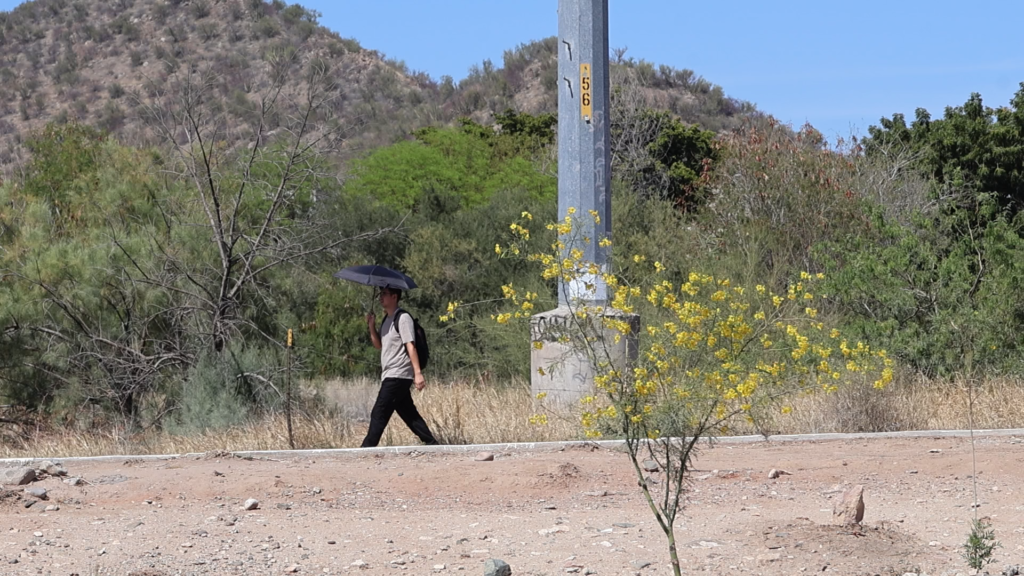
“We turn on the fan, and we constantly have to wet our faces in the sink to lessen the heat a little before starting our activities.” Mirna, a resident of El Ranchito, said. “I’m active at night and sleep during the day.”
Another resident, Brenda, said, “When I have to go out, I have to leave early or I just don’t go, because it’s so hot and it makes me feel sluggish.”
Other residents have reported feeling sick or dizzy, or even getting heat stroke when walking at midday. And at night, many residents can’t sleep soundly in their rooms without thermal insulation or air conditioning. Public activities have been canceled due to the heat and lack of shade in public spaces.
A Community-Led Approach to Understanding Heat
The City of Hermosillo is doing what it can to mitigate extreme heat. City officials are using heat data to map patterns at the neighborhood level and identify “red zones” where vegetation loss and increases in gray infrastructure, such as asphalt and concrete, have raised temperatures.
But these interventions alone are not enough. Most data from meteorological stations focuses on macro-level temperatures, but understanding how heat is felt at the individual level requires a different approach to data collection.
To address this challenge, WRI México launched Cooler Neighborhoods: Participatory Science Against Extreme Heat, a citizen-science initiative that pairs community knowledge with localized data collection to better understand how Hermosillo’s residents experience extreme heat. Rather than treating residents as research subjects, the project invited them to become research partners, collecting data, interpreting findings and helping identify solutions. This approach was especially valuable because experiences of extreme heat can vary dramatically from one street or even one block to the next.
Building on the EcoZonas Legacy
The Cooler Neighborhoods project builds on EcoZonas, a previous project implemented by WRI México in La Metalera, that helped place neighborhood-scale climate adaptation on Hermosillo’s local agenda by pairing community participation with tangible public space improvements. Beyond physical interventions, EcoZonas also strengthened residents’ capacity to identify climate risks and shape collective solutions for their own neighborhoods in partnership with local actors. Those lessons and capacities carried forward into Cooler Neighborhoods, where previous experience became the starting point of confidence for generating localized heat data and advancing into practical adaptation strategies.
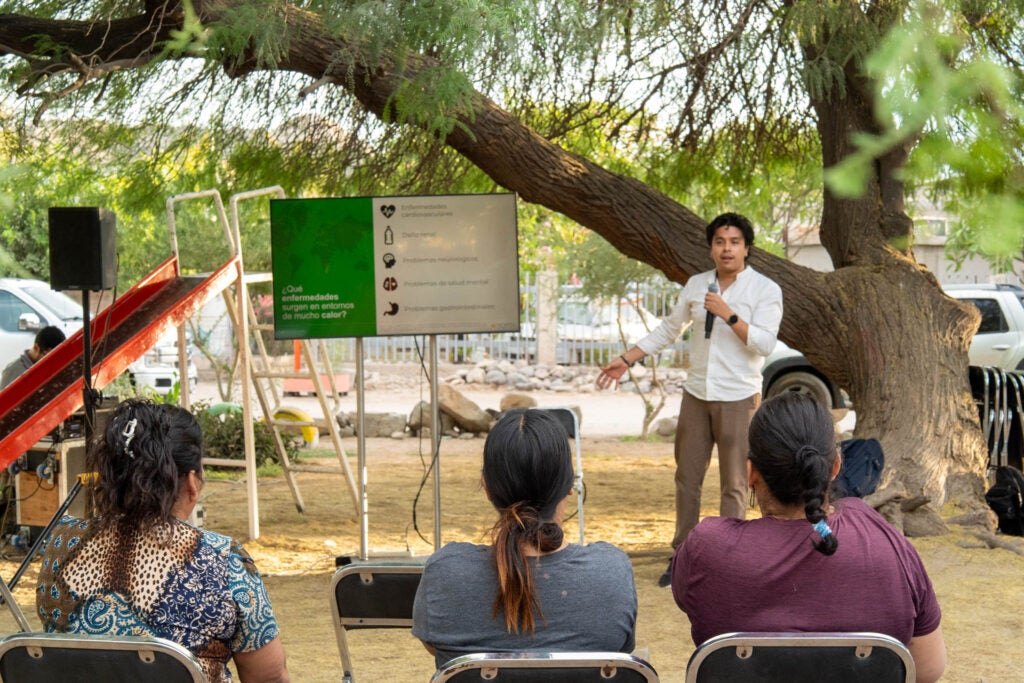
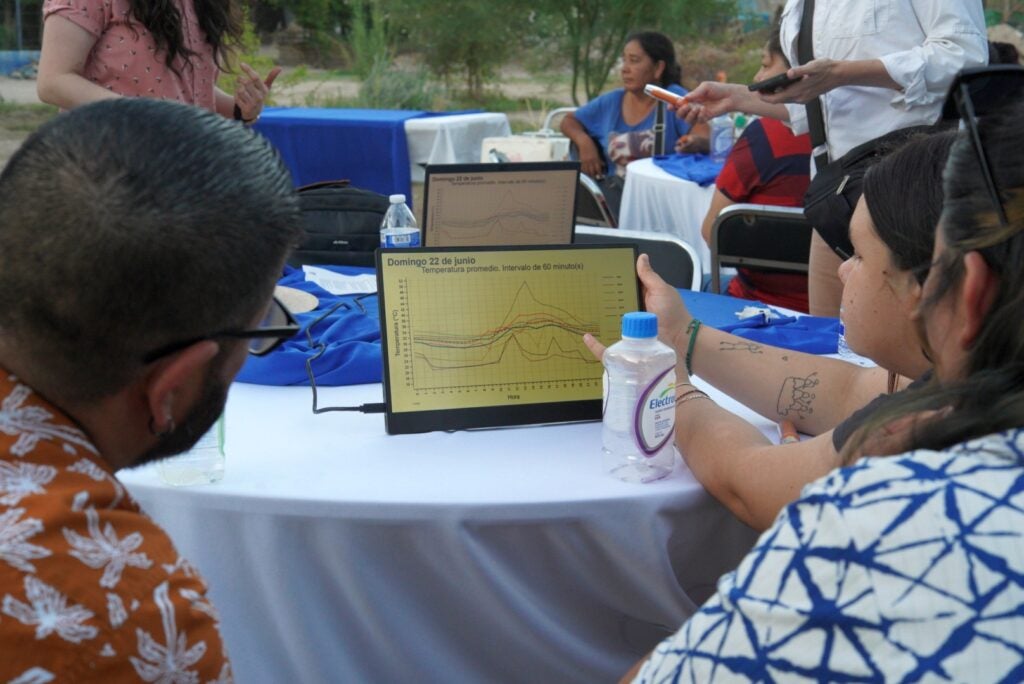
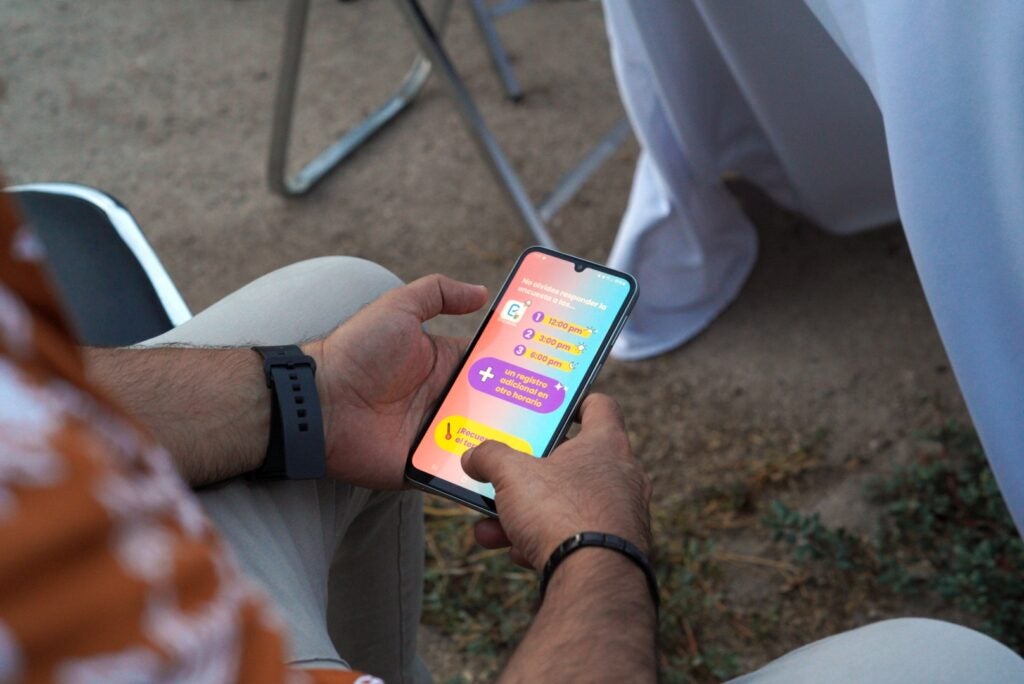
Following an introductory workshop, local volunteers from participating neighborhoods collected data between June and October 2025. They carried portable sensors that recorded ambient temperature and relative humidity throughout the day while their phones logged location data. Volunteers also kept “heat diaries,” documenting where they went, what they were doing and how the heat affected them. Afterward, WRI México returned the findings to the communities through workshops where residents validated the results, identified neighborhood hot spots and began discussing possible adaptation strategies.
Research Designed Around People’s Lives
Collecting neighborhood-scale data also meant designing the research around people’s lives. Volunteers had to balance participation with work, caregiving responsibilities and daily routines while navigating technical issues such as malfunctioning sensors, connectivity problems and survey fatigue.
Building trust proved just as important as collecting data. The project depends on residents seeing themselves as partners whose knowledge can shape the research and its outcomes, rather than being subjects of research.
For Nadia, a volunteer from El Ranchito, participating meant more than collecting data. It was an opportunity for neighbors to solve problems together. “Together we can help and learn, right? Say, ‘You know what? We need to agree and decide: Do we need more trees? Then we plant more trees,’” she said.
The experience highlighted a key lesson: community-based research must be designed around the realities of the people it hopes to engage.
From Data to Action
After analyzing the data, residents came together in co-design workshops to turn the findings into neighborhood adaptation strategies.
One priority area is an empty lot near the school in Amapolas. Although it was recently turned into a soccer field, the lack of trees still leaves little shade for residents. For Nadia, that means braving the heat when picking up her grandchild from school.
“I hurry my granddaughter along until we reach a big tree; we take cover under that tree from the sun,” she said.
Residents proposed practical, low-cost solutions that local authorities could implement and scale across Hermosillo, including shaded school routes, covered bus stops designed for long waits in the sun, additional seating along walking corridors and pilot home-insulation projects for households most exposed to extreme heat.
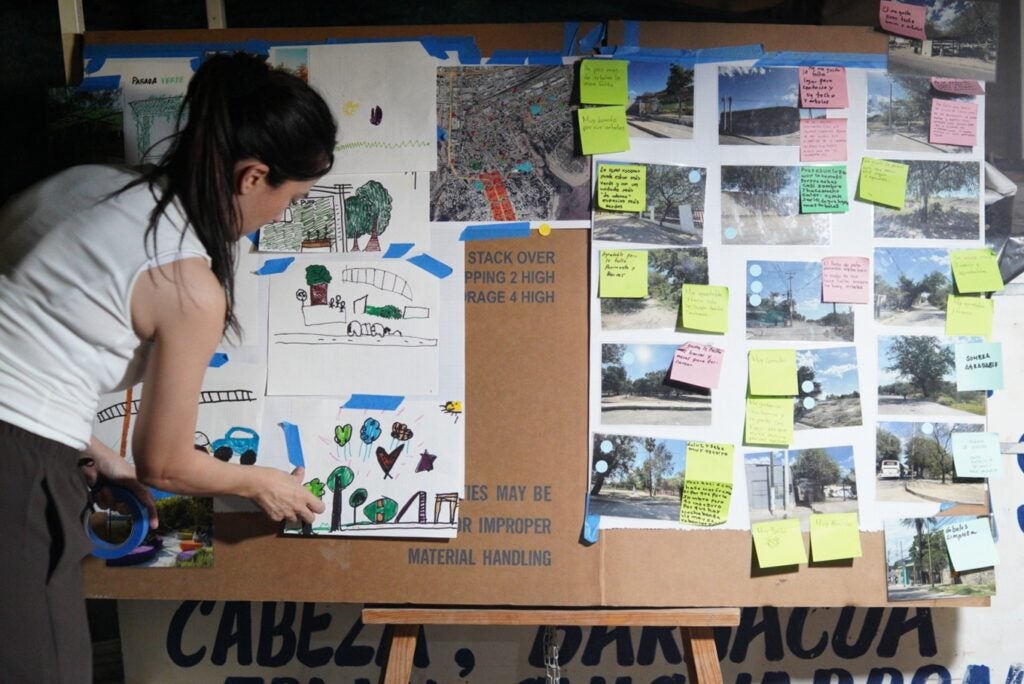
Beyond generating neighborhood-scale data that had never before been available, the project transformed residents’ relationship with extreme heat. At the project’s outset, only a handful of participants felt comfortable discussing climate resilience or proposing solutions. By the final workshops, most participants were confidently using data and personal experience to explain neighborhood challenges, identify infrastructure gaps and advocate for specific improvements.
The community-generated data and co-designed proposals helped spark dialogue with local and state agencies responsible for transportation, energy and urban development. By combining lived experience with actionable data, residents built a stronger case for directing public resources toward heat adaptation, helping inform discussions about future budgets, infrastructure improvements and policy changes.
What Cities Can Learn From Hermosillo
Hermosillo demonstrates that effective heat mitigation requires more than better data — it requires understanding how people actually experience heat in their daily lives. By combining environmental measurements with heat diaries, interviews and community mapping, researchers and residents were able to move beyond identifying hot spots to understanding who was affected, when and why. That understanding ultimately helped transform evidence into practical solutions.
The project also showed that meaningful participation must be designed around people’s lives. Simple tools, flexible schedules and trusted community partnerships made it possible for residents to contribute consistently while building confidence in the process.
Scaling this approach while maintaining its neighborhood focus remains a challenge. Stronger links between community-generated data, public planning processes and long-term funding streams could help ensure that local knowledge informs budgets and infrastructure plans before decisions are finalized.
Perhaps the project’s greatest impact was helping shift the conversation about heat in Hermosillo. What was once discussed as an abstract climate threat is increasingly understood as a hyperlocal challenge that affects specific people, places and daily routines. By combining community knowledge with localized data — and through complementary efforts such as WRI’s Cool Cities Lab — the city is beginning to move beyond broad temperature averages toward a clearer understanding of who is most vulnerable, where and when. That shift is helping turn evidence into action and creating a model other cities can adapt as extreme heat becomes an increasingly defining urban challenge.
Oscar Pozos is Urban Development Project Analyst at WRI México.
Gorka Zubicaray is Senior Urban Development Technical Specialist at WRI México.
Ana Iris Enríquez is Senior Urban Development Project Coordinator at WRI México.
Madeline Palmieri is former Urban Development & Data Communications Associate at WRI Ross Center for Sustainable Cities.
Mariana Campos is Urban Development Manager at WRI México.
Mauricio Brito is Urban Development Data Specialist at WRI México.
Andrea Villasís is Junior Urban Development Project Coordinator at WRI México.
Alí Gallegos is Junior Urban Development Analyst at WRI México.