



Cities have always been shaped by the infrastructure they choose to host. Railways defined the industrial city. Highways reorganized post-war suburbs. Metro systems and airports rewired the geography of globalized urban economies.
Today, another form of infrastructure is expanding rapidly across urban landscapes: data centers. Sitting behind secure fences and inside windowless buildings designed for security and operational efficiency rather than visibility, these facilities have quietly become the physical backbone of the digital economy.
Every online payment, streamed film, financial trade or artificial intelligence (AI) query ultimately passes through a physical building filled with servers, cooling systems and power equipment. The cloud, despite its name, is profoundly material. Data centers occupy large amounts of land and consume vast quantities of electricity and water. They cluster in metropolitan regions where connectivity, capital and policy incentives converge. And as the digital economy accelerates, the scale of infrastructure required to support them is growing rapidly.
While debates about housing, transport, or public space often unfold through extensive planning processes and public scrutiny, the expansion of data centers has largely occurred outside mainstream urban policy discussions. For cities — particularly those where land and resources are already under pressure — this raises a deceptively simple question: who decides how urban land, energy and water are allocated to the infrastructure that powers the digital economy?
A Rapidly Expanding Form of Urban Infrastructure
The growth of data infrastructure is striking. According to the International Energy Agency, electricity generation required to supply data centers stood at roughly 460 terawatt hours in 2024. Driven by cloud computing, digital services and AI, this demand is projected to exceed 1,000 terawatt hours by 2030 and reach around 1,300 terawatt hours by 2035 — roughly equivalent to the current annual electricity consumption of India and Germany combined.
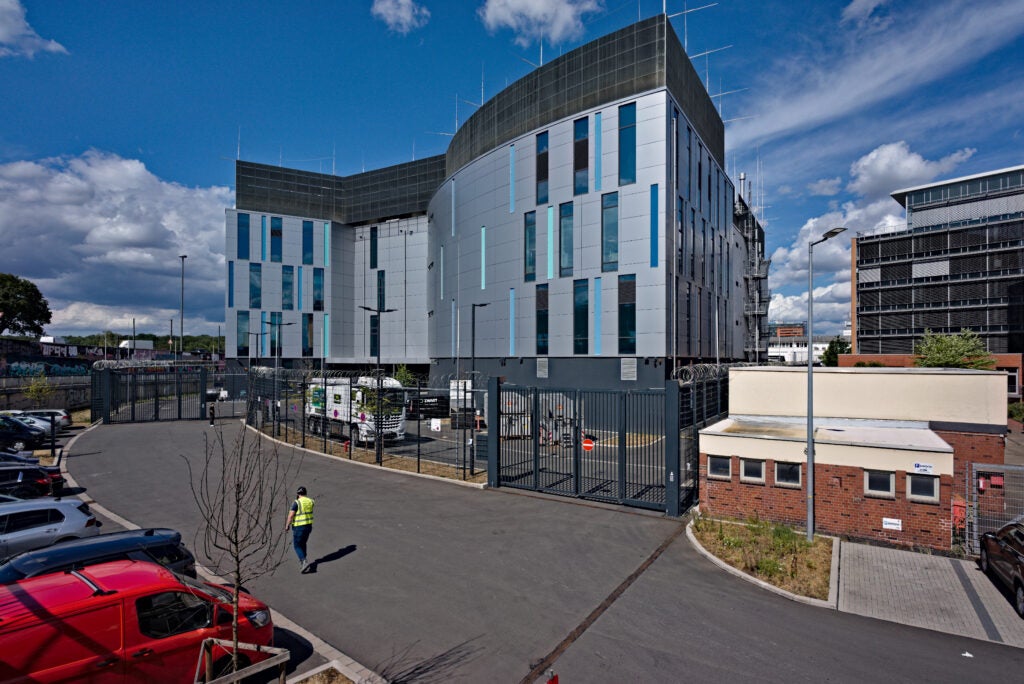
Even then, data centers would account for only about 3% of global electricity consumption. Yet their impact lies less in their energy demand than in their geographic concentration. Data centers cluster in regions with reliable power supply, robust digital connectivity and favorable regulatory environments. Where such clusters emerge, they place substantial pressure on local infrastructure.
The energy mix serving these facilities reflects the complexities of the sector. Currently, roughly 30% of electricity used by data centers comes from coal, about 27% from renewable sources, 26% from natural gas and around 15% from nuclear power. Although renewables are expected to grow rapidly and meet nearly half of additional demand this decade, fossil fuels will continue to supply a significant share of electricity for data centers in the near term.
For cities that are trying to decarbonize their economies, data center creation and expansion introduce a new and often underexamined planning challenge.
India’s Digital Infrastructure Boom
India is emerging as one of the fastest-growing data center markets in the world. According to industry estimates cited by NASSCOM and property consultancy reports, the country’s installed capacity stood at roughly 870 megawatts in 2023 and is expected to exceed 1.7 gigawatts by 2026. That is roughly double the capacity in under three years — a pace of expansion that most urban planning systems are simply not built to absorb.
Much of this growth is concentrated in Mumbai, which accounts for more than half of India’s operational data center capacity. The city’s dominance stems from structural advantages: Mumbai is India’s financial capital, home to dense financial and digital networks, and hosts several subsea cable landing stations connecting the country to global internet infrastructure.
The expansion is already visible in the metropolitan region. Large data center campuses have emerged across Navi Mumbai and surrounding industrial zones, including areas developed under the Maharashtra Industrial Development Corporation (MIDC) and within the planning jurisdiction of the Mumbai Metropolitan Region Development Authority (MMRDA). These locations offer access to land parcels large enough to host industrial-scale digital infrastructure while remaining connected to Mumbai’s financial and telecommunications networks.
This rapid growth also reveals an uncomfortable urban reality: Mumbai is one of the most land-constrained cities in the world.
The Opportunity Cost of Data Centers in Land-Scarce Cities
In several municipal wards in Mumbai, population density exceeds 25,000 people per square kilometer. Affordable housing shortages persist; public open spaces remain scarce, and industrial land faces intense competition from logistics and commercial uses.
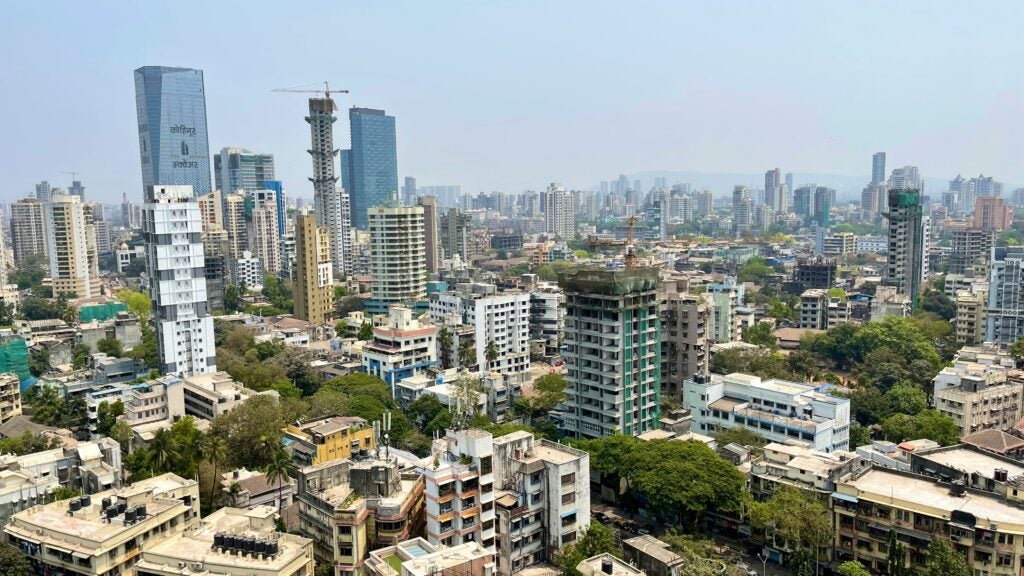
Within this context, allocating land for large-scale digital infrastructure carries a significant opportunity cost.
Data centers introduce a spatial logic that differs from most urban development. Once operational, they typically employ relatively few people compared with office complexes or manufacturing facilities occupying similar land parcels. A facility drawing 100 megawatts of power — enough to supply electricity to roughly 80,000 homes — might directly employ only a few hundred workers. Their economic value lies in digital connectivity and network infrastructure rather than direct employment.
This does not diminish their strategic importance. Modern financial systems, e-commerce platforms and emerging artificial intelligence industries depend on robust digital infrastructure.
However, in land-scarce cities, the question becomes unavoidable: what other urban uses are displaced when large parcels are dedicated to data infrastructure?
Urban planning systems have only begun to grapple with this question. In many jurisdictions, data centers are still classified simply as industrial or IT infrastructure. Few planning frameworks explicitly evaluate the trade-offs associated with dedicating scarce urban land to facilities whose economic benefits may be distributed across national or global digital networks rather than locally. However, the absence of a planning category does not mean the absence of a consequence.
Energy Systems Under Pressure
The environmental implications extend well beyond land use. Data centers are among the most energy-intensive building types in the modern economy. Large facilities can draw tens to hundreds of megawatts of electricity — comparable to the consumption of small towns.
Globally, carbon dioxide emissions associated with electricity generation serving data centers are projected to peak at around 320 million tons by 2030, before gradually declining as renewable energy and nuclear capacity expand.
However, the near-term trajectory remains complicated. Much of the additional electricity required to power the digital economy through the end of this decade is expected to come from fossil fuel generation, particularly coal and natural gas.
For cities pursuing ambitious climate targets, this creates a delicate balancing act. Digital infrastructure can drive economic growth and innovation, yet it also increases electricity demand at a time when power systems are attempting to transition away from fossil fuels. In India, where coal still supplies nearly three-quarters of electricity, a data center boom without corresponding clean energy commitments risks locking in emissions for decades.
Data Centers Are Drinking Cities Dry
Energy consumption is only one dimension of the resource footprint associated with data centers. Cooling systems used to regulate server temperatures often rely on large volumes of water.
Depending on the technology deployed and the surrounding climate conditions, the largest facilities can consume millions of liters of water per day — enough to supply the daily needs of tens of thousands of urban households. In metropolitan regions already experiencing water stress, this introduces additional governance challenges.
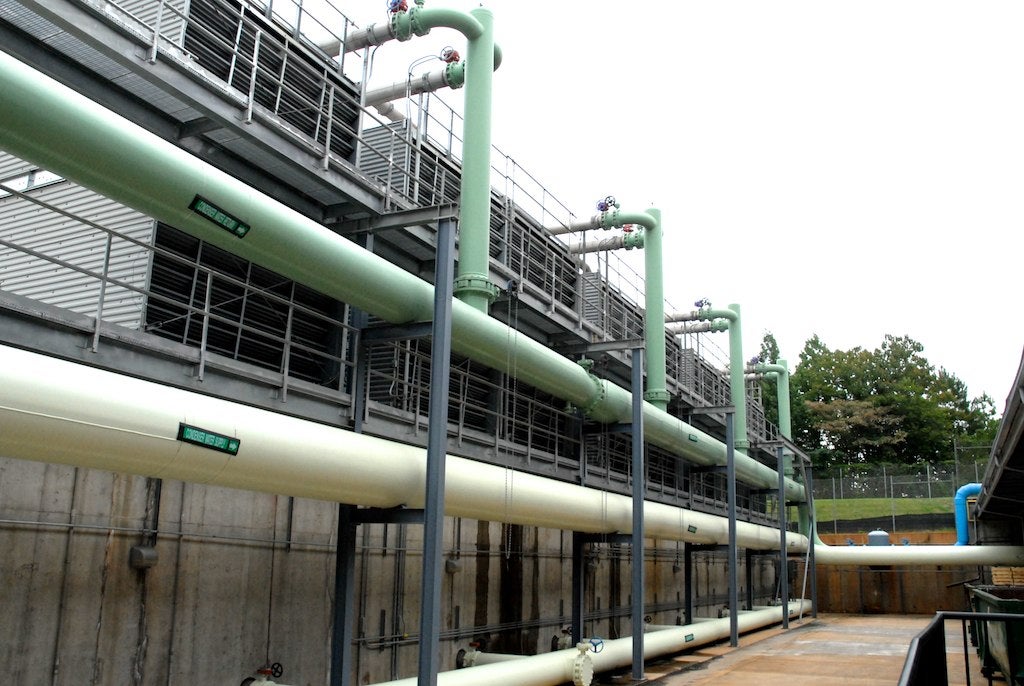
Cities such as Mumbai depend heavily on reservoir systems located far beyond their boundaries and regularly face seasonal water shortages. Yet water allocation frameworks in many jurisdictions rarely account explicitly for the growing demands associated with digital infrastructure.
The result is a striking governance gap: decisions about allocating scarce water resources to private digital infrastructure are often made without transparent public debate.
Managing the Local Impacts of Growing Digital Infrastructure
Cities elsewhere are beginning to confront similar tensions.
In Amsterdam, the rapid expansion of data centers over the past decade triggered concerns about electricity demand and land use. In response, the Dutch government and local authorities temporarily imposed a moratorium on new data center developments in 2019 to reassess planning frameworks and infrastructure capacity. The move forced policymakers to confront how digital infrastructure should be integrated into long-term spatial planning.
Meanwhile, Singapore — another land-constrained city — also introduced a pause on new data center approvals in 2019. Rather than banning the sector, authorities used the pause to redesign policy frameworks, eventually introducing stricter requirements around energy efficiency, renewable energy procurement and land use optimization before allowing limited new projects to proceed.
Both examples illustrate a broader lesson: digital infrastructure may be global, but its impacts are intensely local. They also demonstrate that a temporary pause need not mean a permanent stop — it can be the moment a city reclaims its seat at the table.
If Cities Host Data Centers, What Do They Gain?
A final question concerns the distribution of benefits.
Data centers generate enormous economic value for technology firms and digital ecosystems. Yet the local public benefits are not always proportional to the infrastructure burdens cities must absorb. Municipal systems must accommodate increased electricity demand, water consumption and land allocation pressures, while often capturing only limited fiscal returns.
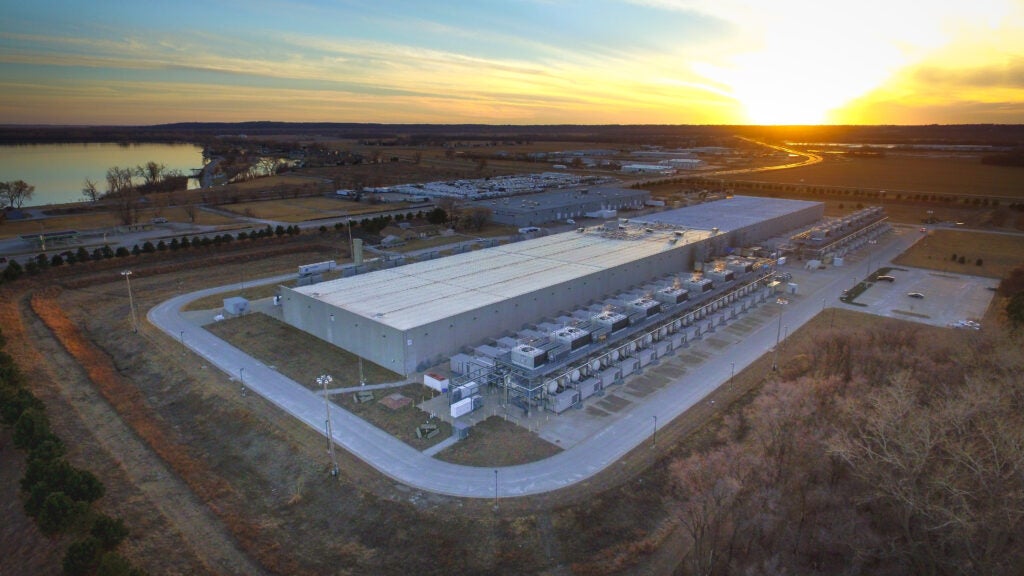
Several policy tools could help rebalance this equation. These include renewable electricity procurement requirements, stricter energy and water efficiency standards, differential electricity tariffs and mechanisms through which large infrastructure investments contribute directly to urban resilience funds or public infrastructure improvements. Some cities are also exploring co-location models — requiring that data center campuses incorporate affordable office space, green corridors or public amenities as conditions of approval.
The objective is not to discourage investment in digital infrastructure. Rather, it is to ensure that such infrastructure contributes meaningfully to the cities on which it depends.
Governing Essential Urban Infrastucture
Perhaps the most important challenge is institutional. In many countries, data centers are increasingly classified as essential infrastructure, allowing national or state governments to accelerate approvals and attract investment.
While this can support economic growth, it can also sideline municipal governments responsible for land-use planning, environmental management, and service delivery. Yet cities are precisely where the consequences of these developments are most directly felt.
The digital economy is often described as weightless. In reality, it rests on highly material foundations: land, electricity, water and governance decisions made in cities.
For land-scarce urban regions such as Mumbai, the question is not whether data centers belong in the urban landscape. Rather, it is whether the rules shaping their expansion are robust enough to ensure that the infrastructure of the digital economy grows in alignment with urban sustainability, resource equity and long-term public interest.
The servers never sleep. The question is whether city governments can afford to.
Mahak Agrawal is Founder of the creative climate action project All Bits Count (ABC), a two-time Expert Reviewer for the Intergovernmental Panel on Climate Change (IPCC) and Head of Riding Sunbeams‘ India portfolio.