


Posts tagged with 'urban planners'

If you are admitted to a New York City public hospital, the in-patient meal menu might surprise you: It’s filled with items like a veggie pad Thai and a Moroccan vegetable tagine. The options look so tempting you probably wouldn’t ...


When torrential rains hit Kinshasa in April 2025, the city of 20 million came to a standstill. Floodwaters submerged more than half the city as the Ndjili River and smaller streams overflowed, quickly overwhelming the city’s drainage capacity. Lives were ...

There’s a growing housing crisis that’s impossible to ignore. Consider the stats: Nearly 3 billion people lack access to housing that is both safe and connected to basic services like energy, water and sanitation. Around 40% of the world’s population lives in ...
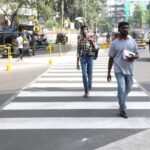
People don’t just use streets; they respond to them. The placement of curbs, alignment of crossings and painted markings directly shape how safely and predictably people move. How people interpret the physical cues received from their environment determines their decisions and movements. ...

In most urban planning meetings, stakeholder engagement begins and ends with presentations. Data is shared, reports are circulated and challenges are discussed. This format often misses fostering the hands-on participation needed to tackle the local realities of climate change. What ...

This op-ed was originally published by Context, the media platform of the Thomson Reuters Foundation, on June 16, 2025. Read the original piece here. A new study has found that 4 billion people – half of the world’s population – endured ...

Cities are not just places where people live—they are interconnected networks of people, services and economic activity. A city is a system of systems, bringing together transportation, energy, buildings, water, waste management and more. Transforming these interconnected systems is vital ...

The built environment is not on track globally to achieve its sectoral climate targets. Accounting for over a third of total energy system emissions already, the continued use of carbon-intensive materials paired with inefficient energy use throughout the built environment ...
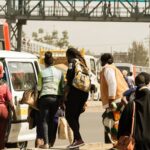
For a woman living in an African city, public transport can be a daunting experience. Women usually plan their trips in advance, and consider a multitude of factors before setting out: What is the safest way to reach the bus ...

India aims to reduce the emissions intensity of its economy by 45% by 2030, compared to 2005 levels, and to achieve net-zero emissions by 2070. The country can’t achieve either goal without a radical transformation in its buildings and construction sector, which was responsible for around 17% of the nation’s ...
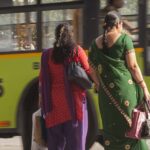
Cutting Across Siloes, Catalyzing Transformative Change: WRI India’s Deep Dive Approach in Bengaluru
Bengaluru is one of the world’s fastest growing metropolitan economies. A favored destination for investors and talent alike, this leading innovation hub is one of the largest technology clusters worldwide and home to 400 Fortune 500 companies. However, the planning ...

The global coronavirus pandemic brought a wave of public and private initiatives to help societies adapt and recover, from economic stabilization and safety measures to new business models and shifts in consumption. Many of these initiatives are not green, despite ...

Nearly 60 percent of women in Britain feel unsafe walking alone in their cities. Seventy percent of women who use public transport in Mexico City have experienced gender-based violence. In too many cases, using public transport in cities is an ...

The diverse economic, social and physical benefits of bicycling are no secret, yet many cities are hesitant to better accommodate growing numbers of bicycles on their streets. In October, WRI Turkey Sustainable Cities organized a workshop with representatives from 16 ...

Community participation has become a checklist item for any major urban development project. But what does community participation actually mean? What would it look like if we flipped the responsibility of engagement from citizens to designers? What if, instead of ...