


Posts tagged with 'risk reduction'

When floodwater entered Virginia’s single-family home in Mathare, an informal settlement in Nairobi, it washed away much more than her furniture — upending all her sources of security while reshaping her life. Before the floods, she owned 15 rental rooms, ...


Climate change is one of the greatest health threats we face. By 2050, it could claim nearly 16 million deaths across low- and middle-income countries. Extreme heat, the spread of climate-sensitive diseases like malaria and cholera, and disruptions to hospitals and other healthcare could ...
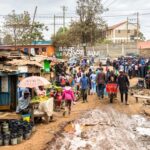
There’s a growing housing crisis that’s impossible to ignore. Consider the stats: Nearly 3 billion people lack access to housing that is both safe and connected to basic services like energy, water and sanitation. Around 40% of the world’s population lives in ...

Last week, WRI Ross Center co-convened the 23rd edition of Transforming Transportation with our partners at the World Bank. Supported by FIA Foundation, the forum in Washington, DC, brought together more than 5,000 in-person and online participants, reflecting the event’s ...

Twenty years ago, the forested slopes above Alpine Acres — a small community at the source of the Weber River in Summit County, Utah — were overgrown with dry brush and primed for wildfire. With only one road in and ...

In most urban planning meetings, stakeholder engagement begins and ends with presentations. Data is shared, reports are circulated and challenges are discussed. This format often misses fostering the hands-on participation needed to tackle the local realities of climate change. What ...

Which neighborhoods are suffering the most from rising urban heat? Where is flooding the biggest challenge? What other cities around the world are struggling with air pollution, and what can we learn from those that have improved the quality of ...

The built environment accounts for over one-third of global emissions. In rapidly developing markets like India and Mexico, a surge in housing construction faces a pivotal choice: lock in high-carbon infrastructure or, with the right interventions, enable resilient, low-carbon designs and ...

Transport is one of the fastest-growing sources of greenhouse gas emissions, accounting for 24% of carbon emissions worldwide. Nearly three-quarters of those emissions come from road vehicles. Solutions like electrification and increased public transport can reduce the transport sector’s emissions, but they ...

In Kenya and throughout east Africa, flooding this past April and May wreaked havoc, leaving a path of deadly destruction. The unprecedented deluge of heavy rainfall resulted in a catastrophe that many in Kenya have never witnessed. According to a June ...

With growing urban populations and increases in cars, trucks and buses, cities are poised to experience more harmful pollution threatening people’s health and livelihoods. But some cities around the world are turning to an emerging solution called zero-emission zones (ZEZs). These are designated ...
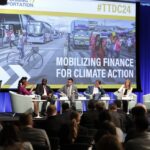
If a picture can tell a whole story, then the image below of an intersection in Dar es Salaam, Tanzania, shows the past, present and future of global transformation in the transport sector. During Transforming Transportation 2024, which focused on ...

This summer the Northern Hemisphere has been so hot with record temperatures — including at sea — that discussions have turned to the limits of human survival. Even in the Antarctic, sea ice is failing to re-form, a drastic departure ...

Over the past two decades, Rwanda – the land of a thousand hills – has made remarkable strides: poverty has significantly declined and quality of life has improved. The service, industrial and agricultural sectors have flourished. Even in the aftermath ...
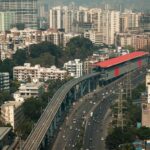
India is projected to overtake China as the most populous country in the world this year. The shifting demographics are bound to create heightened demand for education, health care, jobs and civic amenities, putting existing systems under stress. Current urban ...