


Posts tagged with 'private sector'
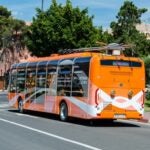
Today’s global challenges of prolonged fuel crises, rising consumer prices, dwindling natural resources and new workforce pressures demand disruptive innovators willing to test new technologies and business models that enable countries to rapidly transform their economies. Accelerating these national ...

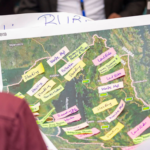
Over the next few decades, Rwanda is positioned to become one of the most competitive investment destinations in East Africa. National targets, such as achieving upper middle-income status by 2035 and high-income status by 2050 (Vision 2050)1, signal the government’s ...

This year marks the 10th anniversary of the Paris Agreement, a watershed moment on climate action when more than 190 countries agreed to pursue efforts to limit global warming to 1.5 degrees C (2.7 degrees F) above pre-industrial levels. Achieving ...

Despite accounting for less than 3% of global terrestrial area, cities have had an outsized impact on our approach to planetary boundaries, affecting biodiversity and consumption of materials and energy. Studies show that cities have become responsible for 78% of carbon emissions, ...

Transport is one of the fastest-growing sources of greenhouse gas emissions, accounting for 24% of carbon emissions worldwide. Nearly three-quarters of those emissions come from road vehicles. Solutions like electrification and increased public transport can reduce the transport sector’s emissions, but they ...

Cities are responsible for more than 70% of global greenhouse gas (GHG) emissions and are highly vulnerable to the consequences of climate change, yet when it comes to climate action, national governments tend to take center stage. Of the 194 ...
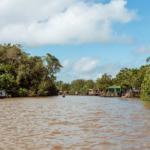
Departing from the Amazonian city of Belém, Brazil, in a speedboat, it takes around 10 minutes to reach the shores of Combu Island. As the skyline fades into the distance, the lush, green environment of the island comes into view ...
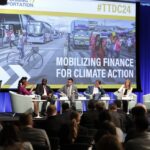
If a picture can tell a whole story, then the image below of an intersection in Dar es Salaam, Tanzania, shows the past, present and future of global transformation in the transport sector. During Transforming Transportation 2024, which focused on ...
India aims to reduce the emissions intensity of its economy by 45% by 2030, compared to 2005 levels, and to achieve net-zero emissions by 2070. The country can’t achieve either goal without a radical transformation in its buildings and construction sector, which was responsible for around 17% of the nation’s ...

In the Seychelles archipelago in east Africa, flooding and erosion caused by rising sea levels pose an imminent threat to the country’s many low-lying islands. At the same time its mangrove forests, which serve as a vital buffer against these ...
As dense hubs of diverse talent, skills and innovation, cities are perfect places for public-private collaboration. In light of urgent calls from the international community for solutions, the wealth of creativity and expertise on urban sustainability in Global South cities can ...
Today’s climate change headlines often seem at odds with each other. One day, it’s catastrophic wildfires wreaking havoc around the world; the next, it’s an optimistic piece on the rapid scale-up of solar and wind power. Taken together, such stories ...

It’s an island no one in their right mind wants to be on, but sadly many of us increasingly find ourselves due to global warming. “Heat islands” are a concept British climatologist Gordon Manley came up with way back in ...
With cities facing population growth, changing work patterns, the climate crisis and ever-widening inequality gaps, improved transportation systems are critical. City governments and local leaders are uniquely positioned to foster innovation to serve public needs. Teaming up with private sector ...
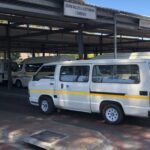
The minibus taxi (MBT) industry is the backbone of South Africa’s public transportation system with a fleet of approximately 250,000 vehicles, operated by thousands of providers, employing some 600,000 drivers. MBTs account for 80% of all journeys taken by taxi ...