


Posts tagged with 'marginalized communities'
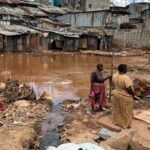
When floodwater entered Virginia’s single-family home in Mathare, an informal settlement in Nairobi, it washed away much more than her furniture — upending all her sources of security while reshaping her life. Before the floods, she owned 15 rental rooms, ...


Data centers are poised to consume land, water and power across the United States at an unprecedented rate. Driven by artificial intelligence, cloud computing and supportive government policies, U.S. data centers’ power capacity could reach 194 gigawatts (GW) by 2035, ...

Building solutions for urban peripheries — the sprawling, poorly served, low-income informal neighborhoods on the outskirts of Brazilian cities — requires recognizing their value. Brazilian peripheries, while poor, often have knowledge, organizational forms and collective practices that are already helping ...

New research from WRI’s Electric School Bus Initiative and Carleton University shows that the U.S. would see an estimated $1.6 billion in health and climate benefits every year by using electric school buses. This estimate accounts for the cost to society of using diesel-burning school buses ...

Editor’s Note: This article was updated with new findings as of October 2024 from WRI’s Electric School Bus Data Dashboard, which is updated monthly and contains the most recent data on electric school bus adoption. Previous versions of this article are ...

In the crowded slums of Zambia, Africa, members of the Zambia Youth Federation, a social movement of the urban poor, conducted climate change research and presented it in an emotional spoken word poem. Their message let policymakers know how climate ...

As electric school buses hit the road across the United States, it’s important for school districts and school transportation providers to prepare for how these clean-running buses will perform in different climates. The good news? Electric school buses are tested ...

This summer the Northern Hemisphere has been so hot with record temperatures — including at sea — that discussions have turned to the limits of human survival. Even in the Antarctic, sea ice is failing to re-form, a drastic departure ...

A key objective of the Clean Air Catalyst is to exchange knowledge, build trust and foster opportunities to elevate the voices of those most impacted by air pollution, particularly women and low-income communities. Funded by the U.S. Agency for International ...
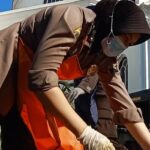
About two-thirds of the world’s population will live in cities by 2050. While cities are hubs of innovation and opportunity, the increasing pace of urbanization also exacerbates inequality, stresses infrastructure, and fuels climate change, air pollution and other environmental problems. The ...

More than 20 million students in the United States ride school buses every year. This equals approximately 7 billion trips per year, making school buses one of the most widely used forms of public transport in the United States. But those trips aren’t always ...
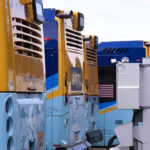
The passage of the Inflation Reduction Act and Infrastructure Investment and Jobs Act marked two of the most profound pieces of climate legislation in U.S. history. With approximately $370 billion available for climate and clean energy investments and $50 billion ...

As hubs of talent and innovation, American cities are uniquely positioned to fight climate change and improve the health, economy and well-being of their residents. The Biden administration’s Justice40 Initiative and funding available through the Infrastructure Investment and Jobs Act (IIJA) provide rare ...
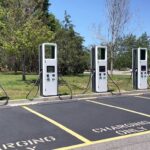
Electric vehicles (EVs) are on the rise in the United States. The Biden administration aims for 50% of new light-duty vehicle sales to be zero-emission by 2030. Some states have even more ambitious targets, like California, Massachusetts and New York, which plan to reach 100% new ...
Water ripples through many sectors of the global economy. Whether companies are in the business of hygiene or hamburgers, phones or pharmaceuticals, they all have water in their supply chain. It takes 12,000 liters of water to produce a single ...