


Posts tagged with 'IPCC'
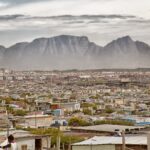
On a hot day in February 2024, volunteers dispersed across Cape Town, South Africa, with sensors affixed to their cars. Their aim was to measure heat differences across the city. In Cape Town’s dense, highly developed center, they recorded air temperatures ...


For better or worse, the year ahead brings a mix of reforms, political shifts and global milestones that will shape how urban sustainability agendas are governed and delivered. From changes to the structure and leadership of the United Nations (UN) ...
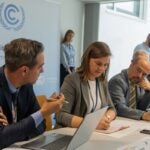
Thousands of local and regional leaders and their networks gathered in Brazil last month for the COP30 Local Leaders Forum in Rio and COP30 in Belém to respond to the call for a “COP of Implementation” — a COP that ...

This year marks the 10th anniversary of the Paris Agreement, a watershed moment on climate action when more than 190 countries agreed to pursue efforts to limit global warming to 1.5 degrees C (2.7 degrees F) above pre-industrial levels. Achieving ...

Nearly a decade ago, the world rallied around the Paris Agreement on climate change and the goal of holding global temperature rise to 1.5 degrees C (2.7 degrees F). Since then, the “1.5C goal” has become the world’s North Star ...

The message is everywhere: You (alone) can save the planet. Choose a veggie burger instead of beef. Book this flight, not that one. Buy thrift over fast fashion. Shrink your “carbon footprint.” But here’s what most people don’t know: The ...

Looking at more than 350 urban leaders and experts gathered in Nairobi, Kenya, for the Green & Resilient UrbanShift Africa Forum, Dr. Cromwel Lukorito, Vice Chair of the Intergovernmental Panel on Climate Change (IPCC) Working Group II, issued a simple ...

COP30 in Belém, Brazil, will be the most substantial and strategic mechanism for local and subnational governments to influence and impact national and global sustainability agendas in 2025. As we gear up for the mid-year Bonn Climate Conference, it is ...

2024 was tumultuous. Cities saw record-breaking temperatures, a sharp uptick in climate-related disasters, violent conflict in too many places, and contentious elections that shifted local, national and regional politics. But amidst the tumult, cities centered themselves as global leaders in ...

On July 22, the world experienced its hottest day in recorded history. The global average temperature reached 17.2 degrees C (62.9 degrees F), prompting UN Secretary-General António Guterres to issue a global call to action on extreme heat. The problem of extreme ...
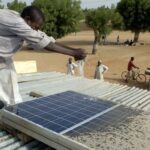
By early 2025, countries are due to unveil new national climate commitments under the Paris Agreement, known as nationally determined contributions (NDCs). These commitments form the foundation of international climate action, establishing emissions-reduction targets and other measures that countries promise ...
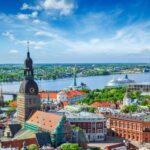
At the 43rd session of the Intergovernmental Panel on Climate Change (IPCC) in Nairobi, Kenya, in 2016, the Panel decided to include a Special Report on Climate Change and Cities in the IPCC’s seventh assessment cycle. This achievement marked a ...

In the Seychelles archipelago in east Africa, flooding and erosion caused by rising sea levels pose an imminent threat to the country’s many low-lying islands. At the same time its mangrove forests, which serve as a vital buffer against these ...
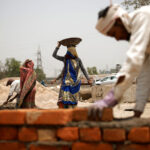
The past year registered record-shattering global temperatures. People around the world are already witnessing epic heat waves, wildfires and drought at 1.1 degrees C (2 degrees F) of global warming, compared to pre-industrial averages. With current policies putting the world on ...

This year is a critical moment for climate action. The mounting impacts of climate change, from floods and droughts to hurricanes and heat waves, are taking a major toll on human lives and economies globally — particularly in vulnerable developing nations ...