


Posts tagged with 'inclusive planning'

On a fair-weather day, one can often gauge the livability of a dense city neighborhood by a simple test: are children active outside? The new Guide to creating urban public SPACES for children takes that test seriously by turning it ...

In August 2025, Bengaluru’s Namma Metro recorded its highest-ever single-day ridership of over 1 million passengers. This milestone came shortly after the launch of the long-awaited Yellow Line, which connects the city with its leading tech hub, Electronic City. The second-largest metro ...
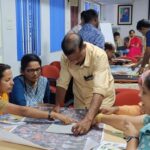
In most urban planning meetings, stakeholder engagement begins and ends with presentations. Data is shared, reports are circulated and challenges are discussed. This format often misses fostering the hands-on participation needed to tackle the local realities of climate change. What ...

School buses, intended to provide safe and secure rides for all children, are largely failing kids with disabilities, prompting urgent calls for improvements. “I experienced accessibility problems at least three times a week,” one youth reflected in a student discussion. ...
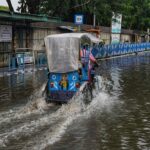
India is the seventh most climate-vulnerable country in the world, with nine of its states among the top 50 most vulnerable regions globally. The country’s cities are at the forefront of the climate crisis with more than 80% of the urban population living in ...
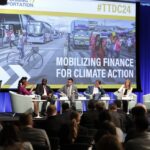
If a picture can tell a whole story, then the image below of an intersection in Dar es Salaam, Tanzania, shows the past, present and future of global transformation in the transport sector. During Transforming Transportation 2024, which focused on ...
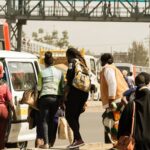
For a woman living in an African city, public transport can be a daunting experience. Women usually plan their trips in advance, and consider a multitude of factors before setting out: What is the safest way to reach the bus ...

Although it is widely recognized that gender disparities are echoed in the design and operation of urban transportation systems, gender-responsive transportation planning is still in its early stages. Drawing from the TOPUK project, which stands for “Women Accessing Public Transport,” ...
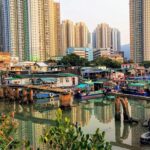
Cities have always been dynamic hubs of culture, education, economic growth and opportunity, and most importantly, centers of social interaction attracting residents and visitors alike. It is no surprise then, that Asia and the Pacific have become increasingly more urban ...

As the world moves towards a green energy transition, effective, equitable and efficient energy governance is crucial to ensure the energy needs of the most vulnerable populations are met and nobody is left behind. This transition, and the future success ...

To date, over 90 countries have set net-zero emissions targets, committing to help prevent the most harmful impacts from climate change. But questions remain around the credibility of many of these pledges and whether these goals will be met. Together, countries with net-zero targets — which ...
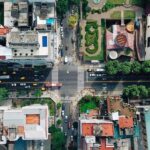
Cities occupy just 3 percent of the Earth’s land, but account for most of the global energy consumption and carbon emissions. Many cities are also more vulnerable to climate change and natural disasters due to their population densities and interconnected infrastructure. ...
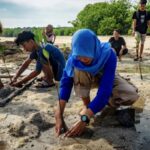
This year is a critical moment for climate action. The mounting impacts of climate change, from floods and droughts to hurricanes and heat waves, are taking a major toll on human lives and economies globally — particularly in vulnerable developing nations ...

A key objective of the Clean Air Catalyst is to exchange knowledge, build trust and foster opportunities to elevate the voices of those most impacted by air pollution, particularly women and low-income communities. Funded by the U.S. Agency for International ...

Mayors from Latin America, Africa and Asia will be welcoming more than 90% of the new urban inhabitants in the next decade. Governing these ballooning cities is a continuing challenge, not just in terms of urban design and revitalization, but ...