


Posts tagged with 'inclusive growth'

Urbanization and rising transport demand are putting real strain on Kenya’s transport systems. Road transport already accounts for about 13% of the country’s greenhouse gas emissions, and this share is projected to rise to around 17% by 2030 as the population and ...

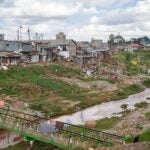
The thirteenth session of the World Urban Forum (WUF13) convenes this month in Baku amid converging geopolitical and economic shocks: conflict-driven energy spikes, rising debt burdens and persistent inflation. Around the world, these shocks are squeezing public budgets and household incomes alike. ...
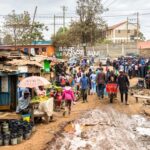
There’s a growing housing crisis that’s impossible to ignore. Consider the stats: Nearly 3 billion people lack access to housing that is both safe and connected to basic services like energy, water and sanitation. Around 40% of the world’s population lives in ...
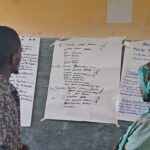
Challenging Discriminatory Cultural Norms to Build Fair, Resilient Communities in Sub-Saharan Africa
Social norms and gender biases are widely recognized as major barriers to the social and economic empowerment of women, people with disabilities and other underrepresented groups, including limiting their participation in governance and decision-making. For instance, in many parts of the world, domestic and caregiving ...
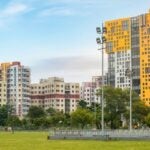
The built environment accounts for over one-third of global emissions. In rapidly developing markets like India and Mexico, a surge in housing construction faces a pivotal choice: lock in high-carbon infrastructure or, with the right interventions, enable resilient, low-carbon designs and ...

Sprawl is a known and widespread challenge for rapidly growing cities across the world. Unplanned, inefficient development encroaches on natural resources and ecosystems, often reaching far beyond established transit networks. Residents of sprawling urban areas often face socioeconomic vulnerabilities and ...

Cities are at the forefront of climate impacts, and city governments are key actors in unlocking action to build urban resilience and reduce greenhouse gas emissions. In recent years, the number of cities and regions committing to climate action and ...
In the crowded slums of Zambia, Africa, members of the Zambia Youth Federation, a social movement of the urban poor, conducted climate change research and presented it in an emotional spoken word poem. Their message let policymakers know how climate ...
Join us July 17-18 for Connect Karo 2023 at the India Habitat Centre, New Delhi. Register now and review the agenda. Since 2013, WRI India’s annual flagship event, Connect Karo, has served as a platform for facilitating dialogue between policymakers, experts ...

This is part two in a series on capacity development for city leaders. As the global urban population continues to grow rapidly, cities are being tasked with addressing a variety of needs – economic, social, political, environmental – with very ...

Cities around the world are embracing the movement to make their streets work better for people, not just cars. From Bogotá’s Ciclovía, to Guadalajara’s Via RecreActiva, India’s Raahgiri Days, and Ethiopia’s Menged Le Sewe, many cities have adopted some version ...
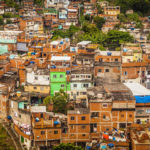
Affordable housing is a crisis that only seems to deepen. Some 1.2 billion people in cities lack access to affordable, secure housing – a number that’s projected to grow to 1.6 billion people by 2025. Cities in the global south, ...
Urbanization is changing the face of the planet – for better and for worse. City populations, GDP and investment are increasing exponentially. At the same time, carbon emissions are rising, more and more people are living in slums, and air pollution ...
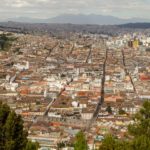
WRI Ross Center for Sustainable Cities is reporting on Habitat III from Quito, Ecuador. Follow our daily coverage on TheCityFix. Habitat III, the third United Nations Conference on Housing and Sustainable Urban Development, officially began on Monday, October 17th in ...
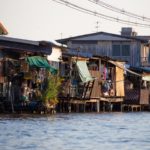
Currently, an estimated one billion people worldwide live in informal settlements where they lack access to basic services and infrastructure and are often threatened with forced eviction. While the overall proportion of the world’s urban population living in informal settlements ...