


Posts tagged with 'energy security'

In an era defined by geopolitical conflicts, volatile energy prices, disrupted supply chains, changing trade relationships and intensifying climate impacts, governments need a steady hand that can anchor today’s policy decisions to tomorrow’s goals. Long-term climate strategies offer exactly that ...

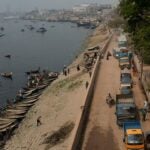
There is a pattern to how global crises unfold that receives far less attention than it deserves: A disruption originates somewhere in the architecture of global trade, energy or finance, travels through supply chains and shipping corridors, and eventually deposits ...
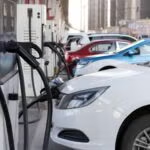
Most electric vehicle (EV) batteries are retired with as much as 70% to 80% of their original capacity remaining. They still work, but their performance no longer matches automotive requirements that demand full charging capacity for long-range driving. Over time, ...
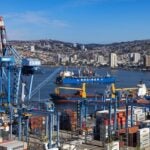
If global shipping were a country, it would rank among the world’s top six emitters of climate-harming gases (GHGs). Eighty percent of international trade — fundamental to the global economy and the goods we use in our everyday lives — travels by sea from ...

For more than 20 years, WRI has identified annual “stories to watch.” These are the year’s moments, issues and decisions that we believe will shape the future trajectory of the world. In the past, we’ve highlighted things like dangerous heat in cities, ...
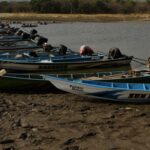
Over the past several months, the climate pattern El Niño has disrupted different regions and sectors across the world. Zimbabwe recently declared a state of disaster, due largely to El Niño-induced drought. The city government in Bogotá, Colombia, announced water rationing as reservoir levels ...
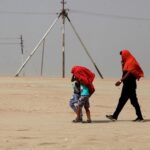
Last year shattered global heat records. The world witnessed the effects of rising temperatures in the form of devastating wildfires, severe flooding, extreme heatwaves and more. Poor countries and communities who have contributed the least to causing the climate crisis ...
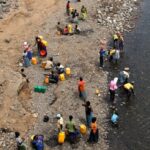
New data from WRI’s Aqueduct Water Risk Atlas show that 25 countries — housing one-quarter of the global population — face extremely high water stress each year, regularly using up almost their entire available water supply. And at least 50% of the ...

Since COP27 wound down late last year (November 6-18), much of the post event commentary has centered on the fact that as observed by The Conversation, the gathering “failed to go beyond the 2021 Glasgow climate pact’s promise to phase down ...
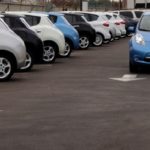
In 2016, the U.S. Air Force offered a vision of the future for the transportation and energy sectors when the Los Angeles Air Force Base became the first federal facility to replace its entire ground vehicle fleet with plug-in electric vehicles (EVs). ...

About 3 billion people, or 40 percent of the world’s population, will need new housing by 2030. That will require constructing approximately 21 million new homes every year across the world. Several of the fastest-growing countries have ambitious goals to ...
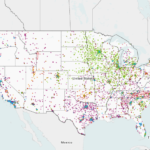
Today, the U.S. Department of Energy released an interactive map displaying thousands of alternative fuel stations around the nation, as part of a complete overhaul of Energy.gov. Color-coded points represent various alternative fuel sources, including electric and hydrogen stations. In ...

“It’s a challenge to make infrastructure, as a topic, sexy, but i know these people can do it,” said this morning’s plenary session moderator Ray Suarez, senior correspondent for NewsHour. The stimulating conversation (Suarez says he couldn’t get the scheduled ...

This announcement is a little last-minute, but there’s still time to apply! Hurry, deadline is tomorrow! CarbonfreeDC, a grassroots initiative dedicated to lowering local carbon emissions in the D.C. area, is now accepting applications for an “Extreme Green Neighborhood Makeover,” ...

Photo by existentist. Today’s New York Times has a letter to the editor I wrote in response to the paper’s <a href=”https://www.nytimes.com/2008/04/15/business/worldbusiness/15food.html?ref=opinion”recent article on the links between biofuels and global food shortages. Entitled “Fuel Choices, Food Crises and Finger-Pointing”, the ...