


Posts tagged with 'construction'
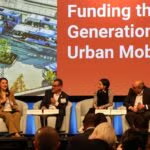
Last week, WRI Ross Center co-convened the 23rd edition of Transforming Transportation with our partners at the World Bank. Supported by FIA Foundation, the forum in Washington, DC, brought together more than 5,000 in-person and online participants, reflecting the event’s ...

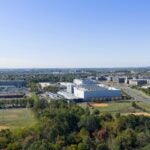
AI tools like ChatGPT, navigation apps and streaming platforms feel effortless, drawing information seemingly from thin air. Yet the infrastructure behind them is anything but invisible. Across the country, a surge of new data centers is reshaping local energy grids, ...

We are in the midst of a great economic shift — one that will shape livelihoods and growth for decades to come. The rise of AI and digitalization, geopolitical changes, uneven population growth, and the urgent need to cut emissions ...

The center of gravity for climate progress is shifting. Increasingly, many of the countries driving the global climate transition are those that have contributed the least to historical emissions yet are among the most vulnerable to climate impacts. Emerging economies are showing ...
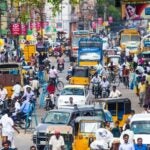
As we enter a new year, people around the world are grappling with rising costs for housing, energy and food. Most worry about the state of the economy. Job prospects feel uncertain in the face of widespread AI, automation and other disruptions. These concerns ...

Launched at COP29 under the Subnational Climate Action Leadership Exchange Partnership, the Zero Emission and Resilient Buildings (ZERB) Accelerator brings national and subnational governments together to rapidly decarbonize and climate-proof the buildings and construction sector. Implemented by C40 Cities, World Resources Institute (WRI) and ...
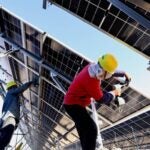
This year marks the 10th anniversary of the Paris Agreement, a watershed moment on climate action when more than 190 countries agreed to pursue efforts to limit global warming to 1.5 degrees C (2.7 degrees F) above pre-industrial levels. Achieving ...
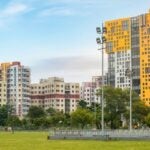
The built environment accounts for over one-third of global emissions. In rapidly developing markets like India and Mexico, a surge in housing construction faces a pivotal choice: lock in high-carbon infrastructure or, with the right interventions, enable resilient, low-carbon designs and ...

Africa’s cities are both among the most rapidly growing in the world and the most underserved by transport infrastructure. The African Development Bank estimates an annual infrastructure investment gap of $100 billion even as Africa’s urban population is projected to double by ...
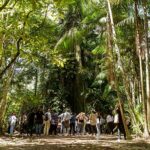
Amid the vast Amazon River delta, Belém, Brazil, sits at the intersection of the urban and natural worlds. A network of waterways and islands home to resources like açaí and cacao surround the city, serving as a critical port for ...

The built environment is not on track globally to achieve its sectoral climate targets. Accounting for over a third of total energy system emissions already, the continued use of carbon-intensive materials paired with inefficient energy use throughout the built environment ...

In Brooklyn, one of New York City’s five boroughs, a new schoolyard features newly-planted native trees offering shade and bright playground equipment that sits adjacent to a track and turf field. Colorful murals celebrating the diversity of its Boreum Hill ...
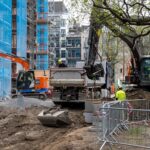
In the stylish Grünerløkka neighborhood in Oslo, construction workers are busy rehabilitating Sophies Minde, an old medical clinic, into a new nursery school and maternal health center. Tidy piles of building materials along the perimeter of the construction site wait ...
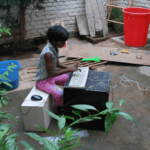
The International Day of Play (IDOP), held annually on June 11th, is a unifying global moment to celebrate the power of play for all children everywhere. IDOP draws attention to Article 31 of the UN Convention on the Rights of ...

Climate change and social inequality are two of the most pressing challenges of our time. But, in the race to net zero, a narrow focus on decarbonization risks exacerbating inequality and results in a rising tide of “greenlash” (backlash against ...