


Posts tagged with 'built environment'
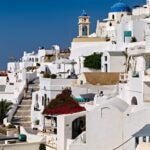
Cities and towns in the Mediterranean and the Middle East have long used white or light-colored roofs and walls to help keep people cool. Today, cities from Ahmedabad to Singapore are also turning to cool roofs to reduce urban heat ...


When torrential rains hit Kinshasa in April 2025, the city of 20 million came to a standstill. Floodwaters submerged more than half the city as the Ndjili River and smaller streams overflowed, quickly overwhelming the city’s drainage capacity. Lives were ...
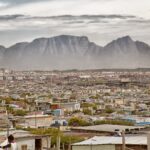
On a hot day in February 2024, volunteers dispersed across Cape Town, South Africa, with sensors affixed to their cars. Their aim was to measure heat differences across the city. In Cape Town’s dense, highly developed center, they recorded air temperatures ...

When the weather heats up in Belo Horizonte, residents of Morro do Papagaio get creative. “A lot of people put their blankets in the refrigerator,” said Amanda Lima, a 24-year-old university student, activist and resident of the south-central region of ...

Launched at COP29 under the Subnational Climate Action Leadership Exchange Partnership, the Zero Emission and Resilient Buildings (ZERB) Accelerator brings national and subnational governments together to rapidly decarbonize and climate-proof the buildings and construction sector. Implemented by C40 Cities, World Resources Institute (WRI) and ...
The built environment accounts for over one-third of global emissions. In rapidly developing markets like India and Mexico, a surge in housing construction faces a pivotal choice: lock in high-carbon infrastructure or, with the right interventions, enable resilient, low-carbon designs and ...

In a city, a grassy park might be a place to stretch out with a book, an asphalt road your route to work, a building wall a canvas for a mural. But beyond their familiar roles, each of these surfaces ...

This op-ed was originally published by Context, the media platform of the Thomson Reuters Foundation, on June 16, 2025. Read the original piece here. A new study has found that 4 billion people – half of the world’s population – endured ...

Cities are at the forefront of climate impacts, and city governments are key actors in unlocking action to build urban resilience and reduce greenhouse gas emissions. In recent years, the number of cities and regions committing to climate action and ...
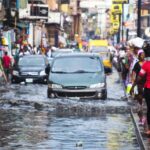
In a time of polycrises – from economic and political instability to health and environmental emergencies – water is a resource that cannot be relegated to the background. Especially in urban environments, water demand is ever-increasing and in too many ...

The built environment is not on track globally to achieve its sectoral climate targets. Accounting for over a third of total energy system emissions already, the continued use of carbon-intensive materials paired with inefficient energy use throughout the built environment ...

When you hear “infrastructure,” most people naturally think of the physical built environment — roads, bridges, buildings. There’s a lot less emphasis on other kinds of infrastructure that are equally as important, like civic infrastructure. Civic infrastructure encompasses a broad ...
The International Day of Play (IDOP), held annually on June 11th, is a unifying global moment to celebrate the power of play for all children everywhere. IDOP draws attention to Article 31 of the UN Convention on the Rights of ...

Climate change and social inequality are two of the most pressing challenges of our time. But, in the race to net zero, a narrow focus on decarbonization risks exacerbating inequality and results in a rising tide of “greenlash” (backlash against ...

In March 2024, the inaugural Buildings and Climate Global Forum convened more than 1,000 participants to spur action towards built environment decarbonization and resilience. The first-of-its-kind forum was welcome, as the sector needs a shakeup. The big issue on the table was ...