


Posts tagged with 'Bengaluru'

Most electric vehicle (EV) batteries are retired with as much as 70% to 80% of their original capacity remaining. They still work, but their performance no longer matches automotive requirements that demand full charging capacity for long-range driving. Over time, ...


In August 2025, Bengaluru’s Namma Metro recorded its highest-ever single-day ridership of over 1 million passengers. This milestone came shortly after the launch of the long-awaited Yellow Line, which connects the city with its leading tech hub, Electronic City. The second-largest metro ...
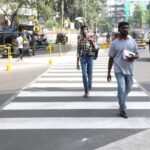
People don’t just use streets; they respond to them. The placement of curbs, alignment of crossings and painted markings directly shape how safely and predictably people move. How people interpret the physical cues received from their environment determines their decisions and movements. ...

2025 tested cities in ways both familiar and new. Urban areas faced intensifying heat, more frequent and severe climate-driven disasters, widening inequality, and political shifts shaping local and national agendas. Yet cities also emerged as centers of leadership and innovation, ...

In most urban planning meetings, stakeholder engagement begins and ends with presentations. Data is shared, reports are circulated and challenges are discussed. This format often misses fostering the hands-on participation needed to tackle the local realities of climate change. What ...

IT professional Nagarjun Kandukuru, 51, looks out of the window of his Bannerghatta Road home in Bengaluru and watches as his 16-year-old son cycles off to music class. The family has never owned a car. Kandukuru, himself, uses a motorcycle ...

Public transit is not only a vital network connecting people to jobs, services and one another; it’s also an important climate solution. The world needs to double public transit capacity by 2030 as part of its larger roadmap to slash planet-warming emissions ...

The world recently experienced a 13-month streak of record-breaking global temperatures. And as blistering heat waves punish communities across several continents, 2024 is on track to be the hottest year on record. Global average temperatures are now perilously close to exceeding 1.5 ...

India’s vibrant streets, a reflection of its dynamic culture, are unfortunately also the setting of a grim reality. Every year, approximately 150,000 people die on Indian roads, which translates to an average of 47 accidents and 18 deaths every hour. In ...

Cutting Across Siloes, Catalyzing Transformative Change: WRI India’s Deep Dive Approach in Bengaluru
Bengaluru is one of the world’s fastest growing metropolitan economies. A favored destination for investors and talent alike, this leading innovation hub is one of the largest technology clusters worldwide and home to 400 Fortune 500 companies. However, the planning ...

Achieving transformation in today’s cities requires the active and ongoing participation of many stakeholders, from the public sector, to civil society, private companies and academia. Non-government organizations can play a crucial role due to their commitment to improving the quality ...
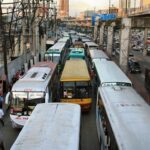
With cities facing population growth, changing work patterns, the climate crisis and ever-widening inequality gaps, improved transportation systems are critical. City governments and local leaders are uniquely positioned to foster innovation to serve public needs. Teaming up with private sector ...

Today’s city leaders face a level of complexity and rapid pace of change that can be overwhelming. Particularly in developing countries, urbanization is unfolding quickly and often haphazardly. One in three urban residents worldwide lack adequate access to at least ...
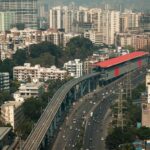
India is projected to overtake China as the most populous country in the world this year. The shifting demographics are bound to create heightened demand for education, health care, jobs and civic amenities, putting existing systems under stress. Current urban ...

Most people in India walk – to work, to the market or to the railway station. According to the 2011 Indian census, 48% of people walk or cycle to work every day compared to the less than 3% of people ...