


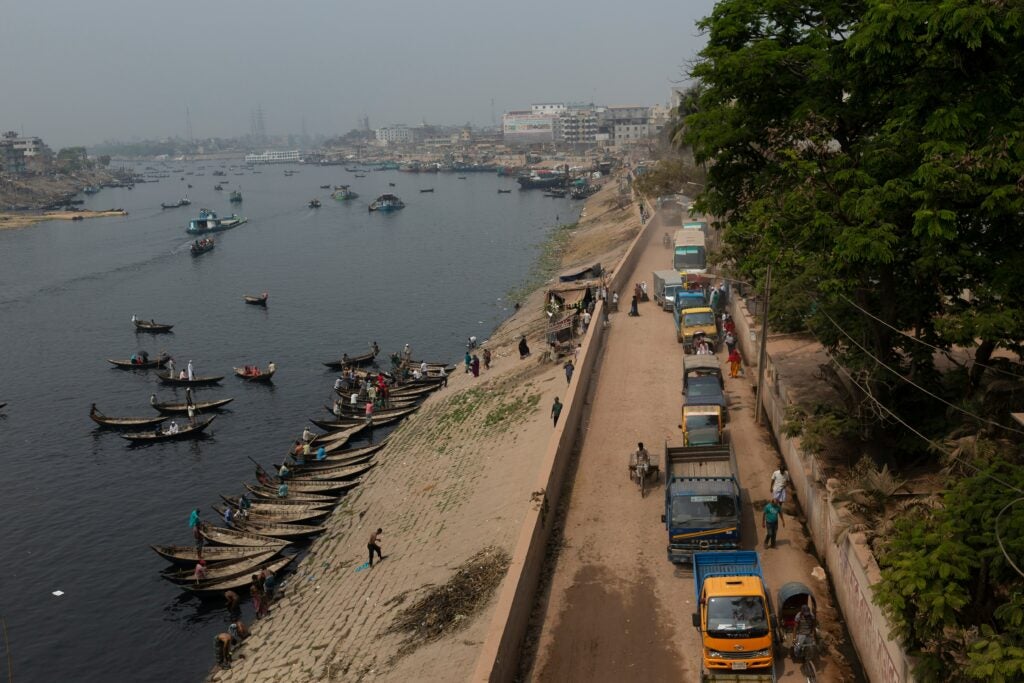
There is a pattern to how global crises unfold that receives far less attention than it deserves: A disruption originates somewhere in the architecture of global trade, energy or finance, travels through supply chains and shipping corridors, and eventually deposits its costs in the streets, markets and municipal budgets of cities that had no hand in producing it.
When the Ever Given blocked the Suez Canal in 2021, the cascading backlog of container freight translated into higher input costs for manufacturers in cities across Europe and South Asia within weeks. When Houthi attacks destabilized Red Sea shipping from late 2023, the rerouting of vessels around the Cape of Good Hope added weeks to delivery times and inflated logistics costs that fell hardest on port-dependent urban economies in East Africa and South Asia. When the Strait of Hormuz effectively closed to commercial traffic in early 2026, bus depots in Colombo ran short of diesel, street food vendors in India faced cooking gas prices they had never seen and Pakistan’s construction sector faced a threatened nationwide shutdown over fuel costs — all because of military decisions made in capitals thousands of miles away.
The crises differ in origin, geography and character, but their destination is remarkably consistent: cities absorb the damage. Understanding why this keeps happening requires moving beyond the framing of individual shocks and recognizing the structural condition underneath them.
The Kiel Institute estimated that each week the Strait of Hormuz remained closed generated welfare losses in energy-dependent developing countries that no subsequent market adjustment could recover. The Food and Agriculture Organization of the United Nations (FAO) warned that fertilizer prices, driven partly by fuel supply disruptions, had risen sharply enough to threaten food security across South and Southeast Asia within 6–12 months. The International Labour Organization (ILO) described what began as a supply shock as having rapidly become a household crisis, with poverty, food insecurity and migrant worker displacement compounding across the region.
What is striking about these assessments is not the scale of the damage but the geography of it: none of the decisions that produced the crisis were made in Colombo, Dhaka or Karachi, yet those cities bore the consequences with no institutional recourse and no early warning.
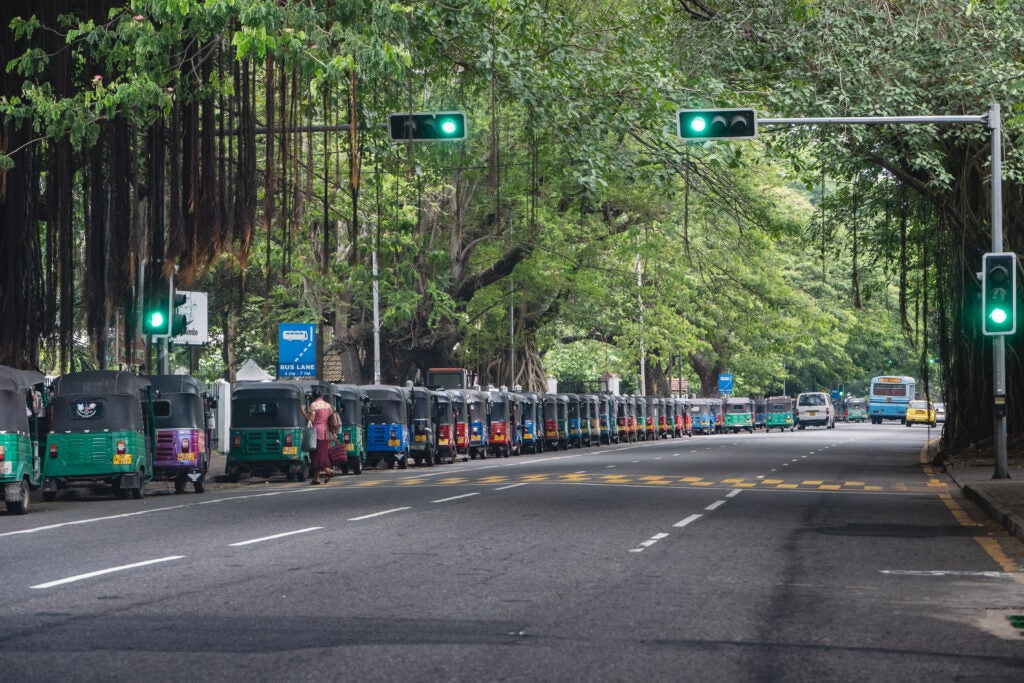
This condition can be described as “volatile urbanism,” a framework that views cities not merely as places exposed to global disruption but as systems structurally positioned to receive its costs. Fuel subsidies get cut to protect national fiscal balances while urban informal workers absorb the price. Fertilizer supply chains fracture and municipal food markets destabilize before national governments even register the problem. The logic is almost mechanical: shocks travel through global systems along the path of least institutional resistance, and cities, lacking the sovereignty to negotiate and the fiscal buffers to absorb, are where that path ends.
Cities with fewer resources and weaker governance absorb the most damage, as the same shock Singapore can withstand becomes a household emergency in Dhaka. Cities’ vulnerability is not evenly distributed, as it bears down hardest on those still being built. This is most evident in Africa, the fastest-urbanizing region in human history, where most of the infrastructure that will house its urban population by 2050 has yet to be constructed. The financing and design decisions made today will determine whether these cities are built to withstand an era of recurring shocks rather than for a stability that no longer exists.
The governance gaps these conditions reveal are not primarily a resource problem; it is a problem of scale mismatch. Military decisions in the Persian Gulf, export restrictions in Beijing and sanctions regimes in Washington D.C. are made at the level of nation-states and alliances. The consequences accrue at the level of cities, which hold no seat at those tables, no claim on the institutions managing the fallout, and no early warning architecture that might translate a tanker insurance repricing event in London into actionable intelligence for a city treasurer in Manila or Nairobi. Urban governments are expected to manage consequences they were given no tools to anticipate.
The multilateral architecture that exists for managing urban challenges was built around a fundamentally different set of assumptions: that the primary threats to cities are slow-moving, that they originate domestically or regionally, and that national governments will act as reliable intermediaries between global processes and local needs. Those assumptions held reasonably well in an era of relative geopolitical stability. They do not hold now. The decisions shaping urban life in Colombo, Karachi and Dhaka are increasingly made in military command centers and trade ministries that have no formal relationship with municipal governments, no obligation to consult them and no mechanism for compensating them when the consequences arrive.
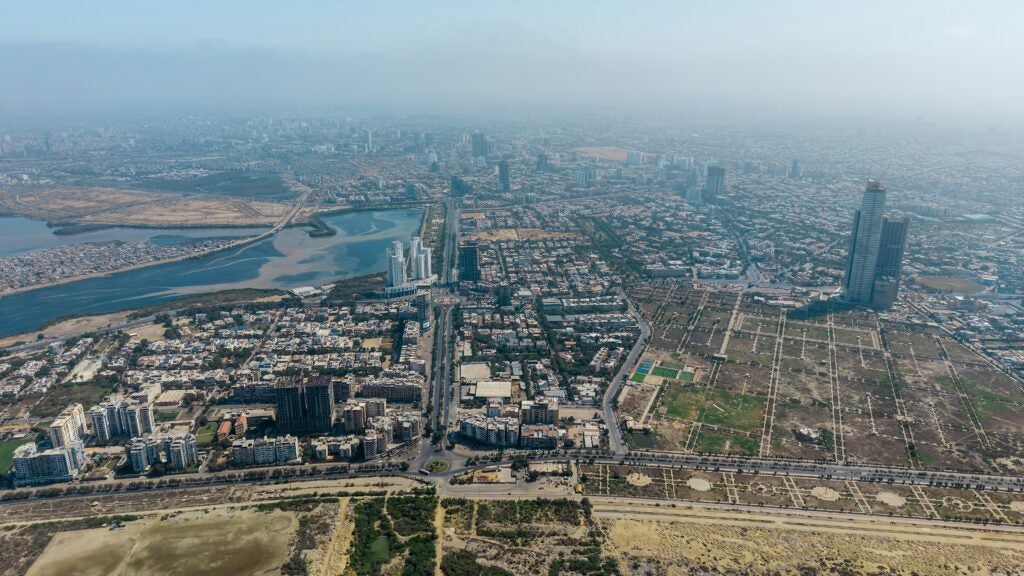
According to the World Bank’s April 2026 Commodity Markets Outlook, energy prices are projected to surge by 24% this year, with overall commodity prices rising 16% and serious implications for job creation and development across the Global South. For informal urban economies, where workers operate without employer buffers, savings reserves or social protection designed for the speed at which these shocks now move, that kind of price environment does not register as an economic statistic but as an immediate household crisis.
Earlier this year, ICLEI Global Advocacy Director Yunus Arikan observed that cities are already navigating converging geopolitical and economic shocks, with conflict-driven energy spikes and persistent inflation squeezing public budgets and household incomes simultaneously. Cities managing that kind of recurring, compounding volatility cannot simultaneously build the governance capacity that the sustainability agenda requires of them. Volatile urbanism is not a distraction from that agenda; it is the condition that most determines whether cities can pursue it at all.
What the existing architecture needs is a specific addition rather than a wholesale redesign: a mechanism through which geopolitical and systemic risk signals are translated into municipal early-warning triggers, and through which national governments bear formal responsibility for protecting city-level fiscal capacity when external shocks arrive. Recently endorsed by the European Union, the Coalition for High Ambition Multilevel Partnerships (CHAMP) for Climate Action explicitly frames multilevel governance as central to resilience and mitigation, suggesting the political logic for this extension already exists. The operational design does not, and that is the work worth doing, beginning with the acknowledgement that the cities absorbing these shocks did not cause them and cannot be left to manage them alone.
Zaheer Allam is a Lead Author for the Intergovernmental Panel on Climate Change’s (IPCC) Seventh Assessment Report (AR7), an Expert on People-Centered Smart Cities for UN-Habitat and an Adjunct Associate Professor at the University of Queensland.