


Posts in the 'Green Growth' category

The world is facing a climate emergency, forcing us all to rethink the best way to spend resources, create jobs and improve quality of life for all. In these critical times, cities offer one of the biggest opportunities. With most ...

Due to historic levels of urbanization, cities have become focal points for creating a more sustainable world. Cities currently account for 80% of global GDP, 70% of emissions, and two-thirds of total energy consumption. The urgent need for climate action ...
The last two decades have seen a rampant rise in environmental challenges being faced by cities and countries globally. In India, too, challenges related to air pollution, waste management, scarcity of water, conservation of natural resources, and loss of biodiversity, ...

Cities around the world are embracing the movement to make their streets work better for people, not just cars. From Bogotá’s Ciclovía, to Guadalajara’s Via RecreActiva, India’s Raahgiri Days, and Ethiopia’s Menged Le Sewe, many cities have adopted some version ...

Contrary to popular belief, the developed world isn’t the best role model when it comes to urban development. In fact, says Gerald Babel-Sutter, the founder and CEO of the Urban Future Global Conference, the developing world can learn more about ...
Cities can choose how they grow by directing investment and policies in specific ways. Those cities that have more upward growth relative to outward growth, for example, are better able to provide services and opportunities to their residents because development ...
When Rani, a mother of five in Khulna, Bangladesh, found that the tea stall outside her home kept flooding, she didn’t wait for a government climate resilience program to swoop in. Like many people in urban communities facing the effects ...

Closing more than 60 kilometers of major streets to car traffic sounds like a logistical headache for a city of 4.8 million. But Guadalajara did it anyway ‒ and has done it every Sunday for the last 15 years. In ...

When we think of design in cities, it’s typically physical environments and infrastructure that come to mind: glass, steel and stone, skylines and main streets, museums, traffic jams, playgrounds and construction sites. But the designs that determine the health and ...
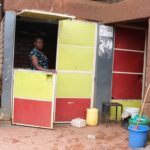
More than half the global population lacks access to safely managed sanitation services – 4.5 billion people. Every year, more than 340,000 children under the age of five die as a result of this problem. And we’re not solving it ...
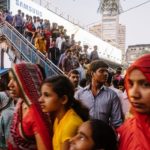
TheCityFix Labs India, supported by Citi Foundation, drives market transition toward sustainable investments through knowledge-sharing, capacity-building and technical assistance. Of 100 applications, the Labs recently selected a cohort of 10 projects to mentor and bring to fruition. Set to ...
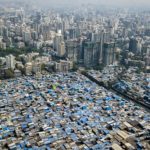
Imagine Lagos, Nigeria, a city of 22 million. What was once a small coastal town just a few decades ago has exploded into a sprawling megacity spanning 452 square miles. Its rapid growth has stretched the city’s services impossibly thin: ...
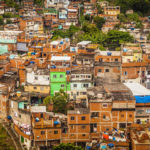
Affordable housing is a crisis that only seems to deepen. Some 1.2 billion people in cities lack access to affordable, secure housing – a number that’s projected to grow to 1.6 billion people by 2025. Cities in the global south, ...

While most cities around the world struggle with inequality, in Johannesburg, South Africa, the challenge is compounded by the legacy of apartheid. In the apartheid era, black populations were relocated to the poorly serviced areas far away from job opportunities. ...
“Integrating planning” can sound nebulous, maybe even unfocused. But when carried out well, the benefits of intentionally seeking to coordinate across different levels of government, sectors and stakeholders, speak for themselves – especially when it comes to sustainable development. A ...