


Posts tagged with 'Scaling Urban Nature-based Solutions for Climate Adaptation in sub-Saharan Africa (SUNCASA)'
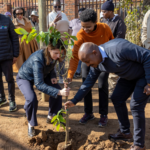
Soweto, Johannesburg’s largest township, faces dual climate threats from flooding and extreme heat. These threats are compounded by the township’s soaring unemployment and an economy dominated by low-value and informal sectors. As a result, many residents have unpredictable livelihoods and ...

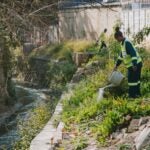
When torrential rains hit Kinshasa in April 2025, the city of 20 million came to a standstill. Floodwaters submerged more than half the city as the Ndjili River and smaller streams overflowed, quickly overwhelming the city’s drainage capacity. Lives were ...
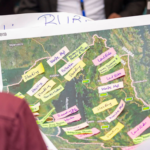
Over the next few decades, Rwanda is positioned to become one of the most competitive investment destinations in East Africa. National targets, such as achieving upper middle-income status by 2035 and high-income status by 2050 (Vision 2050)1, signal the government’s ...
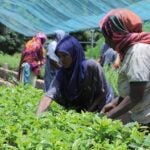
An ambitious reforestation program in Dire Dawa’s watershed is helping to restore hundreds of hectares of farmland and reduce flood risk, while providing 7,000 new jobs and economic opportunities, especially for women and young adults. Dire Dawa, Ethiopia, is known ...
Challenging Discriminatory Cultural Norms to Build Fair, Resilient Communities in Sub-Saharan Africa
Social norms and gender biases are widely recognized as major barriers to the social and economic empowerment of women, people with disabilities and other underrepresented groups, including limiting their participation in governance and decision-making. For instance, in many parts of the world, domestic and caregiving ...

With about 464 millimeters of rainfall per year — less than half the global average — South Africa is one of the driest countries in the world. Its semi-arid climate, uneven rainfall distribution and persistent droughts leave the country facing chronic water ...

In Gauteng Province, the Jukskei River winds its way through the heart of Johannesburg’s inner-city neighborhoods, informal settlements and suburban areas, eventually joining the Crocodile and Limpopo rivers before emptying into the Indian Ocean. One of the biggest waterways in ...

South Africa’s cities face growing threats to their water resources, especially rivers, as rapid development and climate change undermine the health of water systems and the ecosystem services they provide. Urban areas are particularly vulnerable to serious flood risks during ...

Despite accounting for less than 3% of global terrestrial area, cities have had an outsized impact on our approach to planetary boundaries, affecting biodiversity and consumption of materials and energy. Studies show that cities have become responsible for 78% of carbon emissions, ...

Africa’s cities, from large metropolises to smaller towns, are increasingly characterized by growing urban sprawl. Kinshasa, Democratic Republic of Congo, is expanding by about 2,000 people and 5 hectares (10 football fields) every day, according to a World Bank estimate. Kumasi, an intermediary ...

For the 21 million residents of Lagos, Nigeria, climate change is not a distant concept — it is a current reality. Over the past decade, the city has experienced devastating floods, exacerbated by the loss of over half of its wetlands ...
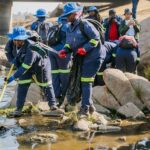
Alexandra Township is a 20-square-block enclave in the heart of Johannesburg, South Africa’s northern suburbs. Established in 1902, the township was built to house 750,000 residents. Today, it is home to more than 1.2 million. Despite efforts to increase waste ...