


Posts tagged with 'road safety'

In cities worldwide, millions of people step out their homes every day to go to work, to attend school, to see a doctor, or to visit family and friends. However, in many of these cities, commuting is becoming increasingly difficult ...


Each year, millions of people die from traffic accidents on roads worldwide. As city leaders take action globally to improve road safety, some innovators have begun to address one of the major causes of traffic accidents, human error, by exploring self-driving ...

A century of car-centric urban development has left our cities polluted, congested, and searching for sustainable solutions. Transport Demand Management (TDM) strategies can provide these solutions by combining public policy and private sector innovation to reverse over-reliance on private cars. ...

Since its introduction over 40 years ago, Bus Rapid Transit (BRT) systems have been adopted in over 190 cities. Across the world, BRTs have brought a level of reliability, efficiency, and safety to bus networks at a fraction of the ...

Today is our annual Bike to Work Day here in Washington, D.C. For many city residents, commuting is ingrained in their daily routine. By targeting how people regularly travel to and from work, there’s a lot of potential to transform ...

India has the highest number of accident fatalities in the world. But the pressing issue of road safety is rarely taken seriously. This is particularly apparent, given the high frequency and intensity of risks that motorists, pedestrians, and cyclists take ...

When you consider the global statistics, it’s no surprise that this year’s U.N. Global Road Safety Week focuses on children’s safety. According to a 2008 World Health Organization (WHO) report, 21 percent of all road traffic-related fatalities worldwide were among ...

This week is the third UN Global Road Safety week, and the theme is saving children’s lives on roads worldwide. TheCityFix had the chance to sit down with Jan Gehl, renowned architect and urban designer, and Ani Dasgupta, Global Director ...

A century of car-centric urban development has left our cities polluted, congested, and searching for sustainable solutions. Transport Demand Management (TDM) strategies can provide these solutions by combining public policy and private sector innovation to reverse over-reliance on private cars. ...
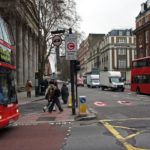
In 2003, London adopted a program of congestion pricing that now places a roughly $17 (£11.50) daily fee on motor vehicles entering central London. The effort was expected to reduce car traffic, air pollution, and emissions in the area, and ...
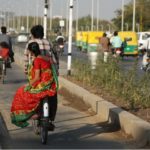
Walking and cycling may be the two most basic modes of transport, but they may also be the most promising for a sustainable future. In a car-filled world, it’s the people who use their own two feet or two wheels that ...

Streets perform a necessary function in the life of cities, like the arteries of a complex, urban organism. As the Project for Public Spaces notes, city streets “animate the social and economic life of communities” by serving as primary sites ...

Two weeks ago, the World Bicycle Forum in Medellín, Colombia brought together more than 4,000 attendees from across the globe to discuss the challenges and opportunities of urban cycling. Many have praised the event for its ability to bring a ...
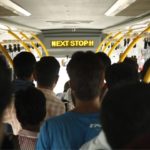
This article was originally published in the Deccan Herald on February 25, 2015. After five years of construction, Indore opened one of India’s few bus rapid transit (BRT) systems in May 2013. Operations started with a fraction of the total ...
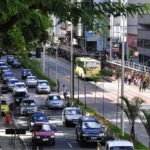
Too many cities currently evaluate their streets in a way that doesn’t support long-term sustainability. The conventional approach centers exclusively on cars, and how quickly they can move up and down streets. Under this approach, a street receives an “A ...