


Posts in the 'Sustainable Mobility' category
In 2004, Medellín – the second largest city in Colombia – introduced the Medellín Metrocable system to connect low-income residents to public transport. As the world’s first modern urban aerial cable car transport system, this innovative addition to Medellín’s existing ...

The city of São Paulo has won the 2014 Enterprising City/State MobiPrize following its support of user information and public participation platforms to advance sustainable transport solutions. MobiPrize was launched in 2012 by the University of Michigan SMART (Sustainable Mobility ...
Instead of sitting in gridlock on a busy road at 8:30 am, imagine cycling safely in dedicated lanes for a quick, pleasant commute. Many cities around the world are making investments that will give residents a faster, safer cycling experience ...
China’s increasing overall wealth makes it unlikely that the country’s growth in car ownership will stop any time soon. However, severe air pollution and traffic congestion have led several large Chinese cities to take action to stem the rising tide ...
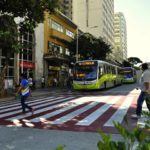
Congestion, high levels of air pollution, and traffic crashes are consequences of a culture of investment that has focused for decades on the automobile. These externalities can cost up to 10 percent of a country’s GDP, and the world’s vehicle fleet is ...
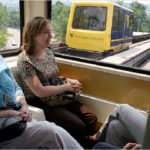
Sustainable urban mobility can come from multiple sources. Personal rapid transit (PRT) combines public transport with personalized routing. Though their designs vary, PRT systems generally consist of four- to six-passenger pods that are autonomously controlled while traveling along guide-ways. Instead ...
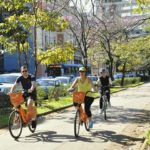
The “People-oriented Cities” series – exclusive to TheCityFix and Insights – explores how cities can become more sustainable and livable through transit-oriented development (TOD). The nine-part series addresses different urban design techniques and trends that reorient cities around people rather ...
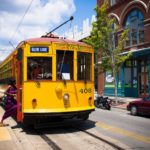
The Economist recently argued that streetcars are “a waste of money,” citing their high capital costs and inefficiencies as a means of transport. Others have argued that streetcars can be a catalyst for creating dynamic, vibrant urban environments. Both arguments ...
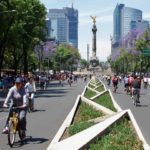
Sustainable mobility is a key challenge for city leaders. Mexico City – the world’s fourth most populous city, with more than 20 million inhabitants in its metropolitan area – is no different. The city must overcome a long history of urban ...

The largest city in Latin America has prioritized curbing car culture and making streets more pedestrian friendly. São Paulo’s new strategic master plan, unveiled on July 31, 2014, focuses on people-oriented development and improved public and non-motorized transport. The new ...

Holger Dalkmann, Director of EMBARQ – the producer of TheCityFix – wrote about the importance of developed and emerging cities improving sustainable transport in the 2014 Commonwealth Ministers Reference Book. Read his thoughts on growing trends contributing to sustainable cities worldwide. ...
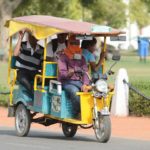
As one of the most widely used forms of intermediate public transport or paratransit – services that connect users to mass transport systems like buses or metro – auto-rickshaws are ubiquitous in Indian cities. The electric rickshaw (e-rickshaw), however, emerged ...

Fresh off our discussion of the latest advances in solar-powered roadways, TheCityFix brings you the next future-oriented innovation in road technology: electric roadways. The Tracked Electrical Vehicle (TEV) Project is a radical new concept looking to transform the look, feel, ...

Traffic congestion has wide ranging costs, from increasing stress and pollution levels to wasting commuters’ time. A new study released by the Industry Federation of the State of Rio de Janeiro (FIRJAN) confirms that traffic congestion has tremendous economic costs ...

Residents of the La Paz/El Alto Metropolitan area now have a new option for navigating the region’s mountainous geography. The first line of the Mi Teleférico (My Cable Car) system opened May 30, 2014, and interviews with new riders show ...