


Posts in the 'Complete Streets' category

Today’s streets are contested spaces. There seems to be an ongoing, intensifying competition between cars, bikes and pedestrians, trying to get from point A to B as quickly as possible. How do they all share the limited space available in ...

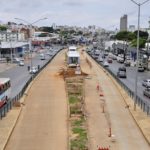
Improving public transit requires a hard look not just at vehicles and routes but at how people get on and off them. Too often, design that takes into account how all different kinds of people might use a system is ...

In too many cities today we see a stark dichotomy. On one side we have enclaves for the rich and powerful, full of luxuries and amenities, and access to the bounties of a globalized world. On the other, there are ...

Urbanization is by and large a good thing, corresponding with steady declines in extreme poverty. More compact cities may also hold the key to a sustainable future. But this trend has come with a side effect: more dangerous city streets. With ...
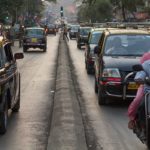
In July last year, Nitin Gadkari, India’s minister for road transport and highways, informed parliament that the country loses over 150,000 lives to road traffic accidents every year. More damningly, the country has only about 2 percent of the world’s motor vehicles ...
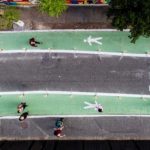
In 2015, the global community committed to halving road deaths and serious injuries by 2020. But city streets are still not safe. More than 3,200 road fatalities occur every day, and this number is expected to increase threefold by 2030, ...

Road engineering – the way urban streets are designed and built – plays an extremely important role in ensuring road safety. The right kind of engineering for a street includes measures that actively restrict the scope for road users to ...
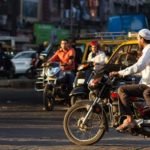
On average, two people die on Mumbai’s roads owing to traffic crashes every day. The city ranks seventh in the country in terms of absolute numbers of road traffic fatalities. Pedestrians, cyclists and motorcyclists are most vulnerable, and are involved in ...
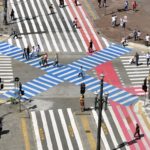
Each year, around 38,000 people die from traffic-related crashes in Brazil. Most of the victims are pedestrians, cyclists and motorcyclists. The staggering number is a direct result of the lack of road safety precautions in Brazilian cities, which are growing ...
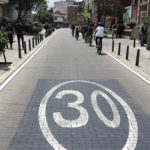
In just 10 years, from 1996 to 2006, Bogotá’s traffic fatalities dropped by half. Despite facing challenges common to many cities – inadequate infrastructure, congestion, pollution, inequality and crime – the Colombian city has become a powerful example of urban ...
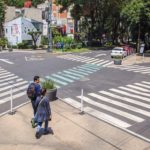
Fewer than 3 people per 100,000 are killed in road crashes in Sweden every year, less than almost anywhere else in the world. In contrast, it’s 11 per 100,000 in countries like India and the United States. One reason for ...
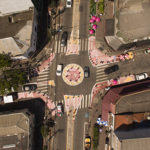
Each year, the Prince Michael International Road Safety Award recognizes the most outstanding achievements and innovations to improve road safety and save lives worldwide. On December 12, 2017, WRI Ross Center for Sustainable Cities was named a winner of the Prince Michael Award for ...
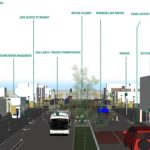
This series, supported by the Volvo Research and Educational Foundations, discusses walking and cycling in cities with a special focus on low- and middle-income countries. Many cities have streets that make life difficult for pedestrians in ways that are not always ...
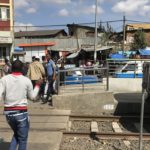
Addis Ababa’s light rail transit system (LRT), launched in October 2015 as the first LRT in sub-Saharan Africa, serves some 120,000 passengers a day. The LRT may help reduce travel times for some, and lead to a safer, cleaner transport ...

The original version of this article appeared on ChinaDaily. The renaissance of bike-riding is a welcome development, so let’s improve conditions for the users. Orange, yellow, blue, green, rainbow…bike lanes in Chinese cities are quite colorful these days. Thanks to ...