Posts in the 'Clean Energy' category
Though cities contribute a majority of the world’s greenhouse gas emissions, they also provide forums for collaboration among diverse stakeholders to incubate climate change solutions. Photo by Wolfgang Staut/Flickr.
Why cities are the solution to climate change: A Q&A with Ani Dasgupta
2015 is a year of utmost importance for the global sustainable development agenda, and cities will play a pivotal role. Landmark global decisions over the next 12 months provide opportunities to unlock the potential of cities and improve quality of ...
A type of fine particulate matter, black carbon causes millions of premature deaths in cities worldwide and is considered the second most important human emission contributing to climate change. Photo by Eduardo M.C./Flickr.
Cities fighting black carbon to achieve public health and climate benefits
Black carbon – a short-lived climate pollutant emitted into the air by incomplete combustion of fuels – is a both major contributor to climate change and a concern for public health in cities. At the global scale, black carbon has ...
As cities urbanize worldwide, they must focus on connected, compact, and coordinated development to grow their economies and tackle climate change. Photo by Scutter/Flickr.
‘We have to get urbanization right’: A Q&A with Felipe Calderón on cities in the New Climate Economy
2015 is a year of utmost importance for the global sustainable development agenda, and cities will play a pivotal role. Landmark global decisions over the next 12 months provide opportunities to unlock the potential of cities and improve quality of ...
The shared mobility economy is on the rise. Zipcar founder Robin Chase sat down with TheCityFix to discuss how current trends and innovations are transforming transportation. Photo by Hugger Industries/Flickr.
Innovating for smart, sustainable cities: A Q&A on urban mobility with Zipcar founder Robin Chase
2015 is a year of utmost importance for the global sustainable development agenda, and cities will play a pivotal role. Landmark global decisions over the next 12 months provide opportunities to unlock the potential of cities and improve quality of ...

Peru recently received an $11 million grant from the NAMA facility that will help the country attract significant funding for its multi-billion dollar sustainable urban transport improvement plans. Photo by Anton Muhajir/Flickr.
Peru’s climate leaders awarded over $11 million for low-carbon urban transport
Peru was recently awarded €9 million ($11.14 million) for its urban transport Nationally Appropriate Mitigation Actions (NAMA) by the German and British NAMA facility. This climate finance award will allow the Peruvian government to leverage $50 million from development aid agencies – especially KfW, ...
Rio de Janeiro is using the Global Protocol for Community-Scale Greenhouse Gas Emissions Inventories (GPC) – the first internationally accepted standard for measuring city-level emissions – to inform actions on climate change. Photo by Gerben van Heijningen/Flickr.
Hundreds of cities poised to replicate Rio’s approach to measuring and reducing emissions
Rio de Janeiro is one of the world’s leading cities injecting sustainability into its planning. In 2011, Mayor Eduardo Paes enacted an ambitious climate change law, setting a goal to avoid 20% of its emissions by 2020, based on 2005 levels. There ...
A growing coalition of cities, NGOs, and private companies are advancing building efficiency efforts that save money and greenhouse gas emissions. Photo by Omar Barcena/Flickr.
Unlocking low-carbon growth through energy efficient cities
Urbanization is reshaping the economy, energy systems, and climate of our planet. By 2050, the world’s cities are expected to add 2.5 billion people who will need housing, hospitals, schools, and places to work. Though global greenhouse gas emissions continue ...
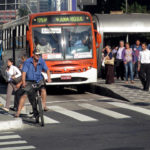
As national leaders prepare plans to curb greenhouse gas emissions at COP20, they can look to sustainable transport for win-win solutions that curb emissions while generating jobs, boosting economic growth, and improving public health. Photo by Associacao Ciclocidade/Flickr.
Low-carbon urban transport boosts social and economic development
This week in Lima, Peru, national-level decision makers, mayors, business leaders, international finance institutions, and civil society actors come together for the COP20 climate negotiations, and the world is expecting progress towards an international climate agreement expected to be reached ...

Improving building efficiency presents a major opportunity to curb greenhouse gas emissions while saving money and improving quality of life. Photo by deano7000/Flickr.
As cities grow, so should their energy efficiency
If you want to find major emitters of greenhouse gases, look no further than your city’s skyline. Buildings account for more than one-third of all final energy consumption and half of global electricity use. They’re responsible for approximately one-third of ...

Cities played a key role scaling up climate change solutions and building momentum for climate action at Tuesday’s UN Climate Summit. Photo by Juliana Swenson/Flickr.
Real progress on sustainable cities and transport unveiled at U.N. Climate Summit
Tuesday’s U.N. Climate Summit included unprecedented focus on cities and the transport sector at climate change conferences. City leaders committed to new actions to promote sustainable urban development and low carbon transport systems. Notable leaders at the Summit included Seoul Mayor ...

Transport accounts for 22% of all energy-related greenhouse gas emissions. By investing in low-carbon transport alternatives, cities can curb emissions while also supporting economic prosperity. Photo by Samuel Yoo/Flickr.
Transport sector climate action key to close the world’s emissions gap
Climate action often focuses on energy and industrial activity, but the transport sector must be included to keep global warming below the dangerous two-degree scenario. Transport is responsible for 22% of energy-related greenhouse gas (GHG) emissions worldwide, and its emissions ...
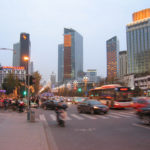
Urbanization is a driver of both economic growth and global climate change. Between 2011 and 2030, the urban areas of the world are expected to add 1.4 billion people, including 276 million in China and 218 million in India. Photo by Ken Marshall/Flickr.
How cities can save trillions, curb climate change, and improve public health
No strategy for reducing the impacts of global climate change is complete without addressing the challenge of urbanization. Cities contribute about 70% of energy-related greenhouse gas (GHG) emissions, despite only accounting for 2% of global land area. Reducing this environmental impact may ...

Incredibly efficient city designs inspired by arcology could scale up mixed-use development and sustainable mobility while minimizing environmental impacts. Norman Foster rendering via Forgemind ArchiMedia/Flickr.
Friday Fun: The futuristic, sustainable cities inspired by arcology
By 2050, the world’s population is estimated to grow to 9.6 billion, with 66% living in cities. How can we accommodate urbanization while avoiding costly urban sprawl that can lead to unequal access to transport and increased greenhouse gas emissions? ...

Ljubljana recently won the European Green Capital 2016 Award based on its comprehensive approach to sustainable development, which has transformed urban life in the past decade while minimizing the city's environmental impact. Photo by Rhobinn/Flickr.
Sustainable development and integrated planning mark Europe’s new green capital
Ljubljana, Slovenia has won the 2016 European Green Capital Award, given annually by the European Commission to cities that set an example of sustainable urban development best practices. With an ambitious sustainability plan and that has led to significant improvements in the ...
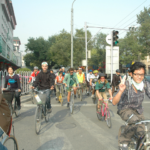
By prioritizing sustainable transport solutions, Beijing can shift away from car culture and improve quality of life for its rapidly growing population. Photo by Philip/Flickr.
The making of a livable city: Inspiration for a sustainable, healthy Beijing
Each year, 440,000 people move to Beijing in search of economic opportunity and better lives. Their rural to urban migration is a driver of economic growth, part of a larger plan to catalyze economic development through urbanization across China. However, ...
Right Menu Icon