


Posts in the 'Clean Energy' category
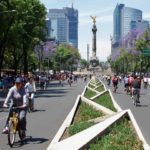
Sustainable mobility is a key challenge for city leaders. Mexico City – the world’s fourth most populous city, with more than 20 million inhabitants in its metropolitan area – is no different. The city must overcome a long history of urban ...


Holger Dalkmann, Director of EMBARQ – the producer of TheCityFix – wrote about the importance of developed and emerging cities improving sustainable transport in the 2014 Commonwealth Ministers Reference Book. Read his thoughts on growing trends contributing to sustainable cities worldwide. ...
Fresh off our discussion of the latest advances in solar-powered roadways, TheCityFix brings you the next future-oriented innovation in road technology: electric roadways. The Tracked Electrical Vehicle (TEV) Project is a radical new concept looking to transform the look, feel, ...

Disclaimer: the calculations below are based on a preliminary, beta version of the Global Calculator. To view and explore the final version of the Calculator, visit tool.globalcalculator.org. Experts predict that a 2 degree Celsius rise in world temperatures could have drastic ...

Helsinki, Finland and Hamburg, Germany are both striving to vastly improve urban transport in less than a generation. The Helsinki Times boldly states that “the future resident of Helsinki will not own a car.” Hamburg, meanwhile, has announced a plan ...

China currently has enough roads and infrastructure to accommodate 300 million vehicles. With car ownership reaching 137 million at the end of 2013, and 74 Chinese cities already reporting pollution surging above the level deemed safe by the World Health Organization (WHO) for over two thirds ...
Editor’s note: Two weeks ago, TheCityFix wrote about the need to include urban mobility as a core tenet of the Bonn climate talks. Cities are the arena in which the regulations formulated at Bonn, and passed at COP 21 in ...

According to the United Nations, temperatures are likely to warm anywhere from 3 to 6 degrees Fahrenheit by 2100, and scientists warn that “the world is ill-equipped to deal with the impacts of warming.” To help the lives impacted by ...

The Massachusetts Institute of Technology (MIT) and ICLEI, the largest worldwide association of local governments, released a study last week showing how climate change has become a priority for cities across the globe. Entitled the “Urban Climate Change Governance Survey,” ...
City leaders and planners weigh difficult decisions when choosing the path for their cities. When it comes to transport, they face such challenges as deciding between developing bus rapid transit (BRT) or light rail, and finding the best way to ...

The transport sector currently accounts for 22% of global greenhouse gas (GHG) emissions and emissions from energy consumption and is the fastest growing sector in terms of overall emissions. It is also responsible for 35% of per capita CO2 emissions in Latin America and is ...

America’s vehicles are on the road to becoming cleaner. Last week, President Obama directed his administration to set new fuel efficiency and greenhouse gas (GHG) emissions standards for medium- and heavy-duty vehicles, including large pick-up trucks, school buses, and tractors. Improving fuel ...
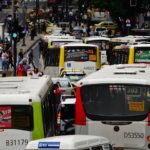
Transport currently accounts for nearly 20% of global energy use and related CO2 emissions, approximately 40% of which are emitted from urban transport. Transport emissions are expected to increase by 57% worldwide from 1990 levels by 2030 and more than ...

The transport sector is the fastest growing major contributor to global climate change – it accounts for 23% of energy related CO2 emissions. In Asia, CO2 emissions are expected to experience a three- to five-fold increase by 2030 compared to ...
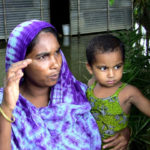
Update July 21, 2014: The Global Calculator is live! Visit www.globalcalculator.org to try the beta version of the Calculator. Part I of the Intergovernmental Panel on Climate Change’s (IPCC) Fifth Assessment Report recently confirmed that atmospheric concentrations of the greenhouse gases (GHG) carbon ...