


Posts tagged with 'Beijing'
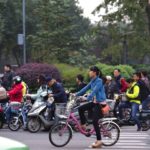
This is the second installment of the China’s Clean Air Challenge series, exclusive to TheCityFix. This series examines the increasing social, environmental, and economic impacts of serious air quality issues in Chinese cities, and investigates the source of emissions and ...

This article was originally published on January 15, 2015 by the Thomson Reuters Foundation. Last year marked an important tipping point: for the first time, half of the global population lives in cities. Cities currently add 1.4 million people each ...
Sustainable, accessible, thriving cities are within our reach. Investing in solutions like energy and building efficiency, integrated public transit and better land use and transit planning can improve health, quality of life and economic opportunities in cities. In fact, the ...
With the next few decades expected to witness to Asia’s swift rise in economic and political influence, the eyes of the world have focused on Asian cities as the engines of this growth. Last month’s Asian Development Bank Transport Forum ...
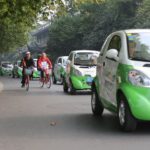
China’s increasing overall wealth makes it unlikely that the country’s growth in car ownership will stop any time soon. However, severe air pollution and traffic congestion have led several large Chinese cities to take action to stem the rising tide ...
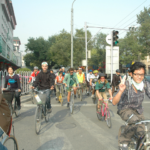
Each year, 440,000 people move to Beijing in search of economic opportunity and better lives. Their rural to urban migration is a driver of economic growth, part of a larger plan to catalyze economic development through urbanization across China. However, ...
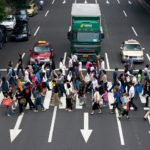
China’s capital city of Beijing is already home to 5.4 million cars, the most of any Chinese city. The country’s rising wealth means that this is a trend unlikely to stop. This rapid motorization has led to many city government ...
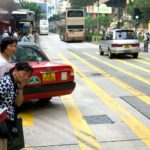
China currently has enough roads and infrastructure to accommodate 300 million vehicles. With car ownership reaching 137 million at the end of 2013, and 74 Chinese cities already reporting pollution surging above the level deemed safe by the World Health Organization (WHO) for over two thirds ...

In the past few years, China has made eye-catching achievements in building the world’s largest high-speed rail system, with a total length of over 9000 km (5,600 miles) in operation in 2012. In China, trains travelling at design speeds above ...
Instead of arguing about how their city did not have enough money to fund the creation of bike paths, a community in Mexico City, Mexico, went ahead and made them. When residents in Beijing, China, saw that cars were encroaching ...
As severe air pollution grips Beijing, China and the surrounding region, the sharp rise in harmful particulate matter has forced authorities to consider both immediate responses and long-term strategies to combat air pollution. The current situation The height of the ...
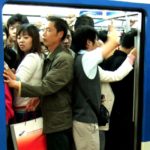
As we discussed last week on TheCityFix, Beijing’s municipal government is currently considering a controversial proposal that would reform the city’s low subway fare structure. If approved, the proposal would raise the standard subway fare in an effort to alleviate ...
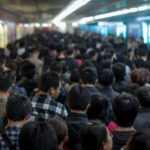
Beijing’s subway system – one of the longest in the world at 469 kilometers (289 miles) of track – is confronted by excessive congestion and costly government subsidies. In an extremely controversial move, the city government has decided to increase ...
Beijing has launched an effort to tighten up its vehicle quota control regulation and further curb air pollution and traffic congestion in China’s capital city. Echoing the city’s recent “Clean Air Action Plan (2013-2017),” an amendment to the car ownership ...
What do the time-honored hutong – quintessential narrow alleys of Beijing that date back to the Qing dynasty – and danwei – organized work and housing complexes from the pre-1979 era –have in common? Apart from the fact that neither ...