


Posts tagged with 'Holger Dalkmann'
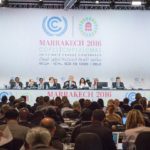
More than 35,000 people from around the world gathered in Quito in October to celebrate the adoption of a New Urban Agenda, and an estimated 20,000 people convened in Marrakech two weeks ago for COP22. The events and dialogue that ...


Two weeks ago, 30,000 people gathered in Quito, Ecuador, for Habitat III, the once-every-20-years UN conference on housing and sustainable urban development. At the conference, 167 country representatives adopted a non-binding but influential vision for cities of the future known as the ...

Habitat III in Quito was the largest UN meeting to date, with more than 36,000 people from 167 countries, thousands of organizations and institutions, hundreds of meetings and side events and the adoption of the New Urban Agenda (NUA). Habitat ...
Urban leaders from around the world are meeting in Quito, Ecuador, October 17-20, 2016, to set the global agenda for the future of cities at the United Nations Conference on Housing and Sustainable Urban Development, known as Habitat III. Through ...
On July 25, over 4,000 participants and negotiators from 142 countries came together for Habitat III’s Preparatory Committee Meeting in Surabaya, Indonesia. The purpose of the meeting was to finalize the New Urban Agenda (NUA)—a vision for the cities of ...
This week in Surabaya, Indonesia marks the last preparatory session (PrepCom3) before the UN Conference on Housing and Sustainable Urban Development (Habitat III) in Quito, Ecuador in October 2016. The conference will bring together national governments, sub-national actors, decision-makers and ...
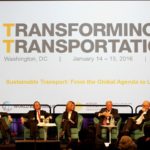
Transforming Transportation (#TTDC16) is the annual conference co-organized by EMBARQ, the sustainable urban transport initiative of the World Resources Institute’s (WRI) WRI Ross Center for Sustainable Cities, and the World Bank. This year’s conference is themed Sustainable Transport: From the ...
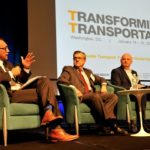
Transforming Transportation (#TTDC16) is the annual conference co-organized by EMBARQ, the sustainable urban transport initiative of the World Resources Institute’s (WRI) WRI Ross Center for Sustainable Cities, and the World Bank. This year’s conference is themed Sustainable Transport: From the ...

Last year saw major international commitments on critical topics like climate change, sustainable development and road safety. From the adoption of the Sustainable Development Goals (SDGs) to the Brasilia Declaration on Road Safety and the climate agreement reached at COP21, ...

TheCityFix is covering cities at COP21. Urban areas account for a large share of greenhouse gas emissions but are also tremendous agents of innovation to address climate change. Read our full coverage of the Paris Climate Conference as it relates to cities, buildings, and mobility. “Our cities ...

TheCityFix is covering cities at COP21. Urban areas account for a large share of greenhouse gas emissions but are also tremendous agents of innovation to address climate change. Read our full coverage of the Paris Climate Conference as it relates to cities, buildings, and mobility. In the ...

TheCityFix is covering cities at COP21. Urban areas account for a large share of greenhouse gas emissions but are also tremendous agents of innovation to address climate change. Read our full coverage of the Paris Climate Conference as it relates to cities, buildings, and mobility. Over the ...
In 1950, fewer than 800 million people lived in urban areas. Today that number is almost 5 billion, and is expected to surpass 6 billion by 2045, according to the UN World Urbanization Prospects. Urban growth—and its related challenges of ...
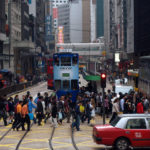
What will the city of the future look like? How can we unlock the potential of urbanization to create safe, accessible and prosperous societies? At Transforming Transportation 2015 – the annual conference co-organized by the World Resources Institute and the World Bank– we learned about ...
Every year, more than 1.2 million people die in traffic crashes worldwide, equivalent to nearly five Boeing 747 plane crashes every day. As developing economies grow and private car ownership becomes more mainstream, the number of associated crashes and fatalities ...